Get Full Government Meeting Transcripts, Videos, & Alerts Forever!
Get email alerts on the Slds topic
No spam. Unsubscribe anytime.
State SLDS faces reductions but leaders say system supports education, workforce research and new AI uses
Summary
State SLDS managers defended the statewide longitudinal data system to the appropriations panel after proposed reductions; officials outlined federal grant history, the system’s public data portal and plans for AI‑readable public datasets and digital credentials.
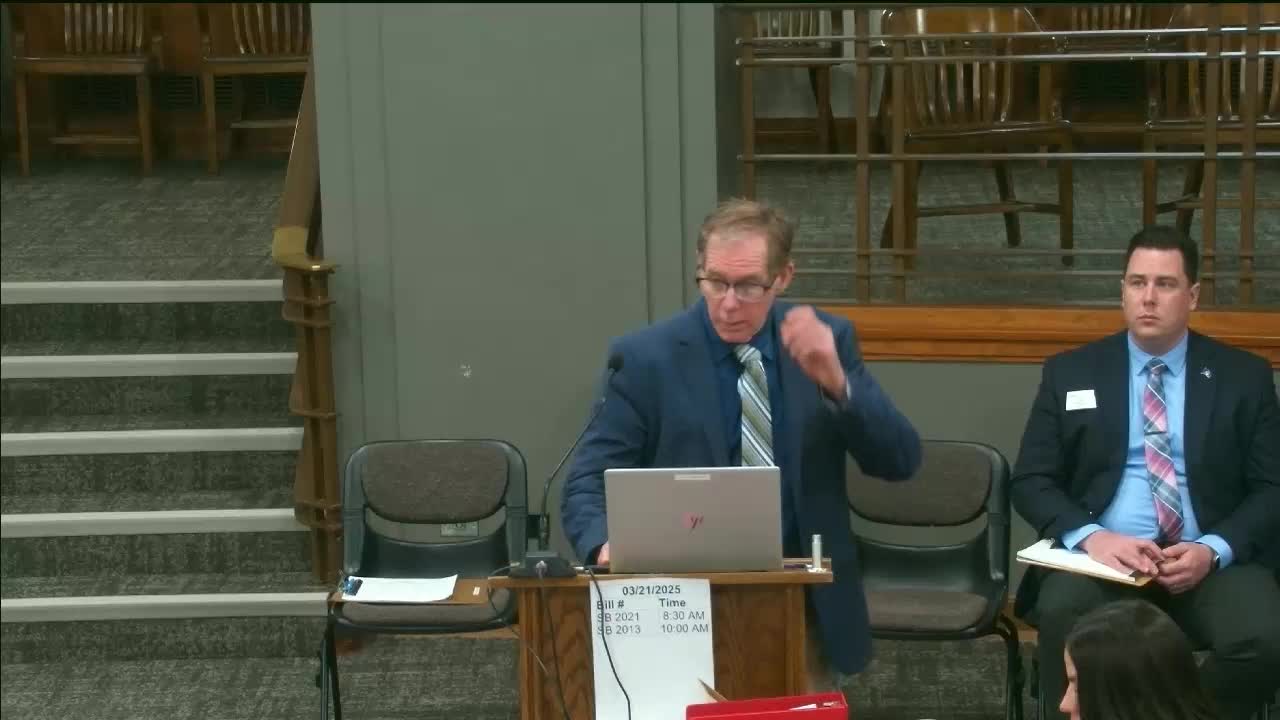
Tracy Korzmell, Statewide Longitudinal Data System (SLDS) program manager at the Information Technology Department, told the committee the SLDS was created by the legislature and placed under ITD and that it is funded in part by five federal grants over time. "When I look at AI, what I see is a lot of public data that I already have available that the general public is already using AI on," Korzmell said, describing plans to make certain public datasets more AI‑readable.
Korzmell and Deputy CIO Greg Hoffman explained line‑item reductions on the Senate long sheet: a $394,839 reduction in general funds and $500,000 removed from other (federal) fund authority, which Hoffman said represented a right‑sizing based on prior turnbacks and underutilized federal authority. Hoffman estimated the SLDS program budget in the slides as “somewhere around $5,000,000.”
Korzmell walked through SLDS products: insights.nd.gov for public education and workforce data, teacher‑level dashboards, e‑transcripts and a hybrid architecture of separate but linked data warehouses for K‑12, higher education and workforce. She described use cases including predicting college remediation needs, tracking scholarship eligibility and producing DPI accountability reports. She said the SLDS will continue evolving — citing incoming juvenile justice and corrections domains — and that retention and PII policies must be reviewed since SLDS now approaches 20 years of data.
Kim Wise, the chief data officer, clarified that positions listed as unfilled for a statewide data strategy (data governance lead, data stewardship lead) are part of a broader lighthouse‑funded statewide data strategy separate from SLDS. Wise said the statewide data strategy is intended to help all agencies use data strategically and that an organizational chart would be provided to the committee.
Committee members asked about the proposed reductions and sustainability; Greg Hoffman said the reductions were intended to align budgeted fund authority with historical utilization and that federal authority could be requested later if needed. Several members praised the SLDS work — including teacher training, e‑transcripts and digital credential pilots with Bismarck State College — and asked for more detail on the SLDS line item when the fiscal team returns.