Get Full Government Meeting Transcripts, Videos, & Alerts Forever!
Get email alerts on the Transportation Bridges topic
No spam. Unsubscribe anytime.
Transportation budget increases highlight bridge needs and a shrinking highway special revenue account
Summary
The Department of Transportation told the House Appropriations Section C committee that inflation and rising federal construction funds have increased project costs, strained the state highway special revenue account (HSRA), and prompted staffing additions for bridge management and rapid response.
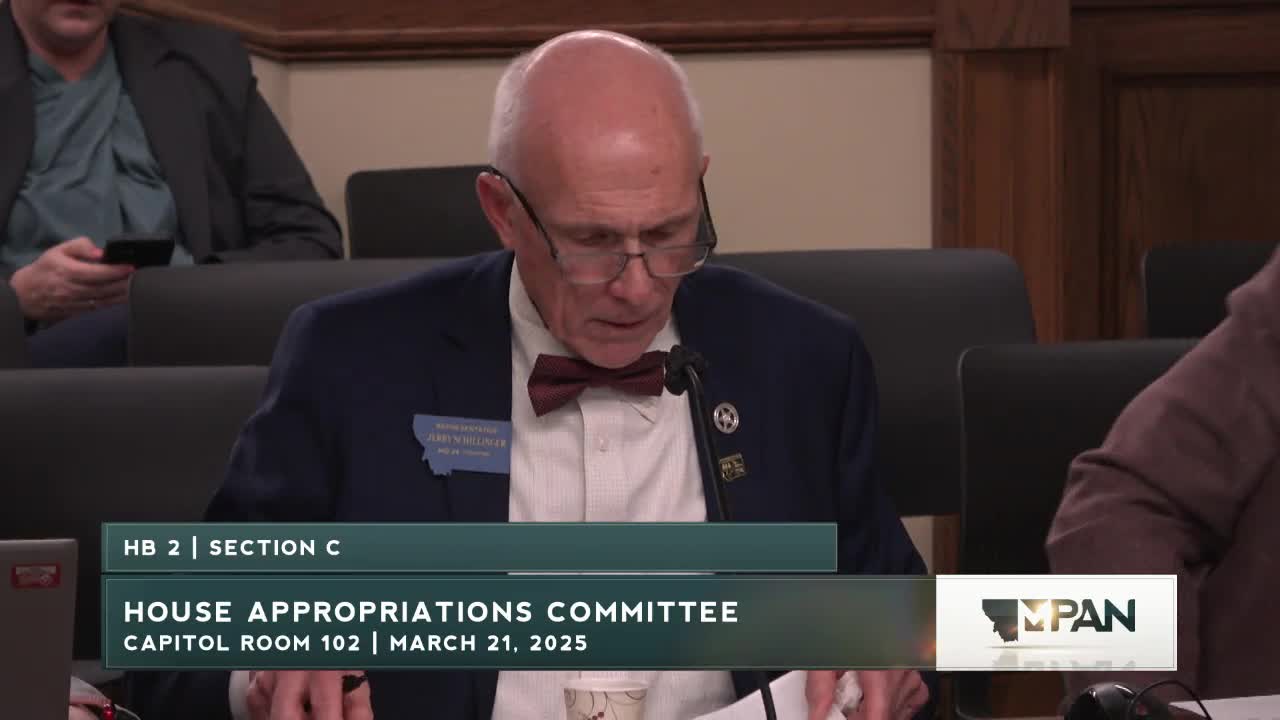
The Department of Transportation briefed the House Appropriations Section C committee on the agency’s House Bill 2 budget, stressing bridge repairs and the strain on the state highway special revenue account (HSRA).
Director Chris Dorrington told the committee that the approved HB2 budget is roughly 12.3% higher than the last biennium, driven by increased federal construction funding and higher contractor payments. He and deputy director Larry Flynn emphasized that federal construction funds require a state match — roughly 13% — and an increase in federal program funding requires a larger HSRA match. Dorrington warned the committee that the HSRA, funded primarily by state fuel and diesel taxes and GVW fees, is on a declining trajectory and “headed down” without additional resources because state revenues are not automatically rising with federal allocations.
Bridges were a focal point. Dorrington described large numbers of aging bridges — including many built in the 1930s — that are load-posted or in poor condition. The subcommittee approved new positions aimed at pipeline capacity for bridge engineering and rapid response: 10 bridge positions to address deterioration, plus six roles for a “bridge preservation, maintenance and repair response team” to react to emergency closures.
Hiring challenges: Dorrington and committee members discussed hiring and market competition for engineers. Dorrington said private firms sometimes retain staff by paying large retention bonuses that state agencies cannot match; he cited an example of a $130,000 bonus paid by a consulting firm. Committee members asked whether the new positions would be temporary; Dorrington said the roles are expected to be ongoing and necessary to address long-term backlog.
Funding and local bridges: Members noted many failing structures are “off-system” local bridges (county or town responsibility). Dorrington said funding these local bridges is more difficult; the department has supported local grant programs and federal grants but cannot redirect funds away from the state system. The legislature previously authorized one-time money from general surplus for local bridge repair; committee members said that money is largely spent and that additional legislation or appropriations will be needed to continue that work.
Why it matters: Committee members asked how fuel tax revenues are used. Fiscal staff explained the state fuel tax (33¢ regular, 29.45¢ diesel) and that most state fuel tax dollars are applied to MDT’s match and maintenance obligations; a small portion is distributed to cities and counties and some to Highway Patrol. Members said federal highway funding has not increased its gasoline tax since 1993, and federal contributions have been partially supported by the federal general fund in recent years.
Next steps: The committee approved most of MDT’s requested positions but reduced some (for example, federal grant administration positions for rail/transit). Members asked for additional reporting on the department’s five-year tentative construction plan and urged MDT to provide updated metrics and an annual plan for clearer evaluation of outcomes.