Get Full Government Meeting Transcripts, Videos, & Alerts Forever!
Get email alerts on the State It topic
No spam. Unsubscribe anytime.
State IT chief explains SITSD billing, onshore cloud costs and DPHHS line-by-line increases
Summary
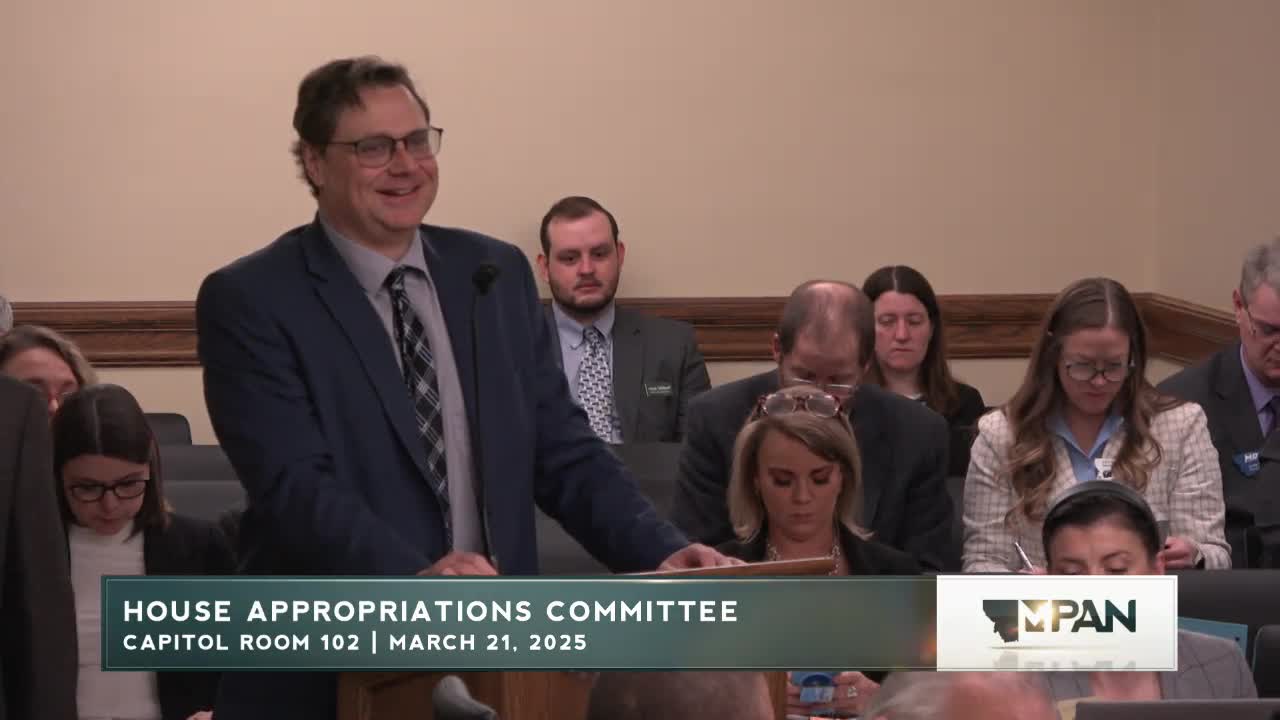
State Information Technology Services Division CIO Kevin Gilbertson briefed the Appropriations Section C committee on how SITSD funds operations by billing agencies, why onshore government cloud costs are higher, and a line-by-line spreadsheet showing changes to the Department of Public Health & Human Services budget.
Kevin Gilbertson, chief information officer for the State Information Technology Services Division, told the House Appropriations Section C committee that SITSD operates as a proprietary enterprise that bills state agencies for products and services and must “earn” its budget by monthly billing to agencies. Gilbertson walked members through a PowerPoint and a spreadsheet prepared at the committee’s request showing the specific increases and decreases that were placed in DPHHS’s IT budget.
Gilbertson described SITSD’s organization — information security, technology (custom development and hosting), innovation and transformation (project and change management), communications, and operations (service desk and data centers). He said SITSD pays some enterprise contracts up-front (for example, the Microsoft enterprise agreement) and recovers the costs from agencies over the year, creating a regular negative cash flow until the year-end reconciliation.
Why government cloud costs more: committee members asked why onshore cloud storage and government-certified hosting cost more than offshore alternatives. Gilbertson said the difference is not the storage itself but the certification and personnel requirements for government clouds (for example, FedRAMP-type certification), and that SITSD requires onshore support and U.S.-based data storage for security and legal reasons. He said one vendor, Highland, increased its price after being told it could not rely on offshore support for Montana data.
Gilbertson showed how SITSD allocates costs: an enterprise rate (mandatory services such as Active Directory, identity management and security monitoring) and usage-based services (application hosting, expert time for custom development). He emphasized that some enterprise costs are allocated proportionally by agency size (for example, number of AD accounts) while usage-based products are billed directly to the consuming agency.
On DPHHS: Gilbertson presented a spreadsheet that breaks DPHHS charges into pass-through contracts, enterprise agreements, services allocations and usage-based services. He pointed to increased usage (for example, live storage), rate increases and reallocation of charges as primary reasons for the increases in that agency’s IT budget. He said SITSD will produce the same detailed line-by-line spreadsheet for other agencies on request.
Committee follow-ups: Rep. Falk and other members requested follow-up meetings to reconcile differences between the DPHHS-related numbers presented at earlier hearings and the spreadsheet SITSD produced. Representative Gillette said he would meet with SITSD, DPHHS and fiscal staff for a deeper walkthrough. Gilbertson offered to discuss individual line items in more detail if committee members want.
Why it matters: Committee members said they wanted the detail ahead of EA (executive action) votes so they could distinguish between base increases in enterprise services, one-time pass-throughs, and new usage charges that will recur. Gilbertson’s explanation framed future budget questions around whether agencies were underallocated in the prior biennium, whether usage growth is expected to continue, and how security-driven procurement requirements affect price.
What remains open: Committee members asked SITSD to provide similar spreadsheets for other large customers and noted some committee members wanted a separate session to walk through reconciliations with fiscal staff.