Get Full Government Meeting Transcripts, Videos, & Alerts Forever!
Get email alerts on the Clean Indoor Air topic
No spam. Unsubscribe anytime.
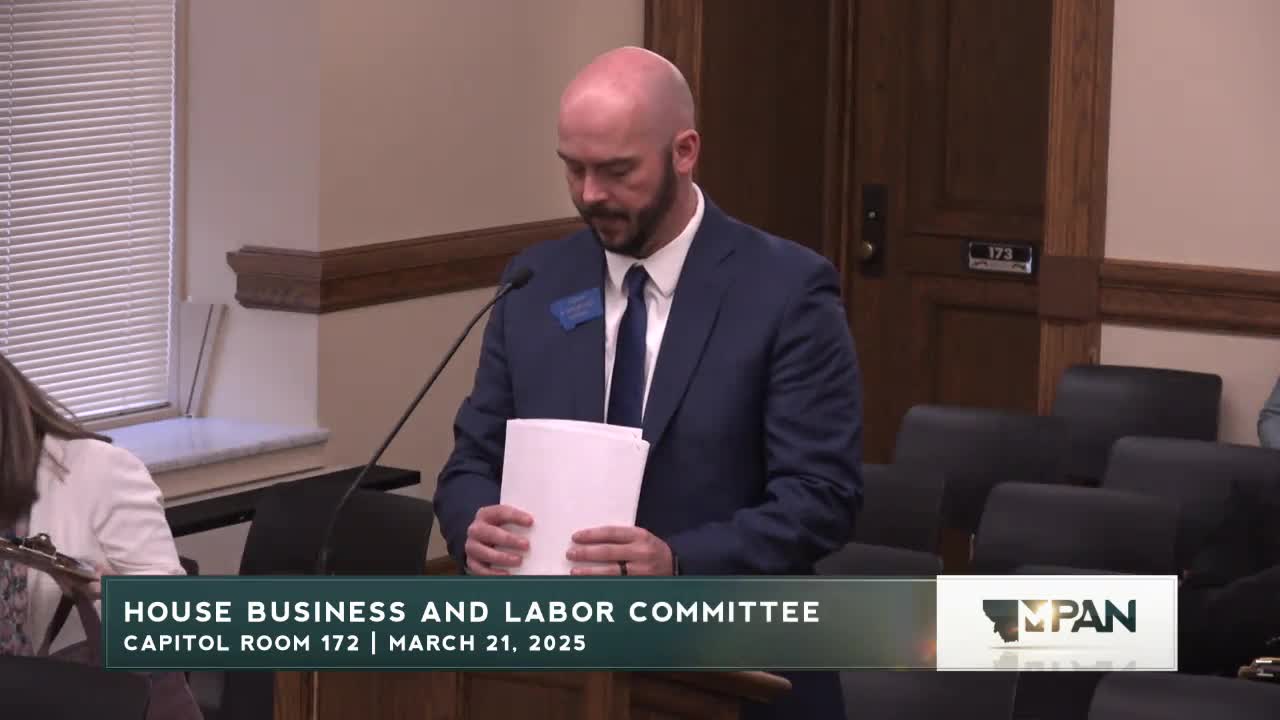
Heated debate over proposed cigar-bar exemption to Montana Clean Indoor Air Act
Summary
Senate Bill 150 would create a narrow exemption to Montana’s Clean Indoor Air Act to permit premium cigar bars in freestanding, ventilated locations, the sponsor said; the proposal drew strong opposition from public‑health groups and medical associations.
A Senate hearing on Senate Bill 150 opened with a sponsor who described the measure as a "narrow" carve-out to Montana’s Clean Indoor Air Act allowing premium cigar bars in freestanding, ventilated locations. The sponsor said the bill has been refined over multiple sessions and includes requirements such as a humidor, ventilation, and other safeguards; he described the measure as an effort to allow a specialized hospitality niche, not a broad rollback.
Supporters argued a narrowly tailored exemption would benefit hospitality businesses and tourism without harming smoke-free venues. Jesse Luther of the Hospitality and Development Association of Montana said the bill creates "new opportunities in the business market for our folks to expand their services" and emphasized that the measure, as drafted and amended, would be limited to premium hand-rolled cigars and freestanding locations with specified ventilation. Brad Longcake of the Cigar Association of America said his group "fully support[s] the amendment" and described premium cigars as distinct products that enthusiasts seek in controlled lounges.
Opponents, led by public-health and medical groups, said SB150 would weaken the state’s 2005 Clean Indoor Air Act and expose workers to harmful secondhand smoke. CB Pearson, speaking for Montana Kids versus Big Tobacco, framed the conflict as a worker-protection issue, saying tobacco smoke and cigar smoke are hazardous and that Montana had enjoyed 16 years of smoke-free workplaces. Jackie Simmons of the American Heart Association said the bill "sends the message to the public that these products are somehow less harmful," and the American Lung Association noted that ventilation systems cannot reliably remove health risk; its witness said "no other engineering approaches... have been demonstrated or should be relied upon to control health risks from environmental tobacco smoke." Medical and cancer groups (represented at the hearing) warned the exemption would create enforcement difficulties and could open the door to other carve-outs.
Operational and compliance questions dominated committee discussion. Witnesses and committee members discussed existing cigar lounges that operate as private clubs with no employees present and the high capital cost of ventilation systems (testimony cited multi‑thousand‑dollar systems and substantial air-change rates). Industry witnesses and the sponsor suggested employees could be protected through waivers or by limiting worker presence during smoking; opponents said that approach simply creates unequal workplace protections.
Sponsor’s request: The sponsor asked the committee to recommend passage with narrow amendments under development; multiple public‑health organizations asked the committee to reject the bill to preserve worker protections in the Clean Indoor Air Act.