Get Full Government Meeting Transcripts, Videos, & Alerts Forever!
Get email alerts on the Direct Primary Care topic
No spam. Unsubscribe anytime.
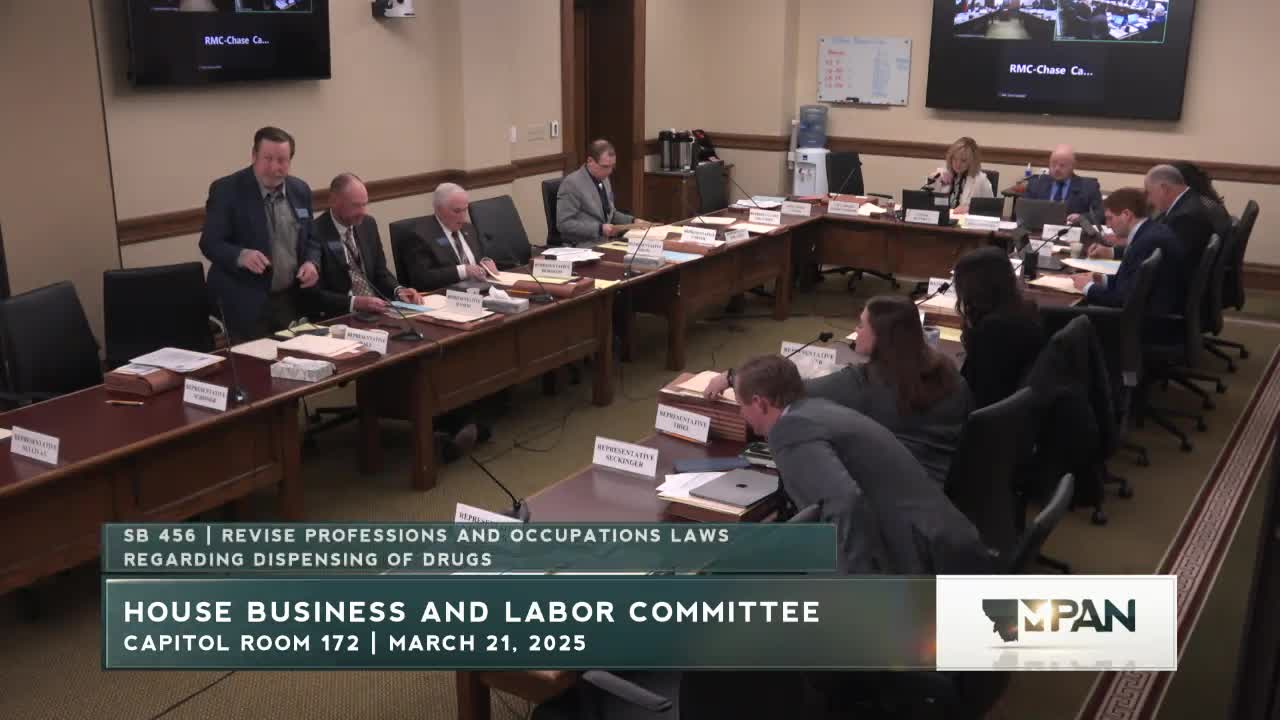
Committee hears bill to let clinic staff hand medications to patients in direct primary care practices
Summary
Senator Tom McIlvray told the committee Senate Bill 456 would fix a drafting error in Montana’s 2021 direct primary care law so that clinic staff — not only the prescribing practitioner — may hand sealed, labeled medications to patients after identity verification.
Senator Tom McIlvray introduced Senate Bill 456 to the committee as "a really pretty simple bill" aimed at fixing a drafting glitch in Montana’s direct primary care law passed in 2021. McIlvray said the 2021 law allowed physicians, physician assistants (PAs) and nurse practitioners in direct primary care settings to dispense medications but, as written, required the practitioner personally to hand the medication to the patient. SB 456 would permit the practitioner’s staff to convey sealed medication packages to patients if the drugs are prepared, labeled and the recipient’s identification verified.
Proponents from the medical community told the committee the change is an efficiency and access improvement. Rob Cook, representing the Montana Medical Association, said the MMA supports SB 456 because it "provides for more affordable, drug pricing," is convenient, and is "secure with the safeguards" described in the bill. Cole Whit Moyer, a family nurse practitioner and representative of the Montana Direct Patient Care Association, described clinic practice: staff already count, label, seal and package medications and verify patient identity; allowing staff to hand the sealed packages to patients mirrors pharmacy technician workflows and reduces barriers to timely medication access.
State officials said the Department of Labor and Industry’s Board of Pharmacy currently registers practitioner dispensers (about 109 registered to date) and that the board can answer regulatory questions. Committee members asked for operational details, including what the bill means by two forms of identification on the package; Whit Moyer described labeling practices — patient name and date of birth on an outer sealed bag — and the in-clinic procedures used to prepare and verify dispensed meds.
Sponsor’s request and next steps: Senator McIlvray closed the hearing by noting the bill had no opponents at the hearing and expressing appreciation. He asked the committee to recommend passage; the transcript does not record a committee vote at this hearing.