Get Full Government Meeting Transcripts, Videos, & Alerts Forever!
Get email alerts on the Budget Transparency topic
No spam. Unsubscribe anytime.
Senate committee hears bill to expand reporting on fiscal notes, lowers reporting threshold
Summary
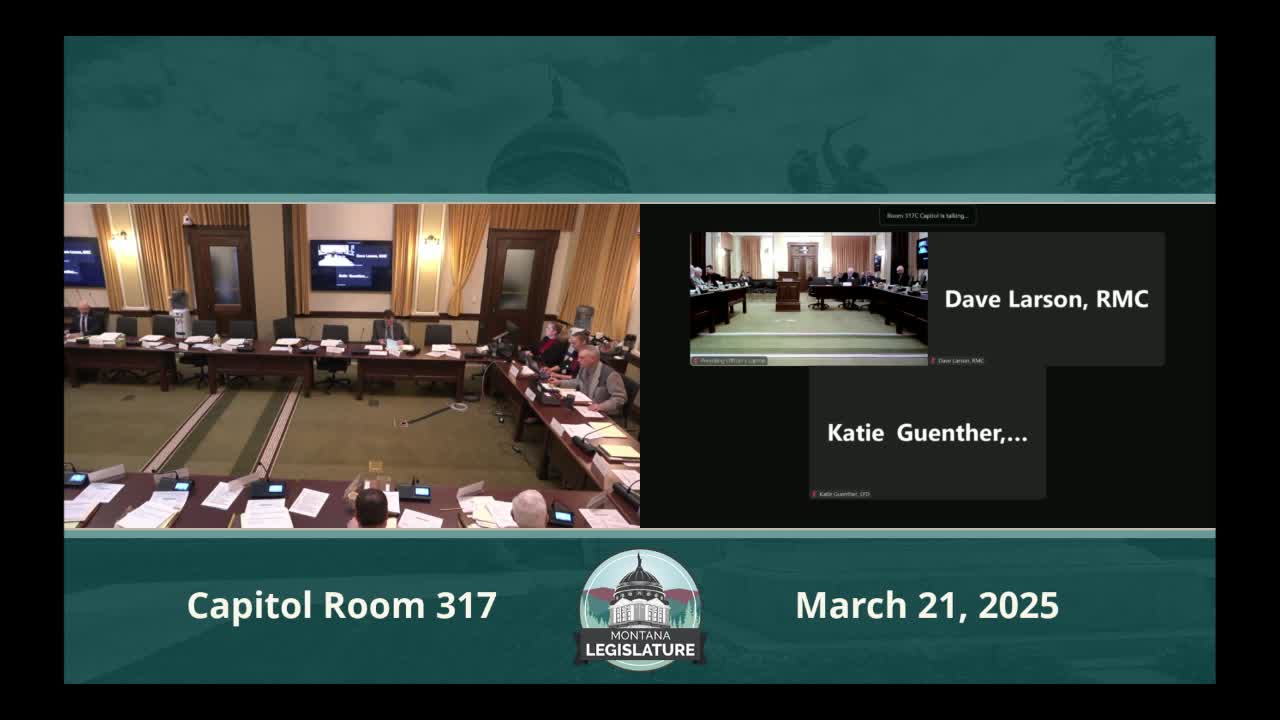
The Senate Finance and Claims Committee heard testimony on House Bill 228, which would remove an existing sunset and require more frequent reporting on enacted legislation with larger-than-expected fiscal impacts, lowering the reporting trigger from $1,000,000 to $500,000 and moving to twice-yearly reports.
Representative Bill Mercer, sponsor of House Bill 228, told the Senate Finance and Claims Committee that the bill would remove an existing sunset and require more frequent reporting on the actual costs of implementing enacted legislation. Mercer said the bill grew from a transparency effort beginning in the 2021 session and related interim budget committee work intended to give appropriators clearer information about how enacted bills are being implemented.
Mercer said the bill would lower the reporting trigger from $1,000,000 to $500,000 in any one year of the four-year fiscal-note projection and would require reports twice a year instead of once to make the information more useful to interim budget committees. Amy Franks of the Office of Budget and Program Planning (OBPP) attended as an informational witness; Mercer and committee members discussed where earlier HB146 reports are posted and how useful they have been.
Senators asked how OBPP compiles the reports and whether the office can extract implementation costs from accounting systems; the sponsor and OBPP staff said the office must access accounting records and that actuarial and accounting work is involved. Committee members noted the reports have improved since early years and that relatively few items have met the original $1,000,000 trigger, prompting the proposed reduction.
Representative Mercer closed asking the committee for a favorable recommendation. The committee subsequently moved to concur with House Bill 228 during executive action.
Questions from senators focused on (1) where prior reports are posted (Legislative Fiscal Committee materials and the LFC page were cited), (2) how OBPP extracts spending data from accounting systems, and (3) whether the reporting is intended to allow appropriators to adjust base funding or make other budget changes. Mercer said the intent is to improve appropriators' visibility into real-world implementation costs so legislators can better decide whether to add or remove items from the base budget.