Get Full Government Meeting Transcripts, Videos, & Alerts Forever!
Get email alerts on the Appointments Diversity topic
No spam. Unsubscribe anytime.
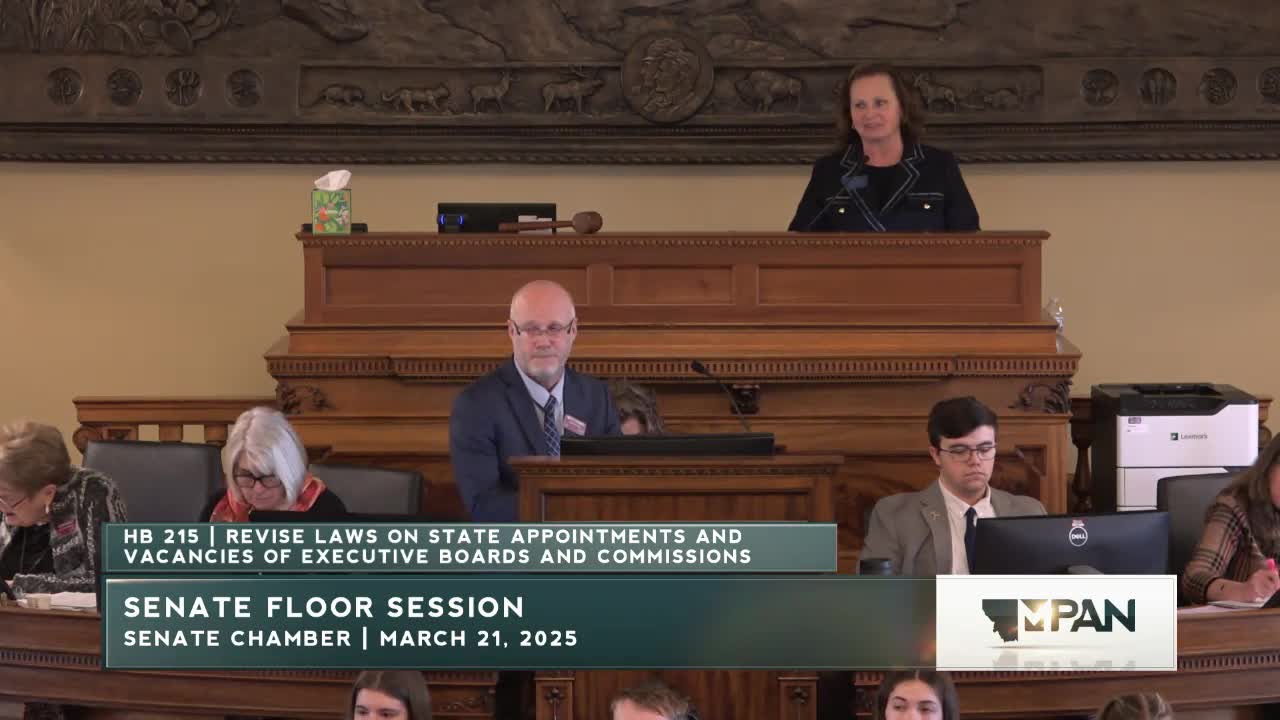
Senate concurs in bill removing statutory gender and racial balancing language for state appointments
Summary
House Bill 215, which removes a 1991 statutory provision directing gender and racial balancing on state boards and commissions, passed the Senate 31-19 after floor debate over representation of tribal communities and whether the provision was obsolete or discriminatory.
The Montana Senate on March 21 concurred with House Bill 215, a bill to eliminate a section of state code that referenced gender and racial balancing on appointments to state boards and commissions. Senator Berry Usher moved concurrence; the Senate voted 31 in favor and 19 opposed.
Sponsor Senator Usher described the provision as “code clutter” added in 1991 and argued it could be read as both a mandate and a suggestion. “Eliminating the section of code will have no effect on the makeup of the tribal boards,” Usher said, adding that appointments should be made on merit.
Opponents urged caution, saying the language encouraged representative appointments, particularly for tribal members. Senator Fern, drawing on long service on boards and associations, said tribal representation improves board deliberations and helps address issues where non-tribal members lack context. “It’s important to say that ... when we do the people’s business at ... state levels of committees, that we do our best to represent the many viewpoints in the state,” Fern said.
Senator Emmerich framed the change as removing a discriminatory prescriptive requirement and invoked a principle that appointments should be based on merit rather than race or gender. Senator Weber emphasized Montana’s history of including Native American voices and opposed removing a provision that he said helped maintain that practice for the state’s largest minority.
The motion to concur in House Bill 215 passed on a 31-19 vote. The bill was described on the floor as a code-cleanup measure; supporters characterized it as removing outdated statutory language, while opponents said it risks reducing attention to diversity and tribal representation in appointments.