Get Full Government Meeting Transcripts, Videos, & Alerts Forever!
Get email alerts on the Mine Enforcement Discretion topic
No spam. Unsubscribe anytime.
Committee backs giving DEQ discretion to treat minor mine maintenance as correctable rather than immediately noncompliant
Summary
Senate Bill 368 would let the Department of Environmental Quality issue written warnings for minor maintenance issues at mine sites and allow 14 days for correction before issuing formal notices of noncompliance; the committee recommended concurrence.
The committee recommended concurrence on Senate Bill 368, which would authorize the Department of Environmental Quality to treat certain small maintenance items at permitted mine sites as correctable within a 14-day period rather than automatically issuing notices of noncompliance and fines.
Sponsor Sen. Sue Vinton said the bill provides “common sense” discretion to address routine issues—such as small equipment leaks or fallen traffic signs—that do not pose imminent dangers to public health or significant environmental harm. Under the bill, DEQ could issue a written warning and require corrective action within 14 days; failure to correct would move the matter to formal notice of noncompliance and potential fines.
Westmoreland Mining’s Darryl James and the Montana Coal Council’s George Harris testified in support, describing routine operational incidents that are quickly remediable and arguing that immediate fines can be disproportionate. John Iverson of the Treasure State Resources Association, Kevin Wade of the Montana Chamber of Commerce, and several chambers of commerce offered “me too” support during the hearing. Dan Walsh of DEQ’s Air, Energy and Mining Division appeared as an informational witness.
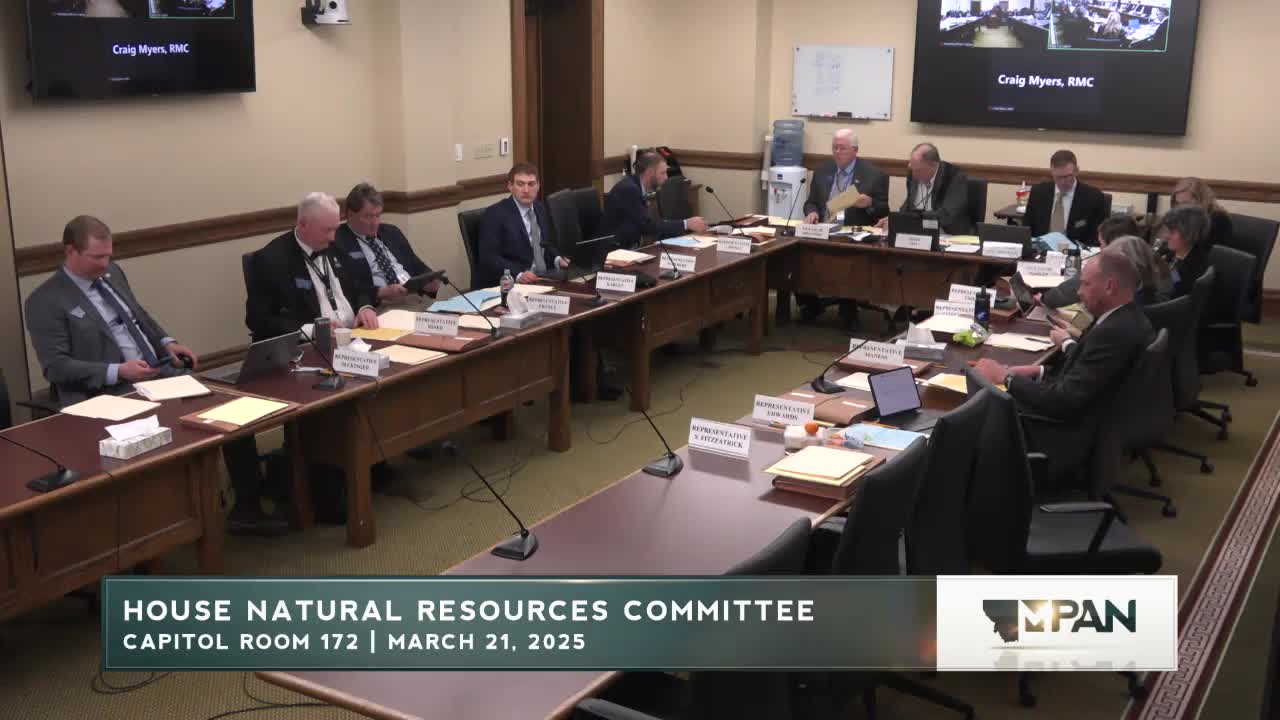
Vice Chair Oblander moved the committee to concur on SB 368; the motion passed on a voice vote with proxies recorded. Supporters emphasized the bill does not change penalties for violations that pose imminent threats or require major operational changes; those remain enforceable.