Get Full Government Meeting Transcripts, Videos, & Alerts Forever!
Get email alerts on the Petroleum Tank Prevention topic
No spam. Unsubscribe anytime.
Committee approves expanded preventive uses for petroleum tank cleanup fund
Summary
The House Natural Resources Committee advanced Senate Bill 315 to the floor after proponents said limited preventive reimbursements would reduce costly cleanups; DEQ and the Petroleum Tank Release Compensation Board supported the change.
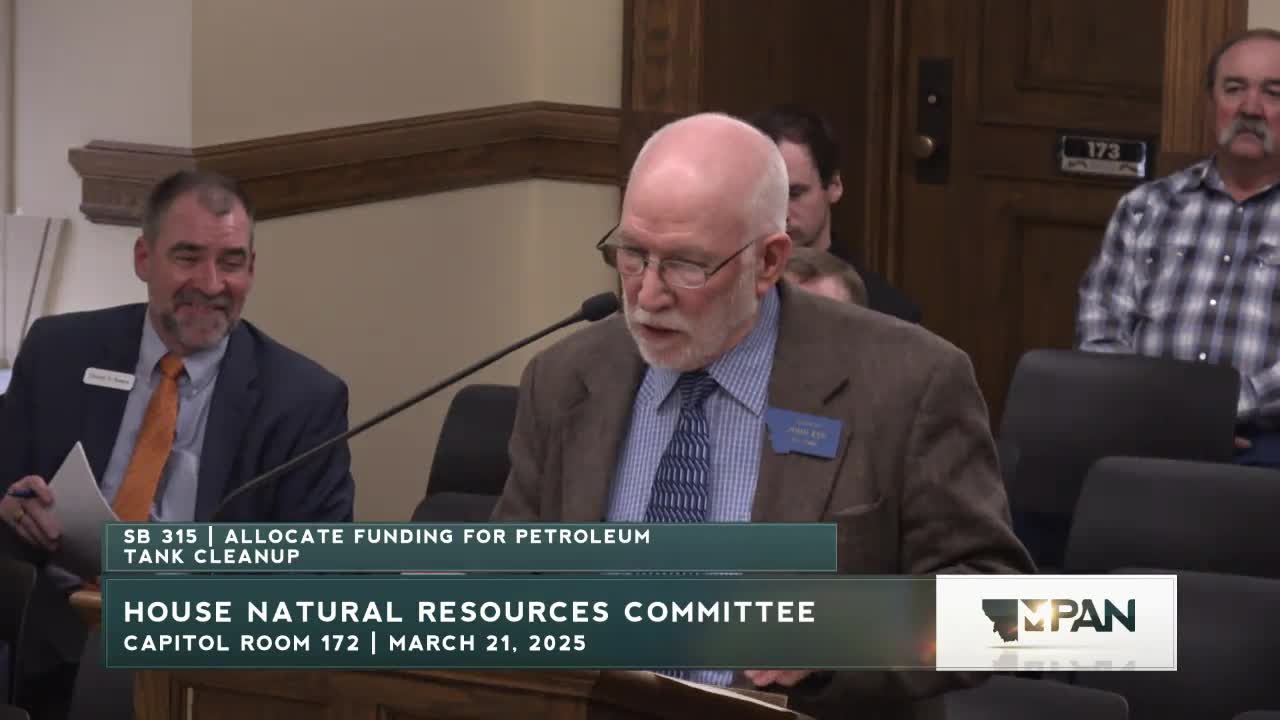
The House Natural Resources Committee voted to recommend concurrence on Senate Bill 315, a bill that would allow limited uses of the Petroleum Tank Release Compensation Fund for preventive measures at petroleum storage sites.
Supporters told the committee the bill does not add money to the fund; it simply authorizes the board to reimburse tank owners for specified prevention activities. Brad Longcake, speaking for the Montana Petroleum Marketers and Convenience Store Association, said the change would allow “an ounce of prevention” and help small owners avoid catastrophic releases. Amy Steinmetz, Waste Management and Remediation Division administrator at the Department of Environmental Quality, said prevention is “much cheaper and much more environmentally effective” than cleanup and that DEQ supports using available funds to incentivize preventive measures when practicable.
The bill lists seven preventive measures that would be eligible for reimbursement and changes a statutory meeting requirement from mandatory to discretionary. Terry Wadsworth, executive director of the Petroleum Tank Release Compensation Board, appeared as an informational witness and confirmed the board manages the fund that would provide reimbursements.
Committee discussion was limited and no opponents appeared at the hearing. Vice Chair Oblander moved that the committee “do concur” on SB 315; the motion passed on a voice vote with several members recorded as voting aye by proxy. The committee’s action sends the bill to the House floor with a committee recommendation to concur.
Proponents said the bill aims to increase compliance by making modest preventive payments—reported in testimony as reimbursements up to $2,000 every three years for eligible owners—without expanding the fund’s total appropriation. The bill text specifies the kinds of preventive actions eligible for reimbursement; the committee did not change those provisions during the hearing.
The committee record shows no formal opposition and no committee-requested amendments were adopted at the hearing. The bill will next be scheduled for floor consideration.