Get Full Government Meeting Transcripts, Videos, & Alerts Forever!
Get email alerts on the Comprehensive Planning topic
No spam. Unsubscribe anytime.
City planning staff briefs Jasper Planning Commission on comprehensive plan, funding and meeting procedures
Summary
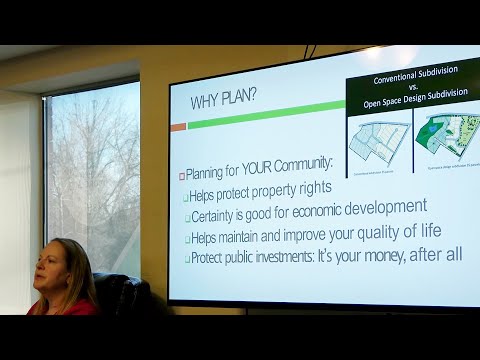
City planning staff delivered an orientation to the Jasper City Planning Commission on the role of comprehensive plans, local zoning and commission procedures during a meeting presentation.
City planning staff delivered an orientation to the Jasper City Planning Commission on the role of comprehensive plans, local zoning and commission procedures during a meeting presentation. The presentation reviewed sources of planning data, the Georgia Planning Act and the Department of Community Affairs (DCA) requirements that affect local eligibility for state funding, described the Plan First program and other grant incentives, and walked commissioners through meeting rules such as quorum, ex parte communications and typical outcomes for land-use applications. No formal votes or motions were taken during the briefing.
The presentation emphasized why the comprehensive plan matters to the city’s finances and development. The staff member said the planning process uses “data that’s provided by the state… the federal government and… locally” and explained that an up-to-date comprehensive plan is required to retain Qualified Local Government (QLG) status with the DCA. The staff member warned that losing that status can jeopardize funding, noting, “You cannot lose that status for longer than 28 days over a 10-year period” for Plan First eligibility.
Why it matters: staff told commissioners that Plan First status and an adopted comprehensive plan can materially affect funding and project competitiveness. The briefing said Plan First gives applicants advantages such as more frequent eligibility for certain block grants and extra scoring points for affordable housing applications; staff noted developers sometimes prefer jurisdictions with Plan First recognition. The presenter also described potential loan-interest benefits tied to GEFA/GIFA lending programs and said Plan First and other certification elements can make grant and loan applications easier to pursue.
Key topics covered included: the purpose of planning and comprehensive plans (population, employment and housing forecasts, future land-use/future development maps), the city’s zoning ordinance and enforcement processes (notice of violation and the goal of voluntary compliance), special ordinances such as erosion and sediment control enforced in coordination with state agencies, and local planning tools including a future development map, zoning map, development code and design guidelines for the downtown area. The presenter reviewed the role of elected officials, appointed boards and staff in adopting ordinances and making recommendations, and noted the planning commission’s advisory role before council renders final decisions.
On meeting procedure and legal risk, staff reiterated that commission deliberations must occur in public and cautioned commissioners against discussing agenda items in numbers that create a quorum outside of public meetings. “Making a decision ahead of time is what they don’t want,” the presenter said, describing a past court case tied to premeeting communications. Staff explained that a five-member commission requires three members for a quorum and that routine actions include approval, approval with conditions, denial, postponement or tabling of applications. Commissioners were told staff typically proposes recommended conditions and checks whether applicants can meet them.
Commissioners asked about community engagement and how the comprehensive plan will reflect public priorities; the presenter described planned outreach methods—public hearings, surveys, charrettes and workshops—and said the city intends to produce its own, city-specific comprehensive plan (as opposed to a county-level plan) that the planning commission will review and recommend to council before council acts. The presenter said the comprehensive plan must be updated every five years under DCA rules.
Staff also pointed to prior grant work as an example: the city’s regional commission involvement and a Pearl Park grant were cited as the jurisdiction’s first regional commission grant experience. Staff closed by urging commissioners to remain informed, follow laws and codes, and direct questions to staff between meetings while avoiding discussions with other commissioners that might create a quorum outside an open meeting. The presentation concluded with a reminder that plans guide policy while codes and ordinances are the law, and that both are living documents that can be updated through proper procedures.
No ordinance amendments, rezoning decisions, motions or formal votes were reported during the session; the meeting segment was an informational orientation and question-and-answer exchange. Staff said the next substantive step is the city-led comprehensive plan process and that commissioners will receive the draft plan for recommendation before the council reviews it.