Get Full Government Meeting Transcripts, Videos, & Alerts Forever!
Get email alerts on the Wastewater Management topic
No spam. Unsubscribe anytime.
Board approves roughly $52.8 million amendment with Synagro to continue biosolids processing at Back River plant
Summary
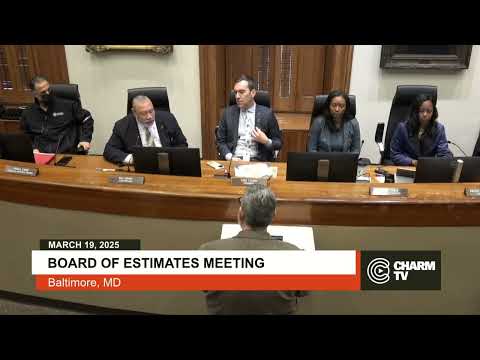
Baltimore's Board of Estimates approved an amendment to the Department of Public Works agreement with Synagro Technologies LLC for continued processing and disposal of biosolids at the Back River Wastewater Treatment Plant, authorizing up to $52,822,800 under the extension structure the department presented.
The Baltimore City Board of Estimates on March 19 approved an amendment to the Department of Public Works agreement with Synagro Technologies LLC that the city described as necessary to continue processing and disposing of solids from the Back River Wastewater Treatment Plant. The amendment as presented carries a maximum notional value of about $52,822,800 under the multi‑year extension structure outlined by DPW.
Mr. Garbark, a DPW representative, described the item as "a $52,800,000 contract extension with Synagro Technologies for processing and disposing of solid organic material at the wastewater treatment plant." He emphasized Back River's scale and role: the plant is designed for 180,000,000 gallons per day and averages roughly 130,000,000 gallons per day, and solids handling is critical to the plant's overall performance.
Michael Hallman, deputy bureau head of water and wastewater, walked the board through the solids management stream and the roles of multiple vendors: Veolia handles the industrial composting portion (about 30 dry tons per day) while Synagro processes roughly 70 dry tons per day, meaning Synagro currently manages about 70% of the plant's solids stream. Hallman noted the plant generates more than 100 dry tons per day on average and that solids removal must continue without interruption so the plant can maintain its high effluent performance.
DPW said the existing Synagro operations contract dates from 1991 and has been amended several times; the current operations contract was about to expire at month'end while a separate lease for Synagro's onsite facility extends through February 19, 2030. The amendment the board approved is structured with a four‑year base and optional extension years to align operations with the lease and to provide flexibility while the city completes an RFP for a next‑generation biosolids removal vendor and evaluates PFAS and other changing regulatory requirements.
DPW officials told the board they have an RFP advertised to seek current technologies and that construction and commissioning of a new facility could take several years; DPW estimated a PFAS‑capable destruction facility could exceed $100 million in capital cost. Officials also said optional contract extension years are intended to avoid costly emergency service contracts if the new facility takes longer than expected to complete.
Board members asked about competitive procurement, performance metrics and the potential to bring functions in house. DPW said a future vendor selection will include technology reviews and metrics and that the present amendment contains minimum tonnage guarantees (the current Synagro contract requires a minimum of 55 dry tons per day). DPW also said vendors currently carry the market and disposal risk for final product distribution.
The board moved to approve the amendment; the item was approved by voice vote on March 19.
Why it matters: Back River is Maryland's largest wastewater treatment facility and its solids management affects plant reliability and Chesapeake Bay nutrient goals. DPW described the amendment as necessary interim capacity while the city pursues a long‑term, updated technology solution.