Get Full Government Meeting Transcripts, Videos, & Alerts Forever!
Get email alerts on the Transportation Safety topic
No spam. Unsubscribe anytime.
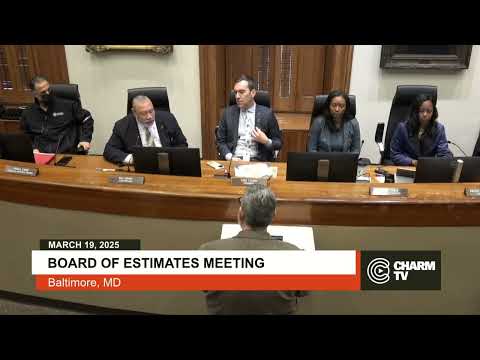
Board affirms emergency procurement for new lane control signals on Hanover Street Bridge after visibility concerns
Summary
The Board of Estimates affirmed an emergency procurement to buy new LED lane control signals for the Hanover Street Bridge, citing diminished signal brightness, near‑miss reports and higher traffic volumes after the Francis Scott Key Bridge collapse. The one‑time purchase is $174,450; delivery is expected in May 2025.
The Baltimore City Board of Estimates on March 19 affirmed a previously approved emergency procurement for new lane control signals on the Hanover Street Bridge, authorizing a one‑time purchase of $174,450.
Hassan Raza, deputy director and chief engineer in the Department of Transportation, told the board the bridge's overhead lane‑use signals were installed in 1986 and have grown "hardly visible," creating unsafe conditions for motorists using the reversible lane. "The brightness of traffic signal has just diminished to an unacceptable level causing unsafe condition for [the] reversible lane," Raza said, and he cited reports of near‑miss head‑on collisions from staff at MedStar Hospital.
Raza said the city expedited purchase through an existing DOT vendor, shortening the procurement timeline by about six months; the signals were ordered in December and are expected to arrive in May 2025. "The new LED signals will arrive in May 2025, and the new lane control signals will provide increased visibility to motorists, thereby preventing potential collision," he said.
City Administrator Faith Leach provided systemwide context: most city traffic signals exceed their 30‑year service life and replacing every such signal would require "hundreds of millions" of dollars; she said a single signal costs about $250,000. Leach and Raza both described limited funding and staffing as constraints that make staggered or targeted purchases necessary.
Board members asked whether better long‑range planning or different funding strategies could avoid repeat emergency procurement. Raza and Leach said the city has an action plan, is prioritizing safety‑critical repairs and is exploring systems and funding to address the broader signal backlog.
The board recorded the emergency procurement as affirmed; the transcript records the item as "noted" by the board after questions and statements.
Why it matters: DOT said the Hanover Street Bridge reversible lane is a high‑risk commuter corridor whose lane control signals had deteriorated to the point of creating near‑miss safety reports. The procurement aims to improve visibility quickly while larger signal system upgrades are planned and funded.
Vote/record: The board affirmed the emergency procurement by voice acknowledgment; no roll‑call vote was recorded in the transcript.