Get Full Government Meeting Transcripts, Videos, & Alerts Forever!
Get email alerts on the Interlocal Ems Agreement topic
No spam. Unsubscribe anytime.
Clark County joint EMS committee agrees to file unsigned 2021 interlocal agreement with DLG, moves to reconcile billing errors
Summary
Clark County and the city agreed on Wednesday to complete and submit a previously unsigned April 2021 interlocal emergency medical services agreement to the Department for Local Government and to work toward reconciling multi-year billing discrepancies uncovered in recent internal reviews.
Clark County and the city agreed on Wednesday to complete and submit a previously unsigned April 2021 interlocal emergency medical services (EMS) agreement to the Department for Local Government and to work toward reconciling multi-year billing discrepancies, county and city officials said.
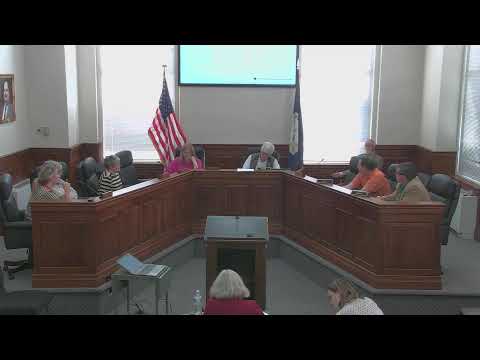
The committee — convened as the Clark County Joint EMS Committee and attended by Judge Yates, Mayor Reed and members of both governing bodies — agreed that the 2021 interlocal EMS agreement should be finalized with an added introductory paragraph explaining why the document was never executed and then submitted to DLG for approval. Committee members said the unsigned 2021 agreement has been used as the operational framework but was never filed with the state, leaving uncertainty about its legal enforceability.
The move matters because county and city staff found several billing discrepancies dating to at least fiscal years 2023 and 2024 that produced competing balances between the two governments. The committee heard staff estimates that the city overbilled the county on 9-1-1 dispatch charges by $94,959.81 in fiscal 2023 and $39,969.12 in fiscal 2024, totaling $134,928.93; staff also said that applying older, unsigned terms could change the allocation and create a countervailing figure of about $196,007.69 in the county’s favor. To avoid protracted claims, presenters recommended treating identified recent errors as a wash and starting fiscal year 2025 with a clean slate once the agreement is signed and filed with DLG.
Committee staff presented quarterly EMS billing figures for fiscal 2025 and said the first-quarter bill totaled $451,932.99, driven in part by front-loaded capital expenditures. The county agreed to pay a $200,000 portion of that first-quarter bill at the meeting; staff reported a remaining outstanding county balance for fiscal year 2025 of roughly $432,725.11 (Alicia, county staff, later provided a slightly different corrected number in committee correspondence). Committee members discussed offsets: the city would issue checks for the 9-1-1 discrepancy and for a hospital revenue-sharing payment, and the county would issue its payment for the EMS billing; staff said the parties would exchange invoices and reconcile the numbers before funds changed hands.
Committee members repeatedly emphasized that both sides bore some responsibility for the paperwork lapses that left the 2021 agreement unsigned and not submitted to DLG. As Bruce (staff presenter) and other officials described it, the 1997 interlocal agreement is the last version with clear DLG approval on file; the 2020 and 2021 drafts were signed locally but were not found in DLG records. Under Kentucky law cited in the meeting (KRS), a multi-government interlocal agreement must be submitted to the state entity specified in statute to be enforceable, staff noted.
Rather than reopen protracted renegotiation of the allocation percentages, several elected officials said they preferred to execute the previously negotiated 39/61 (city/county) split from 2021, file it with DLG with an explanatory front paragraph, and then address ongoing budget and capital concerns through regular reporting. One commissioner said he had no appetite to renegotiate percentages now that years had passed without a signed document; another member said the court could not be expected to accept an unexpected retroactive change that raised the county’s liability by roughly $200,000.
On immediate next steps, staff and officials agreed to: (1) finalize the 2021 agreement text with an introductory paragraph describing the missing execution and forward it to DLG once all signatures are collected; (2) exchange corrected invoices for the identified 9-1-1 billing error and for EMS quarterly charges so treasurers on both sides can net or clear amounts; and (3) aim to settle outstanding FY25 bills and the next quarter’s charges by June 30, if possible, while preserving bookkeeping separation between dispatch (9-1-1) and EMS operating accounts as required by each jurisdiction’s accounting rules.
The committee also scheduled recurring quarterly meetings and set the next meeting for April 30 at 5 p.m. in the commission chambers; the chief agreed to provide a presentation on the state of EMS at that meeting. Committee members approved the March 7 minutes at the start of the session and adjourned following the finance discussion.
Notes on attribution: direct numbers above reflect figures presented to the committee in the meeting by county and city staff (see provenance). Where staff reported corrected or alternate totals in committee materials, the article notes that discrepancy and identifies the staff source when practicable.