Get Full Government Meeting Transcripts, Videos, & Alerts Forever!
Get email alerts on the Board Rules And Procedures topic
No spam. Unsubscribe anytime.
Board of Zoning Appeals reviews comprehensive rewrite of rules, limits councilmembers' advocacy time
Summary
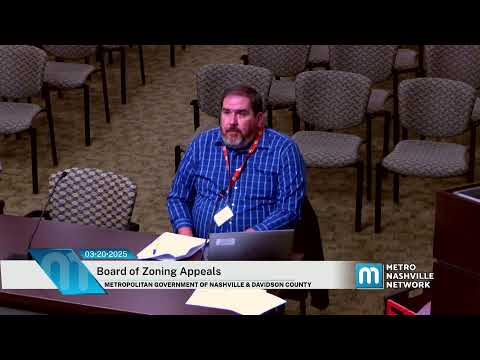
At a Board of Zoning Appeals meeting, staff presented a consolidated rewrite of the board's rules and procedures focused on clearer application requirements, deadlines and conflict-of-interest language. The board voted to require that councilmembers who take a position on an application use the same allotted time as the party they represent.
At a Board of Zoning Appeals meeting, staff and board members reviewed a consolidated rewrite of the board's rules and procedures aimed at correcting typographical errors, reorganizing scattered provisions adopted in 2019 and tightening processes for submissions, notices and conflicts of interest.
The rewrite includes guidance on application packet contents and deadlines, recommendations about when applicants should provide professionally scaled site plans or licensed surveys, clearer notice and neighborhood meeting requirements, and new language on how councilmembers may participate. The board approved a formal limitation on councilmembers' speaking time when they take a position on an application: if a councilmember speaks in support of or opposition to an application, the time they use will be charged to the party they are representing (applicant or opposition). The motion passed with a recorded tally of five yes, one no and one abstention.
Why it matters: the proposed changes aim to reduce repeated continuances and late-filed materials, make hearings more efficient for applicants and neighbors, and address public concerns about fairness when elected officials speak at hearings.
The draft staff presented is largely organizational, consolidating language that staff described as scattered across earlier versions of the rules. "The current rules that we operate on were adopted in 2019," Joey, a zoning staff member, said when introducing the package. Staff said many changes are cleanup and reorganization, but several edits are substantive and reflect lessons from recent cases.
Key changes and discussion
- Application submittal and surveys: Staff proposed clarifying when professional-quality, engineer-scale site plans or licensed boundary/site surveys are encouraged or required. For single-family and daycare-home applicants, staff suggested wording that encourages—but does not mandate—engineer-scale drawings so that homeowners avoid unnecessary expense for minor variances. Board members discussed leaving discretion to the zoning examiner to require more detailed plans where needed to avoid repeated continuances.
- Day-of exhibits and copy requirements: Staff proposed retaining the requirement that parties provide copies of materials for the board and suggested specifying "paper copies" where appropriate to prevent reliance on phones alone. Staff said the prior practice of accepting informal, hand-drawn sketches had produced cases that required resubmission.
- Deadlines for late-filed materials: The draft moves the deadline for opposition/support materials earlier in the week (staff and some board members favored a Tuesday deadline or Wednesday morning delivery) so the board has time to review voluminous submissions. Staff said it will publish clearer timing and work with IT to post materials on the public website.
- Neighborhood meeting and notice rules: The draft reiterates that required neighborhood meetings must be geographically convenient and that sign posting for public hearings must be in place (staff noted signs are required 21 days before hearings). Staff described procedures used when required neighborhood meetings have not been held and noted a past court decision that invalidated a case because a neighborhood meeting had not occurred.
- Conflicts of interest and ex parte contacts: The draft underscores disclosure expectations. "If you're unsure just disclose," said Mr. Pepper, a board member, urging members to state any prior work or connection on the record. Staff reminded members to forward any outside inquiries to staff rather than respond directly when a case is pending to avoid impermissible contacts while appeals or appeals periods remain open.
- Deferred cases and agenda order: Board members discussed how to list deferred cases (old business vs. new business) and proposed a discretionary approach so the board can decide whether a deferred case should be placed near the front of the next agenda (for example, if the board requested the deferral) or after newly filed cases (if the applicant requested the deferral). Staff agreed to add clearer captions on dockets showing whether a matter had a previously opened public hearing and why it was deferred.
- Rehearings and post-hearing process: Staff reiterated that motions to rehear are decided on the filings unless the board specifically allows an additional hearing. Successful rehearings require the moving members to show cause under the standards the board uses.
- Remedies and legal constraints: Staff reminded the board that some timing and filing rules are set by Metro code or state law and are therefore not within the board's power to change unilaterally (for example, statutory limits on refiling and on how long the board has to reach a four-vote decision before a case is deemed denied by operation of law).
Councilmember speaking rule and vote
Board members debated how to handle councilmembers who attend hearings. The approved approach distinguishes neutral, informational appearances from advocacy. Under the rule the board adopted, a councilmember who says they are neutral may speak either at the start of a meeting or when a case is called and their time is not charged. If a councilmember speaks for or against an application, however, the time they use will be charged to the party they represent (applicant or opposition) and is subject to the same time restraints that party would have under the rules (e.g., the typical 10-minute parameter for an opposed case). The board recorded the motion as approved (tally: yes 5, no 1, abstentions 1). Staff said it will draft a redlined rule and return the revised language for a future vote.
Next steps
Staff and counsel will incorporate the board's edits and circulate a redlined draft of the rules for review; the revised rules will be placed on a future meeting agenda for formal action. Staff said it will also publish clearer filing deadlines on the public website and work with IT to make submitted materials more accessible in advance of hearings.
Ending
The board did not take up any new signficant policy beyond the rewrite at this meeting; staff asked members to send any additional edits in writing so they can be incorporated into the redline that will return to the board for final consideration.