Get Full Government Meeting Transcripts, Videos, & Alerts Forever!
Get email alerts on the 911 And Phone Tree topic
No spam. Unsubscribe anytime.
Narberth committee recommends phone-tree fixes and six-month trial of direct police administrative line
Summary
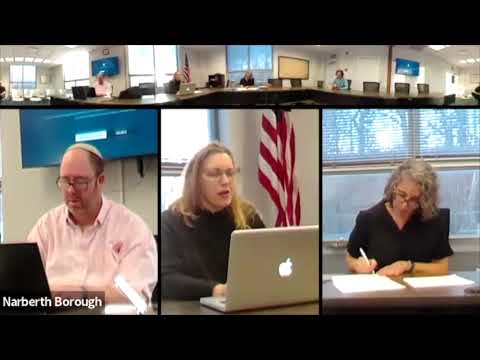
The Narberth Police Advisory Committee voted to ask the Public Health and Safety committee to revise the borough phone tree messaging about 911 and to establish a separate police administrative number on a six‑month trial, after hearing police staff describe gaps in how nonemergency calls are routed and tracked.
The Narberth Police Advisory Committee voted to ask the borough—s Public Health and Safety committee to (1) revise the borough phone tree and voicemail messages so callers are clearly directed on when to call 911 and (2) establish a separate police administrative phone number to be run as a six-month trial.
The recommendation came at the committee—s March meeting after the committee discussed how the current single borough number routes callers to voicemail and how some callers who should reach 911 instead leave messages that are not always returned promptly. Rebecca Starr, chair of the Narberth Police Advisory Committee, moved the recommendation and asked staff to present it to Public Health and Safety.
Committee members said the borough currently has only the general borough phone number (with a police menu option) and a fax line; there is no distinct, widely publicized direct police office number that rings to police administrative staff during business hours. John, a police department representative at the meeting, described recent department upgrades: "we have completed the evidence and then we have an updated evidence and we're able to effectively store things," and said the department is learning a new records-matching system that changed how monthly reports are coded. He and other participants also described the misrouting problem: callers who need to see an officer sometimes reach voicemail or a desk that is not staffed, and "only three or four a month" of calls that should have gone to 911 end up missed in voicemail, per the discussion.
The committee discussed two related problems: public confusion about when to call 911 versus leaving a voicemail at the borough office, and inconsistent voicemail prompts that still instruct callers to call 911 three separate times in the menu. Committee members noted that some residents perceive 911 as a general catch-all and will use it for nonemergency requests, but others avoid 911 for non-flashing-light situations and instead use the borough number, where their message may not be returned promptly. Participants suggested layered messaging (posters at municipal buildings, social media, and event outreach) and clearer menu language that tells callers when to call 911, when to leave a voicemail, and the expected response time for administrative messages.
Rebecca Starr proposed the motion to recommend the two changes. The committee then refined the motion to include implementation of the separate police administrative number on a six-month trial and a proposed voicemail policy stating that administrative voicemail messages would not be returned within 48 hours unless callers request immediate assistance. The motion was seconded and carried; committee members voted in favor during the meeting.
Committee members asked staff to coordinate with borough communications staff (referred to in the meeting as "Maggie") and with 911/county dispatch to clarify what the county—s 911 operation can and cannot handle. Members also discussed linking Narberth—s website to Montgomery County—s live incident page and referenced other jurisdictions— practices (Philadelphia and Montgomery County were mentioned as examples) to identify language and phone-tree designs that differentiate emergency and administrative contacts.
The committee instructed staff to draft recommended language for the phone tree and policy for the six-month trial to present to Public Health and Safety. The motion passed by voice vote.
The meeting also approved the previous meeting minutes earlier in the session.
Going forward, the committee asked that staff report back with proposed phone-tree wording, the cost and technical steps required to obtain a distinct police administrative number, and a six-month evaluation plan to measure whether the separate number changes caller behavior and reduces missed or delayed administrative follow-ups. The committee also asked staff to check Sunshine Act compliance before extensive off‑meeting drafting of FAQ content and to provide 2024 police data in a comparable format to 2023 for a future agenda item.