Citizen Portal

Tempe presents $1.95 billion, five-year capital plan; council gives consensus to raise property-tax cap to speed projects

2739263 ยท March 21, 2025

Get AI-powered insights, summaries, and transcripts

Subscribe
AI-Generated Content: All content on this page was generated by AI to highlight key points from the meeting. For complete details and context, we recommend watching the full video. so we can fix them.

Summary

City staff presented the city manager's initial recommended five-year Capital Improvements Program and acceleration strategies to the Tempe City Council at a March 20 work study session, proposing a $1.95 billion capital program and asking for policy direction to accelerate voter-approved projects.

City staff presented the city manager's initial recommended five-year Capital Improvements Program and acceleration strategies to the Tempe City Council at a March 20 work study session, proposing a $1.95 billion capital program and asking for policy direction to accelerate voter-approved projects.

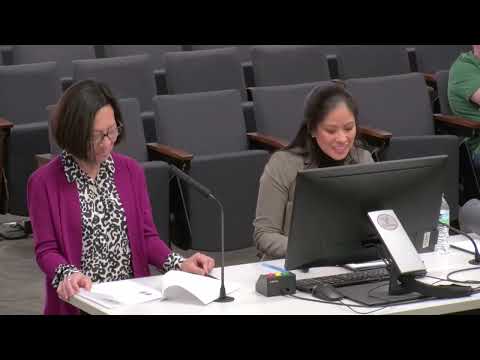
Lisette Camacho, city staff, opened the presentation and emphasized the procedural status: "There are no funding decisions being made tonight." Julie Hyder, interim municipal budget director, reviewed public outreach and funding sources and said the packet includes public-survey results: "We had 592 responses." Wydell Holmes, director of the Strategic Management and Innovation Office, described performance-focused acceleration models, including homelessness prevention and Pavement Quality Index targets.

Why it matters: The recommended CIP aligns projects funded by last November's voter authorization and aims to speed street paving and other community priorities. Staff asked the council for consensus on revising the city's property-tax stabilization policy so Tempe can issue additional general obligation debt to accelerate work already approved by voters.

The recommendation and program structure City staff said the proposed five-year CIP totals $1,950,000,000, essentially consistent with the current adopted five-year program but about a 5.5% increase (roughly $9 million) overall due to adding a fifth year and inflationary adjustments. Major spending categories shown to council include parks and recreation (playgrounds, pool repairs, urban forest), public safety (a new police substation and multiple fire station projects), arts and culture (repairs at Tempe Center for the Arts and the History Museum), transportation (PQI acceleration, parking lot and signal work), transit (multiuse paths and streetscape), storm drains (projects from the Tempe drainage master study), and large enterprise projects (water and sewer replacement and treatment-plant upgrades).

Funding sources and constraints Hyder outlined three main funding categories: enterprise funds (user-fee supported, e.g., water and solid waste), special revenue funds (restricted-use funds such as transit and arts and culture), and general governmental funds (public safety, streets, parks). The presentation noted the city maximized general-obligation bond capacity in response to inflation and that other funding alternatives include federal grants and developer contributions.

Hyder also recommended suspending cash funding for capital projects in the general fund, the transit fund and the arts and culture fund because of a loss of residential rental sales tax revenue. She reminded the council that general-obligation bonds require voter authorization and are repaid with the secondary property tax levy.

Voter authorization and policy change Staff reminded the council that voters approved about $582,000,000 in bond authorization in November 2024 for public safety, roadway improvements, neighborhood quality-of-life projects and affordable housing. Because the November packages included acceleration goals (notably an accelerated paving program to repave all city streets in four years), staff recommended revising Tempe's property-tax stabilization policy (adopted June 2011) to remove the CPI reference and allow an increase of up to 5% in the levy cap so the city can issue additional GO bond debt to accelerate those projects.

Council response and next steps Several councilmembers voiced support. Councilmember Brad Adams said the November results showed strong public backing and that he was "fully in support" of lifting the cap to deliver the projects residents approved. Councilmember Keating also spoke in favor of the recommendations.

Mayor and council confirmed consensus to proceed with the policy revision; staff said a resolution for formal action would be presented at the April 10 regular council meeting. The meeting record contains no formal vote on the policy tonight.

Acceleration strategies and performance measures Wydell Holmes presented the Tempe Accelerates performance framework, which ties CIP acceleration to council priorities from the community survey (quality of life, safe and secure communities, sustainable growth). Holmes outlined measurable targets for multiple performance areas, including ending homelessness (one example target: "reduce our encampment response time from 5 days to 2") and increasing graduates in the Tempe Works job program. Holmes also described operational changes to sustain progress: quarterly reporting, cross-department collaboration and use of predictive indicators to emphasize prevention.

Pavement Quality Index and communications Councilmembers and staff discussed the Pavement Quality Index (PQI) target set after the bond: staff cited a new target of 82 (about 12 points above a 70 industry standard) and multiple councilmembers praised the accelerated timeline. Staff said contracts for paving projects would come forward for approval next week and that the city will post signs and create a digital dashboard to inform neighborhoods and schools about upcoming work. City staff emphasized public communications through TempeToday/TempeThisWeek, project signs, neighborhood notifications and an online map (performance.tempe.gov) that will show project timing and status.

What council directed (and did not) The council gave consensus to revise the property-tax stabilization policy to allow up to a 5% increase and remove the CPI reference; staff will return with a resolution on April 10. There were no funding votes tonight and no ordinance or formal motion was adopted at the meeting.

Ending note City staff concluded by saying the presentation met the charter timing requirement for the city manager's recommended five-year CIP and that further budget review sessions will follow in April and May, with tentative and final adoption in May, June and July.