Get Full Government Meeting Transcripts, Videos, & Alerts Forever!
Get email alerts on the Municipal Finance topic
No spam. Unsubscribe anytime.
Portsmouth audit: unmodified opinion, healthy fund balance; residents press auditors on levy and bond figures
Summary
Auditors gave Portsmouth an unmodified opinion on its fiscal 2024 financial statements at the Feb. 10 council meeting, reporting a $29 million combined fund balance but a government‑wide deficit driven by pension and OPEB liabilities; residents pressed auditors for follow‑up on levy and bond reporting.
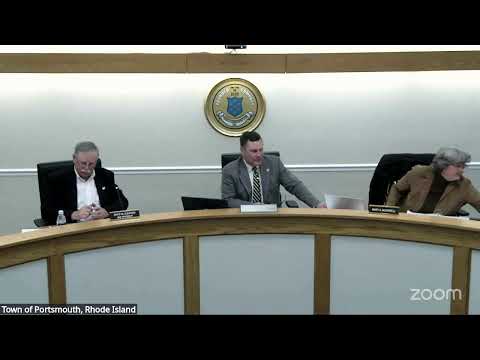
Portsmouth’s independent auditors presented the town’s comprehensive annual financial report for the fiscal year ended June 30, 2024, at the Feb. 10 council meeting and reported unmodified opinions on the financial statements and on internal controls over financial reporting.
Auditor Mary Shahadi told the council the report uses a familiar format and that management is responsible for the statements; the auditors’ role is to opine that the statements “present fairly, in all material respects, the financial position of the town.” She noted the town’s government‑wide net position showed a deficit of about $38.7 million driven primarily by pension and other post‑employment benefit (OPEB) liabilities, while investments in capital assets and restricted net position remained positive.
Key numbers discussed in the presentation: a combined ending fund balance of about $29 million; an unassigned general‑fund balance of $11.4 million (about 15.95% of the 2024 budget); a school unrestricted fund balance of about $1.3 million; pension trust net position of about $71 million; and an OPEB trust net position of about $2.7 million. The transfer station enterprise fund posted most of the business‑type net increase for the year.
During public comment and Q&A, several residents raised detailed accounting questions. Tom Greve (commenter) asked why the property‑tax revenue figure on the financial‑statement summary showed a 4.7% increase over the prior year and whether the actual levy complied with the 4% cap; auditors and staff pointed the council to levy and collection schedules in the report (pages 175–176 and 195) and said prior‑year collections and accruals affect the presentation. Greve also flagged small reconciling differences in bond principal repaid figures between summary and detail pages and asked why bond premium was not added to face value in the bonds table; the auditor and staff agreed to follow up with written responses.
Another speaker asked whether interest during construction for a school bond had been capitalized in a way that might conflict with GASB 89; the auditor agreed to research and respond. Council accepted the audit report and voted 6–0 to “receive and place on file” the audit.
Action: motion to receive and place the audit on file passed 6–0. The auditors reported no material internal control findings and said the required supplementary information (budget‑to‑actual, pension and OPEB schedules) is included in the report.
Councilors and members of the public asked staff and auditors to provide follow‑up clarifications on the levy calculation, bond premium presentation and capitalization of interest during construction.