Get Full Government Meeting Transcripts, Videos, & Alerts Forever!
Get email alerts on the Municipal Finance topic
No spam. Unsubscribe anytime.
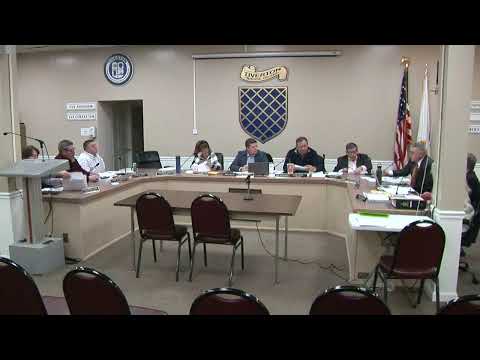
Tiverton council OKs $407,135 in casino funds for school repairs; hears automated trash, zoning and other proposals
Summary
The Tiverton Town Council approved $407,135 from the casino special revenue fund to cover school capital needs and reimbursable costs, voted on several municipal capital items and appointments, extended the town’s pay‑as‑you‑throw bag contract, and heard presentations on automated curbside carts and a broad zoning overhaul.
The Tiverton Town Council on a unanimous vote approved $407,135 in casino special‑revenue funds to cover a package of high‑priority school capital needs and to reimburse previously spent school heating work, while also approving a slate of municipal capital requests and hearing extended presentations on automated curbside carts and a proposed rewrite of the town zoning ordinance.
The vote followed a presentation from school department officials listing eight capital requests, later revised by the council. Councilors approved exterior door replacement, cable/wiring work (with a 50% state reimbursement estimate), turf and field maintenance items, tennis‑court repairs under selected options, boys’ bathroom partition replacement, a roof diagnostic at Tiverton High School, and a $100,000 district heating allocation intended to reimburse prior emergency heating expenses and complete outstanding work. The council removed one $30,000 electrical item from the package before voting.
Why it matters: The council used proceeds from the casino special revenue account, money set aside for capital projects, to address school safety, facility and infrastructure problems the school department said are generating costs and, in some cases, service interruptions. Some line items are partly reimbursable by state programs, which the administration expects to return money to the casino account after projects are completed.
Most important facts - The council authorized a total allocation of $407,135 from the casino special revenue fund for the school and other capital items after trimming certain items. The motion passed unanimously. - The school requests included $133,000 for exterior doors, $20,000 (with 50% reimbursement) for wiring/cabling, $13,000 for athletic field repairs, $97,795 for selected tennis‑court work (options 2, 3 and 4), $35,000 for boys’ bathroom partitions, $8,340 for roof diagnostics at Tiverton High School and a $100,000 district heating allocation to cover prior repairs and further work. The council excluded a $30,000 request for electricity to lower athletic fields. - The council also approved municipal casino‑fund allocations for town IT and furniture: $50,000 to upgrade town hall workstations and network infrastructure, $10,000 for administrator and council‑chamber technology, and $20,000 for new office furniture and chairs; and authorized several RFPs (painting, windows, carpeting) to proceed. - The council instructed the administrator to prepare resolutions and formal language for these allocations; reimbursements from state sources will be returned to the casino account as projects complete.
Council heard two major public presentations that could lead to policy changes. Jim Siminow of MIGA/Mega Disposal, a national waste‑services company, outlined an automated curbside cart proposal that would supply two carts per household (one trash, one recycling), keep weekly collections, and require a minimum contract term (the company asked for five years if its cart and vehicle costs are amortized). Siminow said the vendor’s supplied cost estimate for purchasing carts outright was “just under $800,000,” and that switching some trash carts from 95‑gallon to 65‑gallon could reduce per‑cart cost but would require a community survey to manage resident preferences and spare inventory. The council directed the administration to return to the Feb. 10 meeting with detailed specs, pricing for both purchase and amortized options, and a public‑engagement plan for residents.
The planning board presented a large zoning update and said it will hold a public workshop on Saturday and a council‑level public hearing Feb. 10. The proposed rewrite splits the town’s current single “waterfront” district into Waterfront 1 and Waterfront 2, reduces the number of land‑use categories that remain as special‑use permits (the board said the state’s 2023 change to special‑use permitting requires each special‑use category to have specific, objective criteria), and folds earlier form‑based code language into the main ordinance. The planning board and its legal counsel told the council the changes are intended to make the ordinance less ambiguous and more consistent with state law and the town’s comprehensive plan.
Other actions and outcomes - The council granted a Class C liquor license to Haystack Books LLC d/b/a The Yellow House (3842 Main Road) after a public hearing, subject to meeting all legal, zoning and health department requirements; the council’s motion approved the license “subject to meeting all legal requirements.” - The council approved several appointments and reappointments: Paul Amaral to the North End and Industrial Business Park Advisory Subcommittee; James Walter Forrest to the Library Board of Trustees; reappointment of Frankie Ramos as annual tree warden; and placement of Councilor Janek on the Zoning Revision Committee. Votes on appointments were taken by voice and recorded as approved. - The council extended the existing pay‑as‑you‑throw trash‑bag contract with Waste 0, with a 90‑day termination clause tied to elimination of the uniform bag program; one councilor recorded an abstention on that vote. - The council authorized the interim town administrator to sign a statewide public‑safety CAD/RMS memorandum of understanding and to proceed with other municipal RFPs; it also approved updated ambulance billing rates as recommended by the town’s billing vendor.
What council members and presenters said Jamie French, a resident who spoke during public comment, criticized the timing and legal basis for waterfront rezoning efforts, citing Rhode Island General Law 45‑22.2‑13 (comprehensive planning and land‑use act): “I don't understand how we can be rezoning because we haven't followed… Rhode Island general law 45‑22.2‑13,” she told the council. (Public comments are part of the record.)
Jim Siminow, a representative of the waste‑services company, described the vendor proposal: “The rate that I provided to the town includes the carts, providing two carts, 95‑gallon to every resident, one for trash, one for recycling, keeping the collection services the same as they are now in terms of weekly collection.”
School officials asked the council to fund the heating and other repairs to avoid sending students into poorly heated buildings and to preserve warranties. The administration told the council it anticipates some state reimbursements will be returned to the casino fund after project completion.
What’s next - The planning board has scheduled a public workshop for Saturday and the council will hold a public hearing on the proposed zoning amendments on Feb. 10. Residents are encouraged to review the zoning packet on the town website and bring questions to the planning board workshop. - The administration will return on Feb. 10 with full specifications and pricing on the automated curbside cart proposals and with drafts of the municipal allocation resolutions for formal council action.
Ending note Council members said they wanted thorough public engagement on the trash‑cart proposal and that the forthcoming detailed proposals should include options to purchase carts outright, amortize them into the contract, and handle requests for smaller carts or extra carts for larger households.