Get Full Government Meeting Transcripts, Videos, & Alerts Forever!
Get email alerts on the Budget Revenue topic
No spam. Unsubscribe anytime.
Hopkinton staff warn state reimbursements and pension rate hikes are key budget drivers
Summary
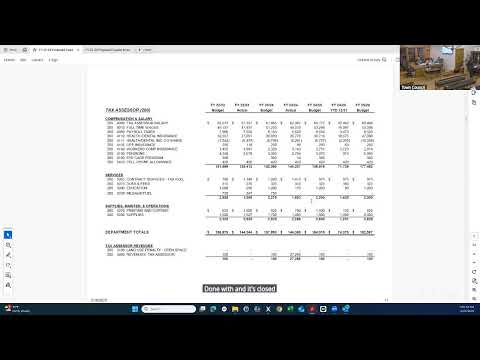
Town staff at a Hopkinton budget workshop reviewed revenue assumptions — including state pass-throughs, a state reimbursement tied to the tangible personal property tax, and delinquent-tax collections — and warned that a state-set pension rate increase and uncertain state aid could affect the FY budget.
Town staff reviewed Hopkinton’s revenue and major cost drivers at a budget workshop, highlighting state pass-throughs, a state reimbursement for the frozen tangible personal property tax and a rising pension rate set by the state.
Town Manager Brian (town manager) and Liz (finance staff) told the council the town administers a number of pass-through items, including COBRA and state library aid, and that those pass-throughs are budgeted at net zero because beneficiaries pay the full cost. Liz said, "they 100% of their cost, so the expense in the revenue over time are net 0," describing the administration of former-employee benefits and similar agreements with neighboring fire districts.
Why it matters: staff said three items are among the most uncertain for the operating budget. First, state-provided revenues such as public service corporation tax, hotel excise and other state-aid figures are projections from the governor’s office and have changed after budgets were set in prior years. Second, the town is receiving a state reimbursement tied to the phaseout/freeze of the tangible personal property tax; staff identified that payment in the budget at about $189,000. Third, the state-set pension rate for municipal employees is increasing, which will raise retirement costs across departments.
Revenue and collection notes Town staff said delinquent (prior-year) tax collections have declined because recent collection efforts and tax sales recovered many past-due balances. The town’s tax collector has improved collections, "we were kind of a victim of our own success," Brian said, and the administration cautioned against budgeting a higher collection rate than historical experience supports.
Investments and restricted funds Liz said the town moved larger cash balances into higher-yield savings accounts to capture recent interest-rate gains, and that restricted accounts (for example ARPA/CLIN funds) are held separately and not counted in operating interest revenue. The town also maintains a restricted legal-fee account; staff gave a balance of about $24,000 for that fund.
Lease and utility items Council members asked about several facility leases and utilities. Staff said the town’s lease with the post office contains an escalation clause and is approaching an option year that will require renegotiation; the current expiration was described as coming up in the next year or two. Staff also noted ongoing savings from the earlier LED streetlight conversion and said remaining debt service on that conversion will end soon, producing further savings.
What’s next Staff recommended holding conservative assumptions for collection rates and state-aid projections until more definitive state reports and local collection trends are available. No formal votes were taken during the workshop portion covered in the transcript.