Get Full Government Meeting Transcripts, Videos, & Alerts Forever!
Get email alerts on the Finance And Budget topic
No spam. Unsubscribe anytime.
Finance committee reviews food‑service review, contracts and multi‑year budget timeline; medical costs flagged
Summary
The Wallingford‑Swarthmore finance committee on March 19 reviewed a range of business‑office items including a favorable administrative review of the National School Lunch Program, planned purchases using excess food‑service funds, several vendor contracts for technology and services, and the district’s multi‑phase budget calendar.
The Wallingford‑Swarthmore finance committee on March 19 reviewed a range of business‑office items including a favorable administrative review of the National School Lunch Program, planned purchases using excess food‑service funds, several vendor contracts for technology and services, and the district’s multi‑phase budget calendar. Staff also briefed members on recent insurance and medical‑benefit trends.
Why it matters: The business‑office items include mandated program compliance, procurement decisions that affect recurring operating costs, and multi‑year budget planning that will inform tax and borrowing decisions in the coming months.
National School Lunch Program review: The district underwent an on‑site review of the National School Lunch Program on Feb. 25. Scott Steinmet (the on‑site reviewer) observed meal service and requested backup documentation. The business office reported the district was not found to be a high risk and was compliant in most areas; two documentation items — an updated nondiscrimination statement — required correction and were addressed before the committee meeting. The reviewer has 21 days to provide a formal write‑up and the district will have 30 days to respond to any additional findings.
Unclaimed/unpaid checks process: The business office told the committee it will start an annual process for outstanding accounts payable and payroll checks older than three years and will submit unclaimed property files as required by state rules. Checks under $50 will be sent automatically to the state unclaimed‑property program; staff will send due‑diligence letters to payees for larger outstanding checks and track responses.
Food‑service equipment and excess funds: The district may use excess funds in its food‑service account to buy kitchen equipment. Staff reported about $140,000 in excess funds after planned purchases; a high‑school dishwasher and other equipment are scheduled for installation during spring break and vendors will perform walkthroughs to finalize remaining specifications.
Contract slate and procurement highlights: Administration presented nine contracts for the March board agenda. Notable items include TriNet Communications (a proposed radio upgrade to replace an aging analog system and improve coverage and emergency communications) and Eagle Wireless (a GPS/telemetry replacement for Synovia on the bus fleet; staff said Synovia costs about $10,800 per year and staff currently budget an upfront fee near $5,500). PowerSchool Time Clock (TimeClockPlus) was described as a replacement for manual paper timesheets to streamline payroll and approvals. Other contracts on the list include a speaker engagement (Bennington), DJ/entertainment for a school dance (JMW Entertainment Group), SOS staffing for temporary clerical/custodial help, a contract amendment for a curriculum consultant (CRIS), copier service renewal (Riggo) and an integration enhancement for PowerSchool HR workflows.
Budget process and multi‑year planning: Staff reported that phase 3 (routine budget requests) totals were roughly $4.8 million this year and that the district is moving to a multi‑year budget cycle so more costs are known in advance. The committee was given a calendar: an April committee presentation of estimated preliminary budgets, a May committee and board presentation of the proposed final budget, and a June meeting to adopt the final budget. Staff said they will present personnel (phase 4) submissions in April and aim to have firmer figures for May.
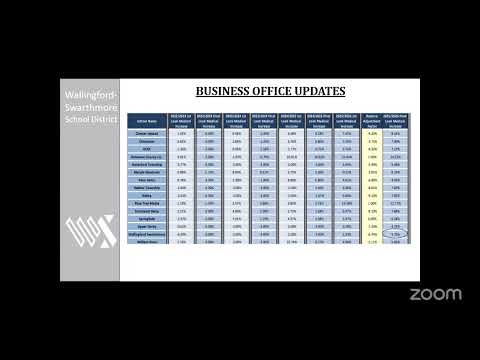
Insurance and medical costs: The business office said the district’s medical trend is now being modeled at 5.76% for budgeting; staff explained that COVID‑era claims and timing of reserve use affected reported year‑to‑year changes. The district’s participation in a regional trust and existing reserves helped moderate immediate impact on the budget, though staff said medical costs should remain under review.
Time‑clock system: Administration said the new automated time‑clock system will allow employees to clock via phone or fixed terminals, add geo‑fencing (location verification), and integrate with payroll and eFinance. Staff said teachers’ base daily schedules will not require clocking but extra work (coverage, summer assignments, substitutes) will move from paper timesheets to the electronic system and reduce manual payroll inputs.
Ending: Committee members asked follow‑up questions about contract categories, the timeline for vendor rollouts and the budget calendar. The committee will present a recommended preliminary budget in April and return in May for the proposed final budget; several contracts presented at the committee will be on the March board meeting consent agenda for approval.