
Ossining staff seek more ELL and dual‑language staff, Spanish content in middle school as program grows
Get AI-powered insights, summaries, and transcripts
Subscribe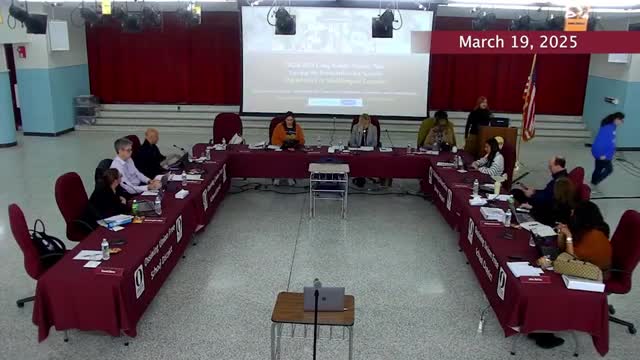
Summary
District staff told the board that the multilingual learner population and dual‑language program have expanded and asked for new ELL teachers, Spanish AIS positions and a sixth‑grade Spanish social‑studies course to support bilingual learners and compliance with NYS regulations.
Nancy, a district multilingual‑learner staff presenter, gave the Board of Education an update on English learners, the dual‑language immersion program and world‑language courses on March 19, reporting that the district’s multilingual programs now serve roughly 1,100 students and describing several staffing and program requests for the 2025–26 budget year.
Nancy said the district has seen net increases in English learner enrollment in recent years and that many incoming kindergarten students enter at the “entering” proficiency level. The multilingual‑learner department asked the board to fund three additional ELL teacher full‑time equivalents to meet minutes‑of‑service requirements under state guidance, add Spanish AIS (academic intervention services) teachers at Brookside and Claremont and expand dual‑language sections so cohorts that started in kindergarten can continue to advance.
The presentation stressed compliance with New York State regulations for bilingual education (CR Part 154) and said dual‑language students should continue to receive content instruction in the home language at the middle‑school level. The department proposed adding a Spanish‑taught social‑studies course in grade 6 so dual‑language students receive both literacy and content instruction in Spanish as they transition to secondary school — a change the presenter described as aligned with state bilingual‑education mandates and with goals to increase biliteracy and the seal of biliteracy pipeline.
Staff highlighted program features and supports already in place: translanguaging professional development for teachers, a morning writing program (selected buildings hold 8:00 a.m. sessions), and extended‑day academic opportunities drawn from Title 3 funds while those grants remain available. Nancy said the morning extra‑help programs currently enroll about 85 students across three elementary buildings and that Claremont hosts an early‑morning writing group as a targeted intervention.
Trustees pressed for details about program balance and operational constraints. Board members asked whether students can enter dual language after first grade and about language variety in instruction; presenters said seats have been scarce, transfers from other dual programs are accommodated when possible, and teachers intentionally acknowledge regional Spanish varieties in classroom instruction rather than teaching a single national dialect. Trustees also asked about services for students who are dually identified (English learners with Individualized Education Programs); Nancy said 99.5% of dually identified elementary students receive their prescribed ELL minutes but that middle and high school scheduling can make full minute compliance harder without additional staff.
Specific budget requests Nancy tied to the program update included: three additional ELL teachers (elementary and high‑school staffing), Spanish AIS teachers for Brookside and Claremont, two additional dual‑language sections to maintain cohort continuity as classes move up, a grade‑6 Spanish social‑studies content course, and funds for curriculum development and expanded professional development. The presenter also noted success indicators — the district was cited as a “bright spot” for dual language and has hosted regional visits — and asked the board to consider the staffing and program additions as the administration finalizes the superintendent’s budget.