Get Full Government Meeting Transcripts, Videos, & Alerts Forever!
Get email alerts on the Worksite Wellness topic
No spam. Unsubscribe anytime.
Norwood distributes pedometers to employees, launches walking challenge funded by health grants
Summary
Norwood health officials handed out 225 pedometers to city employees and launched a walking challenge funded by a $3,500 cardiovascular grant and an American Cancer Society community investment grant.
NORWOOD, Ohio — Norwood health officials handed out 225 pedometers to city employees and launched a walking challenge after securing grant funds to pilot an employee and school wellness program.
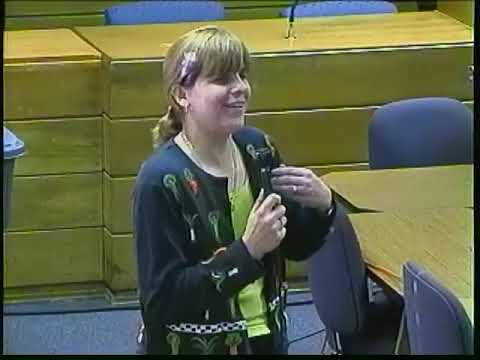
Donna, a Norwood health department staff member, told attendees the city used $3,500 from a cardiovascular heart disease grant to buy pedometers and combined that money with a community investment grant from the American Cancer Society to fund food and program support. “We took the $3,500 that we got from the grant, and I shouldn’t say this in front of Jack and financial people, but I squirreled it away in one of our little restricted accounts, so the city couldn't take it,” Donna said.
The program has been piloted in Norwood schools and now includes city employees in a campus and worksite challenge that runs at least through September, health staff said. Employees received pedometer packets with calendars to record daily steps; staff will collect monthly calendars and report results to the grantors. Attendees were told the program will track monthly participation and award small incentives to employees who return calendars.
Nutrition educator Lauren Nemas of the Nutrition Council explained how to use the pedometers and how diet relates to chronic disease risk. “That is one simple thing that can reduce your risk for most cancers by 30 to 40 percent if you can get up to five servings of fruits and vegetables a day,” Nemas said. She demonstrated a quick fruit smoothie provided at the event and described a trail-mix snack made from whole-grain cereals and dried fruit that organizers distributed.
Nemas gave practical instructions for accurate pedometer use: clip the device horizontal at the hip, not in a pocket; reset the display nightly; and use the safety strap. She said the pedometer brand used in the program has been tested in research for accuracy, and reiterated that 10,000 steps approximates 30 minutes of moderate activity. She noted that stride length affects step counts, with roughly 2,000–2,500 steps per mile depending on the walker’s stride.
Annette Bell of Mercy Connections, working with the Cardiovascular Health Coalition, handled sign-up forms, liability waivers and the monthly calendar collection process. Bell asked participants to complete a pre-survey of awareness on heart attack and stroke signs and to return calendars to the Norwood City Health Department at the end of each month.
State Senator Schaffrath and Gary Parks of the Ohio Department of Health gave a presentation on the Healthy Ohioans Small Steps/Big Strides initiative, emphasizing physical activity, improved nutrition and tobacco prevention. Schaffrath cited statewide statistics about tobacco use, overweight and obesity and urged community and school participation in daily physical activity. “Small steps are gonna lead to big strides,” Schaffrath said.
Program organizers described other visible elements of the initiative: city workers and volunteers painted red footprint stencils to mark one-mile walking routes around schools and city buildings, and the schools will run a parallel steps challenge to compare average steps by site. Staff said the red footprints were painted in red specifically to avoid conflicts with buried utility markings.
Organizers asked employees to record daily steps on calendars provided in their packets and to return those calendars monthly; staff will retain the pedometers while participants keep their submitted calendars. The event closed with a short walk led by organizers and state guests.
Why it matters: Norwood’s program pairs small, measurable activity goals with nutrition education and monthly reporting to grantors. The effort links school and municipal participation and creates a route-marking and incentive system intended to encourage sustained activity across workplaces and neighborhoods.
What’s next: Staff will collect monthly calendars for reporting to grantors, continue the employee and school challenges and provide incentives for participants who submit calendars.