Get Full Government Meeting Transcripts, Videos, & Alerts Forever!
Get email alerts on the Parking Requirements topic
No spam. Unsubscribe anytime.
Council debate grows over proposal to waive parking for small conversions; sponsors, colleagues ask for more public review
Summary
Councilman Ryan Dorsey proposed an amendment to eliminate off‑street parking requirements for up to three dwellings (and scale parking by unit count) to streamline small conversions and infill housing; several council members said the change is significant and requested broader public notice and a narrower scope limited to conversions.
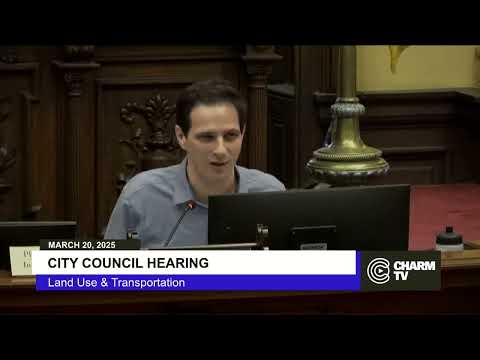
Councilman Ryan Dorsey introduced an amendment during the Land Use and Transportation Committee hearing that would exempt up to three dwelling units from the city’s off‑street parking requirement, a change intended to speed small multifamily conversions and infill housing.
"When you're creating housing, the first 3 dwellings or up to 3 dwellings require no off‑street parking," Dorsey said, explaining the change would also scale required parking for larger projects (for example, a 10‑unit project would need seven spaces under the proposed scheme).
Supporters’ rationale
Proponents, including Dorsey and Councilman Zach Blanchard, said the exemption responds to a repetitive procedural obstacle: conditional‑use conversions routinely require a parking variance and these variances are typically granted, but the process can delay rehabs. Blanchard said expediting conversions "can add up over time and are meaningful" for addressing vacant housing by reducing months of delay.
Colleagues raise process and neighborhood impact concerns
Multiple council members asked for more time and broader community input before adopting a citywide change. Councilwoman Felicia Porter said some neighborhoods already struggle with parking supply and asked how the amendment would reconcile with local conditions. Councilman Mark Parker and others urged that the proposal was large enough to require a separate, robust conversation with affected communities.
"I would suggest that that is, a significant enough change to how our communities operate, that it's worthy of a full and robust conversation," Parker said.
Chair Dorsey signaled openness to narrowing the amendment — for example, limiting the exemption to residential conversions rather than applying citywide to new construction — and asked for revised written language before the next session. The committee did not adopt the change at the hearing and held the bill for one week for redrafting and outreach.
Ending
Sponsors said they are willing to consider a narrower carve‑out limited to conversions. Committee members asked for written amendments and more time to solicit public comment before the scheduled March 27 voting session.