Get Full Government Meeting Transcripts, Videos, & Alerts Forever!
Get email alerts on the Dpw Solid Waste Safety Pay topic
No spam. Unsubscribe anytime.
Baltimore council holds oversight hearing after IG finds deadly safety culture at DPW solid waste bureau
Summary
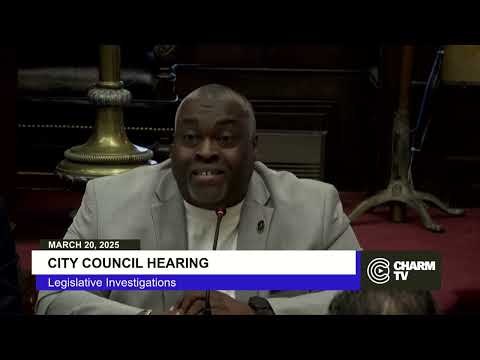
Baltimore City Council held an investigative hearing into the Bureau of Solid Waste on Oct. 12, 2025, after the Office of the Inspector General released a multi‑part inquiry finding persistent safety and management failures in the Department of Public Works (DPW).
Baltimore City Council held an investigative hearing into the Bureau of Solid Waste on Oct. 12, 2025, after the Office of the Inspector General released a multi‑part inquiry finding persistent safety and management failures in the Department of Public Works (DPW).
The inspector general told the council the office’s investigation found a “toxic work culture” and longstanding operational shortfalls that contributed to six worker deaths and 1,627 reported injuries between 2019 and 2024, and recommended pay, training and safety changes. The DPW director described steps the agency is taking — including new standard operating procedures for heat and incident response, fleet upgrades and a proposed pay increase to be negotiated with unions — while union leaders and rank‑and‑file workers pressed for faster bargaining and larger wage gains.
Why it matters: Solid waste crews perform services at every household in Baltimore. Council members and the inspector general said improving worker safety and pay is both a labor and a public‑health concern because injury rates and personnel shortages affect route reliability.
The inspector general, Isabelle Mercedes, told the council her office conducted an eight‑month inquiry that included undercover observation and interviews with more than 30 employees. “The DPW that the Office of the Inspector General encountered earlier this year is not the DPW of today … However, the DPW of June of ’24, first reported by the OIG, is the same as the DPW reported by the Office of the Inspector General in December 2019,” Mercedes said. The IG said the office documented broken HVACs, inoperable fixtures, methane leaks, inadequate training and a culture in which workers feared retaliation for reporting safety concerns.
Deputy inspector general Matthew Neal walked the council through injury data from 2024: of 293 injuries recorded that year, 154 originated at Bowleys Lane and Cherry Hill facilities; the most common diagnoses included 41 sprains/strains/tears, 19 cuts or lacerations, 18 contusions, 17 inflammations and 11 heat illnesses. The IG’s presentation also cited a roughly $15 million total in workers’ compensation payouts tied to the bureau from 2019–2024.
Director Khalil Zaid acknowledged the bureau “is in much better place right now than I would say a year ago,” and described a five‑cornerstone plan — standard operating procedures, training, fleet and infrastructure, management and leadership, and culture — to address the IG’s findings. Zaid told the council DPW has developed SOPs including an accident/incident notification SOP and a heat‑illness prevention plan; he said the department will operate only trucks with functioning air conditioning, will purchase 800 MHz radios for load‑backers, and has temporarily installed trailers to provide bathrooms and locker rooms while repairs proceed.
Zaid outlined near‑term capital figures the administration plans to invest in facilities and fleet: roughly $29 million for phase 1 and 2 work at Bowleys Lane, $10–12 million at Reed/Redbird (as presented), and $48 million for King Street improvements; he said much of the vehicle replacement has already lowered average fleet age to about four years. He also said the administration will include a pay increase for solid waste workers in the FY26 budget, but the specific amount and scale are subject to collective bargaining.
Union leaders said major issues remain unresolved at the bargaining table. Patrick Moran, president of AFSCME Maryland Council 3, said his local repeatedly has requested higher base pay and increases to the 15‑cent hourly hazard differential that has remained unchanged for decades. “At every single bargaining table, in every single instance, we ask for increases in hazard pay, increases in base pay — only to be told no by the city,” Moran said. AFT/CUB representatives echoed demands for negotiated heat‑policy language, supervisor and driver training and binding remedies when bargaining stalls.
Workers who testified at the hearing described dangerous routes, harassment by supervisors, and pay they said is insufficient for the risks of the job. “We need our money,” said Clarence Thomas, a sanitation worker who described years on the route and raised concerns about retirement and family finances. Several current employees also alleged that union representatives were not consistently supporting rank‑and‑file workers; those claims were presented as worker assertions and were not independently adjudicated at the hearing.
Council members pressed the administration for timelines and data. Council President Adrienne Cohen (first reference uses full name and role) asked whether the bureau is “a safe place to work today.” Zaid and the IG agreed that while progress has been made, the bureau is not yet where it needs to be. The IG and DPW officials provided the council with operational metrics cited in the investigation: Baltimore routes average about 1,166 stops (the IG noted an industry standard of roughly 950 stops), and the report said 134 workers initially lacked city health insurance or the $2,500 waiver option (after OIG outreach that number fell to 36).
Commitments and next steps identified at the hearing - Heat policy: DPW said it will continue negotiating a heat‑illness prevention SOP with unions; Zaid said the department expects to finalize the SOP with union input within about 2–4 weeks and to hold mandatory heat illness training in April. - Pay: Director Zaid and the administration said the FY26 budget will include a salary increase proposal for solid waste workers; the amount will be finalized through collective bargaining and DHR processes. The administration described the goal of completing negotiations before FY26 budget adoption. - Training and supervision: DPW said it has delivered dozens of trainings since June 2024 and is launching management/leadership training and a leadership pathway in partnership with DHR; both the IG and council members emphasized training must be practical and teachable at crew level. - Fleet and facilities: DPW committed to placing only AC‑equipped trucks in service, installing temporary site trailers, completing facility rebuilds at Bowleys Lane and other yards, and procuring radios and charging infrastructure for load‑backers. - Data requests and oversight: Council members asked for detailed injury and hospitalization records, a calendar of meetings with unions in 2023–24 and route/facility studies; they signaled follow‑up hearings and committee data requests.
What the hearing did not produce: The session produced no formal council votes or ordinance adoptions. The items above are department commitments, pending formal negotiation and follow‑up oversight.
Context and constraints: Labor bargaining for city employees is handled by the city’s Office of the Labor Commissioner; DPW officials said bargaining timelines depend on that office and the union calendars. The IG noted that some matters involving labor or union finances fell outside the OIG’s jurisdiction and were referred to other agencies.
Ending: Council members and labor leaders said they will monitor implementation closely. The council indicated it will return to the topic for oversight and requested records that will allow it to verify whether DPW follows through on training, heat protections, equipment and pay commitments.