
Tennessee appellate panel hears arguments in Thomas Arnold appeal over premeditation, prosecutor’s closing remarks
Get AI-powered insights, summaries, and transcripts
Subscribe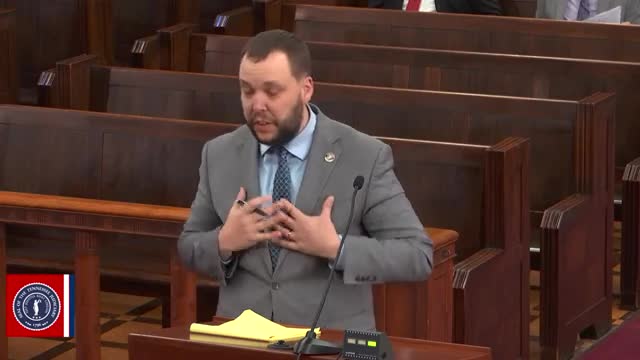
Summary
Attorneys argued before an appellate panel over whether evidence supported a first-degree murder conviction of Thomas Mac Arnold and whether the prosecutor mischaracterized the defendant's words in closing argument; the panel heard competing accounts but issued no ruling at oral argument.
An appellate panel in Tennessee heard oral arguments in the appeal of Thomas Mac Arnold, who was convicted of first-degree murder for a shooting that the parties say occurred Sept. 27, 2020, at a residence near the Bledsoe County line in Cumberland County.
Appellate counsel Joe White, representing Arnold, told the panel the central question is whether the trial evidence supported a finding of premeditation and whether a prosecutor’s closing remark—characterizing the defendant as saying “I shot him”—amounted to prosecutorial misconduct that deprived Arnold of due process. White said the record shows conflicting witness accounts about whether the shooter wore a mask, whether a weapon was procured by Arnold, and whether a shotgun was present; he argued the jury’s verdict was “unreasonable and irrational” in light of those conflicts.
White pointed to factual disputes and testimonial gaps that, he said, undercut the State’s case for premeditation. He emphasized that exterior witnesses testified they saw Arnold arrive with a backpack, walk to the back of the house at 25 Christian Road and then leave after a single gunshot, while interior witnesses described a masked person firing a shotgun. White told the panel that only one witness identified a weapon on the victim before the shooting and that the shotgun itself was not recovered. He said the chaotic nature of the event and contradictions among witnesses made the procurement-of-weapon inference unreliable.
White also argued the prosecutor mischaracterized statements Arnold made during a traffic stop in Georgia. According to White, a Georgia officer relayed at trial that Arnold said, essentially, that he had gone to confront the victim, that the victim “pulled a knife,” and that Arnold invoked self-defense; White said Arnold never said “I shot him” and that the prosecutor’s phrasing improperly supplanted words into the defendant’s mouth. White noted trial counsel objected at closing and the trial judge gave a curative instruction, but he argued the instruction did not cure the harm and that the misstatement infected the trial with unfairness given the life sentence at stake.
Assistant State Attorney Garrett Ward told the panel the conviction should be affirmed. Ward said the sufficiency claim on appeal is limited to premeditation and that circumstantial evidence—including a series of text messages exchanged shortly before the shooting in which Arnold’s wife asked her son to contact Arnold and Arnold responded that he was on his way and “I love you” and “I’m bringing my slingshot”—supported a rational finding of premeditation. Ward described exterior eyewitness testimony that placed Arnold at the house carrying a backpack, interior witnesses who saw a man with a shotgun but with his face covered, and forensic evidence consistent with a shotgun wound. Ward noted the actual weapon was not found but said the wound, wadding, and wall damage supported shotgun use.
On the misconduct claim, Ward said the jury had access to the dash-cam video of the Georgia traffic stop and to the Georgia officer’s testimony; he argued those exhibits showed Arnold telling officers he went to confront the victim, that the victim “pulled a knife,” and that Arnold claimed self-defense. Ward said the prosecutor’s closing line—recounted in the record as “I shot him, I shot him in self-defense”—was close in spirit to what the jury saw on video and that the trial judge’s immediate curative instruction, plus a self-defense jury instruction given at trial, cured any minor misstatement. Ward also noted trial counsel did not request additional relief such as a mistrial.
Judges on the panel asked questions about which Reynolds premeditation factors were present, whether the shotgun was recovered, and whether the defendant’s invocation of self-defense had been formally instructed to the jury at trial. The judges also probed whether the prosecutor’s remark, viewed against the video and the court’s curative instruction, was prejudicial enough to require reversal.
The arguments closed without an immediate ruling from the panel. The court did not announce a decision at the hearing; the panel will take the matter under advisement and issue a written opinion at a later date.