Get Full Government Meeting Transcripts, Videos, & Alerts Forever!
Get email alerts on the District Budget topic
No spam. Unsubscribe anytime.
Bethlehem Central presents $116.6M 2025–26 budget proposal; recommends $715,000 fund‑balance use to close gap
Summary
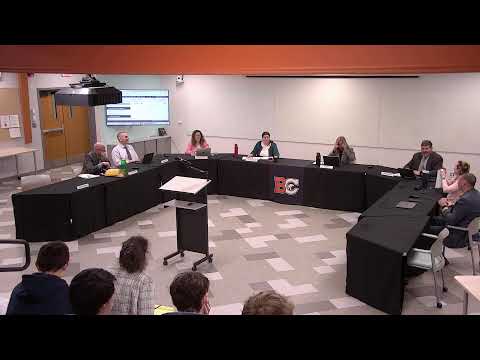
John McPhillips, district business official, presented an updated 2025–26 budget to the Bethlehem Central School District Board of Education on March 19 and outlined proposals to close a remaining structural gap.
John McPhillips, district business official, presented an updated 2025–26 budget to the Bethlehem Central School District Board of Education on March 19 and outlined proposals to close a remaining structural gap.
McPhillips said the adjusted proposed operating budget that would be presented to voters is about $116,600,000. After additions and reductions presented across departments, the remaining gap for 2025–26 stood at roughly $1,300,000 (about 2.3 percent of the budget). To balance the 2025–26 budget without exceeding the tax‑levy cap, McPhillips proposed using roughly $715,000 of the district’s undesignated fund balance and highlighted an unexpected $610,000 in revenue from a PSEG pilot program that reduced the immediate pressure on the levy.
He told the board that the district can increase the tax levy by $820,000 (about 1.12 percent) under the tax‑cap calculation included in the plan; the staff recommendation is to use the full allowable levy increase and cover the remaining gap with fund balance.
McPhillips summarized programmatic additions and reductions that produced the current numbers: transportation recommendations from Ellen Dorado, director of transportation, included eliminating five driver positions and three attendant positions (vacancies) for roughly $490,000 in savings; instructional reductions tied to retirements produced roughly $217,000 in reductions; other departmental adjustments and a proposed $475,000 replenishment of capital reserves (matched by expected state building aid) were among the items that changed the gap. He also proposed a $210,000 increase in the transfer to the food service fund based on the food service director’s presentation.
On revenues, McPhillips showed a modest increase in state aid included in the executive budget proposal and noted that a $1,269,000 universal pre‑K allocation was not included in the state aid chart. He advised that pilot payments and state aid remain variable and that the GB2 pilot extension negotiated with the Bethlehem IDA earlier this year contributes approximately $3,500,000 in revenue in the current budget assumptions; ongoing negotiations may change future amounts.
McPhillips reviewed reserve balances and the district’s fund structure. As of June 2024 the district’s undesignated fund balance was roughly $4.5 million, which is at the four percent threshold allowed under the Real Property Tax Law for school districts. He summarized other reserves, including employee benefits, retirement reserves and capital reserves; the 2022 capital reserve had about $14.3 million available and a statutory $20 million cap.
McPhillips described two ballot propositions the board is expected to place before voters if it adopts the plan on April 2: a bus acquisition proposition for up to $814,770 (three large diesel buses and three small gasoline buses) and the establishment of a $30,000,000 capital reserve to fund future projects. He reviewed the public schedule: the board will consider ballot language on April 2, hold a public hearing May 7, a candidates night May 14 and the district vote on May 20.
Board members asked detailed questions about the use of fund balance, the multi‑year projections that showed ongoing fund‑balance draws in out years, how reserves are replenished and whether relying on one‑time revenue to close structural gaps is prudent. McPhillips and other staff described the district’s multi‑year projections, the timing and mechanics of real property assessment and equalization rate effects on tax rates in the towns of Bethlehem and New Scotland, and the importance of managing the budget through the year to reduce projected draws on reserves.
McPhillips recommended the board consider the proposed budget and ballot items at the April 2 meeting and noted staff would continue to monitor revenues and expenditures closely before fiscal close and during the 2025–26 year.
No formal vote on the 2025–26 budget occurred at this meeting; the presentation set the schedule for adoption and the public hearing process.