Get Full Government Meeting Transcripts, Videos, & Alerts Forever!
Get email alerts on the Vacant Property topic
No spam. Unsubscribe anytime.
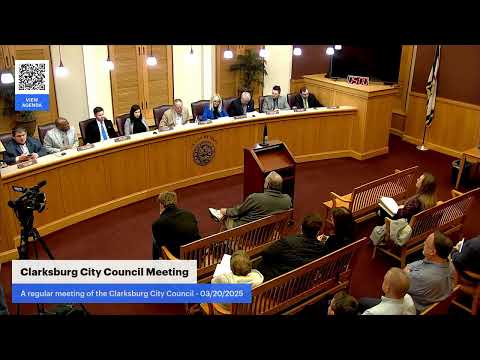
Clarksburg council approves higher vacant-property penalties, expands authority to add properties
Summary
The Clarksburg City Council voted to adopt amendments to the city's vacant building registration program, raising fees and clarifying who can place properties on the registry. Council members debated enforcement, appeals and the city's backlog of demolition properties before approving the ordinance.
The Clarksburg City Council voted to adopt amendments to the city's vacant building registration program that increase daily penalties for properties that remain on the registry beyond 12 months and grant city officials clearer authority to place properties on the list.
The changes amend the vacant-building registration code (cited in the meeting as sections 17 30.02 and 17 30.07). Council discussion focused on enforcement, the size of the city's demolition backlog, and options for owners who say they are trying to sell or redevelop properties. The council approved the ordinance in a recorded vote.
Why it matters: Council members and staff said the fee increases are designed as an incentive to prompt owners to repair, sell or otherwise remove dangerous vacant buildings from the city inventory, not to generate revenue for the general fund. Several council members warned the new penalties could become liens and make properties harder to sell; others said stronger penalties are needed to address persistent public-safety and fire risks from derelict structures.
What the ordinance changes: The version considered by council adds enforcement clarity and raises fees charged to owners while a building remains on the vacant-property registry. Under the fee schedule discussed at the meeting, the ordinance imposes an additional $20 fee for each consecutive day a vacant structure remains on the registry beyond 12 consecutive months; one council member calculated that rate would amount to roughly $7,300 a year for a single property if the daily penalty continued for the full year. The ordinance text also references an appeals mechanism (noted in the transcript as 17 30.08).
Council debate and practical concerns: Council members repeatedly asked how the registry is enforced, whether the fee schedule would actually get buildings rehabilitated, and how cases where owners are actively trying to sell would be treated. Staff said the city can put a lien on a property that does not resolve the vacancy, and noted other options including land-bank transfer and demolition where warranted. Council members raised the city's backlog of demolition projects (the transcript cites about 70 properties on the demolition list) and asked staff for more data about how other municipalities measure the program's success.
Appeals and process questions: Several council members requested clearer written appeal steps and staff follow-up. The council referenced the existing appeals provision in the code (identified in the meeting as 17 30.08) and discussed the related demolition-appeal timeline; staff said after local appeals are exhausted circuit court is the next recourse for owners challenging demolition actions.
Vote and next steps: The ordinance passed (vote recorded in the meeting transcript; roll-call names and votes are recorded in the meeting minutes). Council members asked staff to provide a list of properties that will be placed or remain on the vacant-property registry under the updated rules and suggested a future work session to review implementation details and the effect on the city's demolition program.
Council members and staff emphasized that the ordinance is intended to be one element of a broader strategy that includes demolition, liens, land-bank options and outreach to owners.
The council directed staff to follow up with additional information on current registry listings, recent collections under the program and examples from other West Virginia municipalities that have increased fees for vacant properties.