Get Full Government Meeting Transcripts, Videos, & Alerts Forever!
Get email alerts on the Micromobility topic
No spam. Unsubscribe anytime.
Carmel committee opens study of micromobility, weighing golf carts, e-bikes and trail safety
Summary
The Land Use and Special Studies Committee formally introduced a study of micromobility devices — from golf carts to e-bikes and one-wheelers — focusing on where they should be allowed, enforcement, permits and trail safety.
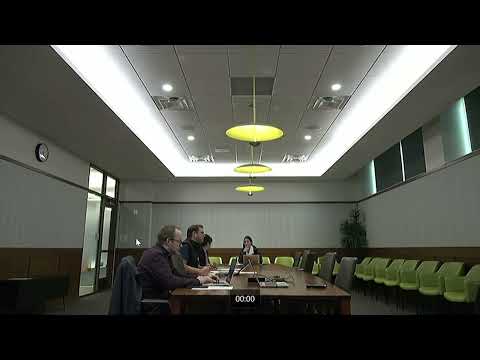
The Land Use and Special Studies Committee met March 19 at the Carmel Clay Public Library and formally introduced a study of “micromobility” that officials said will examine how to regulate devices such as golf carts, electric scooters, electric skateboards and e-bikes on city streets and multiuse paths.
Committee members said the review will define which devices count as micromobility, where they may operate, whether permits and registration should be required, how to enforce rules and how to coordinate with parks and engineering staff.
Micromobility, as the committee’s presenter described it, is “any device that moves people that’s not a motor vehicle or not defined as a motor vehicle currently,” and includes “scooters, electric skateboards, electric bikes” and other assisted devices. Committee members discussed the difficulty of drawing lines between assisted devices and motorcycles or other motor vehicles as motor technology changes.
Members raised safety on the Monon and other multiuse paths as a key concern. One committee member said the central Monon is now treated by many users as a “slow area” but that fast-moving e-bikes and other electric devices can create conflicts with walkers and families. Another member said: “If we’re getting run over every chance that we get to go for a walk, I’m not sure that this meets the needs of our citizenry.”
The committee cited examples from nearby municipalities. Westfield recently finished an ordinance and has allowed broader golf cart use; Zionsville adopted an ordinance that the committee said excluded specific streets. The city’s police chief and engineering staff were identified as likely participants in the study; committee members suggested inviting police chiefs who have drafted ordinances to describe safety and enforcement issues.
Discussion touched on possible permit systems and enforcement. Committee members asked whether permits should apply only to golf carts or to all assisted mobility devices, what a fee structure might look like, and whether police would be the enforcing authority. One member argued for strong penalties: “If you screw up in a golf cart, you probably ought to lose your permit, period.” The group also debated whether licenses should be required for some devices and how often officers could reasonably be expected to monitor neighborhoods where such devices are in heavy use.
The committee also discussed parking and event issues. Committee members noted that two golf carts can generally fit in a standard parking stall, and that golf cart use increases during concerts and events in the village center where on-street car parking is scarce.
Several members urged taking a broad approach now rather than repeatedly responding to new devices: one cautioned that narrow rules just for golf carts may leave the city reacting to future technologies. Others preferred a narrower ordinance limited to golf carts with future amendments for evolving technology. Committee members agreed to gather more information, consult police and engineering staff, and coordinate with parks staff because of differences between park-managed trails and city-managed multiuse paths.
No formal action or vote occurred; the item was introduced for additional study and subsequent drafting work with staff and outside experts.