Get Full Government Meeting Transcripts, Videos, & Alerts Forever!
Get email alerts on the Education topic
No spam. Unsubscribe anytime.
Superintendent details Coventry Public Schools budget, highlights CTE tuition outflows and Medicaid reimbursements
Summary
Superintendent Don presented a 2.42% budget request that aligns with the town’s projection, reviewed revenue shifts including rising Medicaid reimbursements and tuition, and raised concerns about students attending CTE programs in other districts under the state’s 'substantially similar' rules.
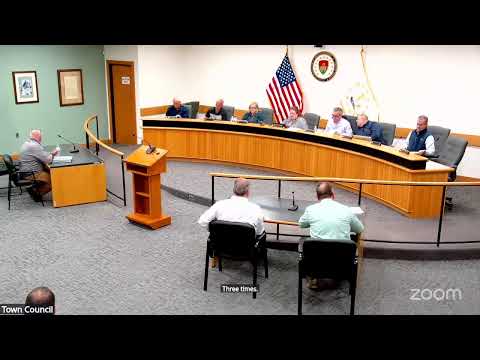
Coventry — Superintendent Don presented the Coventry Public Schools’ proposed budget during the council’s budget hearing, outlining a 2.42% increase the district is asking the town to fund, revenue strategies that include higher Medicaid reimbursements, and concerns that the state’s treatment of “substantially similar” career and technical education (CTE) programs is costing the district tuition outflows.
“We talk about funding, but we also talk about successful programs that we have in place,” Superintendent Don said, describing a budget that the district says emphasizes student supports, curriculum, and capital needs. He told the council the district’s request lines up with the town’s current budget projection.
CTE programs and tuition outflows
School leaders and council members discussed how students attending CTE programs in other districts create a tuition liability for Coventry when the students’ home district pays the receiving district. Superintendent Don said Coventry is spending roughly $2.6 million annually on tuition to other districts for students attending out-of-district career and technical programs. He and councilors described the state’s “substantially similar” policy as narrow, with many Coventry programs that staff consider similar to others not appearing on the state’s substantially similar list, allowing students to attend comparable programs elsewhere and shift tuition dollars out of Coventry.
Don and council members said they and other municipal leaders are discussing state-level policy changes; a council member said the issue came up at a League of Cities and Towns meeting and urged the town and school leaders to pursue policy changes to better track and limit tuition outflows.
Revenue and expenditures
Superintendent Don reviewed revenue lines the district has advanced, including increased tuition income for preschool and some programs, and stronger Medicaid reimbursements. The district budgeted about $800,000 in Medicaid reimbursements for the current year and reported the reimbursement target had already been reached by February, meaning further Medicaid receipts this year would exceed budget projections. Don said federal ESSER pandemic-era funds had boosted federal revenue in prior years but that those funds have largely ended.
The district also noted a long-run per-pupil expenditure figure below the state average; Don said Coventry’s per-pupil expenditures are lower than many neighboring districts and that the district has pursued grants, rental income, and other revenue sources to offset budget pressures.
Capital needs and previous reductions
Don listed several capital priorities — sprinkler systems, gym work, science-lab renovations, a Western Well replacement and roof repairs — and said the district has trimmed positions in recent years to balance budgets, including reductions and layoffs in instructional staff and administration. He said the school committee approved the budget on its internal calendar and that the proposed increase matches the town projection, allowing schools and town to proceed with aligned planning.
Next steps
No council vote on the school budget occurred at the hearing. Don and council members said ongoing coordination between the district and town finance staff will continue. Staff said the district will provide additional detail as the town’s budget process proceeds and that the school committee will continue to refine capital and program priorities.
Why it matters: The budget affects classroom staffing, special education services, transportation and capital projects affecting building safety and instructional space. The CTE tuition and Medicaid reimbursements both have multi-year implications for district revenues and spending.