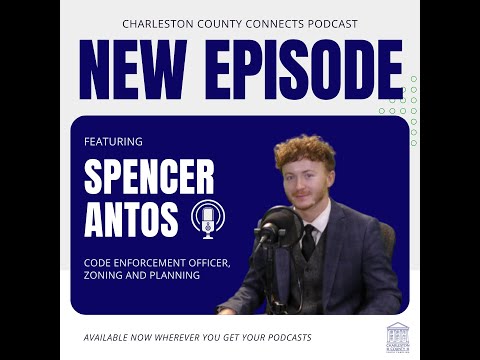
Charleston County zoning staff outline permit rules, common violations for unincorporated properties
Loading...
Summary
Charleston County Zoning and Planning staff described the purpose of zoning in unincorporated areas, common code violations, permit thresholds for sheds and land disturbance, tree protections, and enforcement steps during a Charleston County Connects podcast.
On the Charleston County Connects podcast, Spencer Antos of Charleston County Zoning and Planning explained the purpose of zoning in unincorporated Charleston County and described common permit requirements and enforcement steps for property owners.
"Zoning is essentially, it is a process of what you use to see if what you can do, like building or placing a structure or operating a business is allowed on that property," Antos said, adding that zoning "really helps kind of show people what they can and in some cases cannot do on their property."
Antos said common code-enforcement issues include unpermitted additions and sheds, unpermitted clearing and grubbing of soil, and operating a business without the county business license. He told host Sean Smetana that a business operating in the city that moves into unincorporated Charleston County must obtain a Charleston County business license through the county's Revenue Collections office.
On small structures, Antos said property owners must obtain a zoning permit before placing any structure larger than 120 square feet; after that threshold a building permit is required. He described "grubbing" as disturbing or removing soil and changing a site's natural grade, and said such activity also requires a zoning permit.
Antos discussed tree protections: pine and sweetgum trees are generally exempt from protection unless located in higher-intensity zoning such as industrial or commercial districts, he said. Trees with a trunk diameter greater than 24 inches at breast height are protected; Antos specifically cited live oaks, magnolias and crepe myrtles as commonly protected specimens.
For enforcement, Antos said staff typically contacts property owners first and attempts to work toward permitting and compliance to avoid court. "If somebody does have a violation on their property, the first thing is we'll contact them, and hopefully we can work things out, get a permit, so we don't have to go to court," he said. He added that summonses or court appearances are reserved for more egregious or unresolved violations.
Antos encouraged property owners to check with the zoning department before starting work, saying it is "a lot easier to ask, first, especially when it comes to building or placing structures" to avoid costly demolition and rework. He also noted that the county offers a free arborist visit to evaluate tree questions; property owners may also hire private arborists if they prefer.
The podcast host said contact information for Zoning and Planning would be included in the episode description. The guidance given on the episode applies specifically to properties in unincorporated Charleston County and addresses zoning and county-level permitting and enforcement only.