
Jury convicts Ahmad Jamal Akron of murder, returns life sentence after finding two prior felonies true
Get AI-powered insights, summaries, and transcripts
Subscribe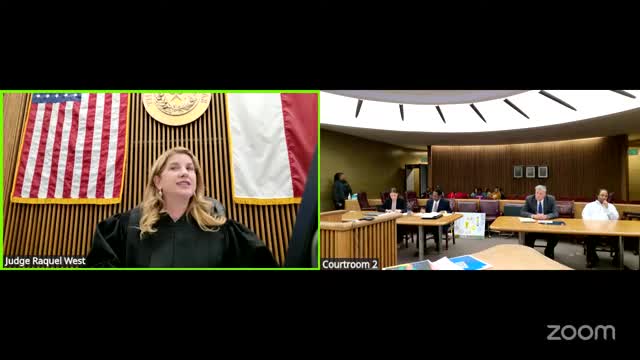
Summary
A Jefferson County jury found Ahmad Jamal Akron guilty of murder, found two prior sequential felony convictions true and assessed punishment at life in prison; the judge sentenced him to life and remanded him to the sheriff’s custody.
Presiding Judge read the court's punishment charge and the jury returned a verdict finding Ahmad Jamal Akron guilty of murder and true the state's allegation that he had two properly sequenced prior felony convictions; the jury assessed punishment at life in the Texas Department of Criminal Justice.
The jury's unanimous verdict followed closing arguments in the punishment phase of Cause No. 2239528. The court instructed jurors on punishment ranges that depend on whether prior-conviction enhancements are proved: if two sequential priors are proved, punishment ranges from 25 years to 99 years or life (and a possible fine of up to $10,000); if one prior is proved, the range is 15 to 99 years or life; and if no priors are proved, the range is 5 to 99 years or life. The court also described parole eligibility generally, saying parole eligibility typically occurs after one-half of a sentence or 30 years, whichever is less, and stressing that eligibility does not guarantee release.
Nut graf: The jury resolved the enhancement question in the state's favor and imposed the maximum penalty available short of death: life imprisonment. The presiding judge immediately pronounced sentence consistent with the jury's verdict and remanded Akron to the Jefferson County Sheriff's Department pending transfer to the Texas Department of Criminal Justice (TDCJ).
Defense counsel objected to the court's inclusion of instructions about parole law during the charge. Defense counsel (Mister Burbank) argued that informing jurors about parole could skew deliberations. The court overruled that objection. During closing argument, the defense urged jurors to consider the circumstances and questioned whether the killing rose to the level of the most violent homicides described by the prosecutor. The prosecutor (Mister Coleman) urged jurors to reject desensitization to violence, to weigh the defendant's criminal history, and to “follow the law” by applying the enhanced punishment range if they found both prior felonies proved. Coleman also urged jurors to consider a life sentence, noting its long-term supervision consequences even if parole eligibility exists.
The charge presented to jurors listed the alleged prior convictions by date, cause number, and court: a February 12, 1993 conviction (cause number 60254) in the Jefferson County district court for theft, and October 20, 2008 convictions (cause numbers 97334 and 97589) in the 252nd District Court of Jefferson County for assault on a family member. The charge also included the element that the earlier conviction became final before the later offense. The jury found elements proving two sequential prior felony convictions to be true.
After the verdict was read aloud in open court, the judge asked whether either party wanted the jury polled; neither requested that. The judge then pronounced sentence: “In conformity with the jury's verdict, I now sentence you to a term of life in prison,” and advised the defendant he would receive credit for time in custody and a written admonishment concerning firearms possession ineligibility under Texas law. The defendant was remanded to the Jefferson County Sheriff's Department to await transfer to TDCJ.
Ending: The court concluded the trial after sentencing and directed courtroom attendees to leave calmly. The record shows Cause No. 2239528 is now closed as to trial and sentencing; any collateral matters (for example, whether the sentence will run consecutively to a parole term) were discussed briefly on the record but not pursued further by the state given the life sentence.