Get Full Government Meeting Transcripts, Videos, & Alerts Forever!
Get email alerts on the Condominium Construction Warranty topic
No spam. Unsubscribe anytime.
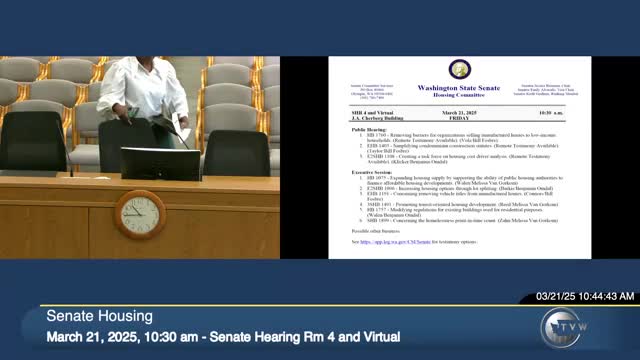
Panel weighs competing views on bill to simplify condominium construction warranties
Summary
Representative Tamela Taylor told the Senate Housing Committee she filed House Bill 1403 to “simplify condominium construction statutes” and help spur condominium construction and homeownership, particularly smaller infill projects.
Representative Tamela Taylor told the Senate Housing Committee she filed House Bill 1403 to “simplify condominium construction statutes” and help spur condominium construction and homeownership, particularly smaller infill projects.
“The condominiums represent a critical opportunity for first time homebuyers to start building equity and security through affordable homeownership,” said Cindy Shadelge, Tacoma City Council member, testifying in support.
Nut graf: HB 1403 proposes multiple changes to implied warranty law and building enclosure inspection requirements for condominiums. Supporters including city officials, builders and housing advocates said the bill clarifies standards and could reduce legal risk that has discouraged condominium construction. Opponents, including homeowner‑association advocates and condominium attorneys, urged caution and recommended additional study or targeted amendments to preserve consumer protections.
Key provisions as described by committee staff include revising the implied warranties of quality applicable to condominium declarants and dealers; creating an alternative express warranty for certain small condominium buildings (for example, new buildings or conversions containing 12 or fewer units under specified story‑height limits); and modifying which buildings must meet building enclosure design and inspection requirements. The staff summary referenced the Washington Uniform Common Interest Ownership Act (WUCIOA) provisions that now govern condominiums created after July 1, 2018, and become applicable to all condominiums July 1, 2028.
Supporters argued the statute's ambiguity and resulting litigation risk have driven many developers to build apartments rather than condominiums. Alex Herr of the Master Builders Association said clearer definitions of “workmanlike manner” and an express warranty option for small buildings were “a right sized solution.” Bill Cornell, a practicing lawyer for developers, called HB 1403 “a small step in the right direction to level the playing field.” Builder Mike Nickram told the committee he has been “building condominiums for 50 years” and urged lawmakers to “Please pass this bill exactly as written.”
Opponents urged delay or targeted fixes. Steve Horvath of HOA United said the bill would “erode” protections built up over two decades and recommended bifurcating warranty rules to preserve the existing construction‑defect protections for buildings with shared horizontal and vertical boundaries. Dean Martin of the Community Association Institute and practicing attorney argued the bill should be tabled until results of an insurance study in a different bill are available and warned that narrowing warranty language to only building‑code and plans could leave out industry standards that catch many real construction defects. “The building code is a minimum standard and does not address everything,” Martin said, adding an example of incompatible caulking that can corrode fire‑sprinkler piping despite compliance with plans and code.
Committee members asked about comparisons with other states; staff reported they did not find a clear model in other states. Several local officials and planners urged passage to support infill and “missing middle” housing objectives, noting condos account for a small share of the state’s housing stock and a very small share of new construction in recent years.
Ending: The hearing produced a mix of policy support and detailed technical objections. Opponents urged further study by the insurance committee and suggested precise drafting changes to preserve industry standards and protections for condominium owners; supporters said clearer, objective standards could restore developer interest in condominiums and increase homeownership options. The committee did not take final action on HB 1403 during the March 21 meeting.