Get Full Government Meeting Transcripts, Videos, & Alerts Forever!
Get email alerts on the Manufactured Homes Exemption topic
No spam. Unsubscribe anytime.
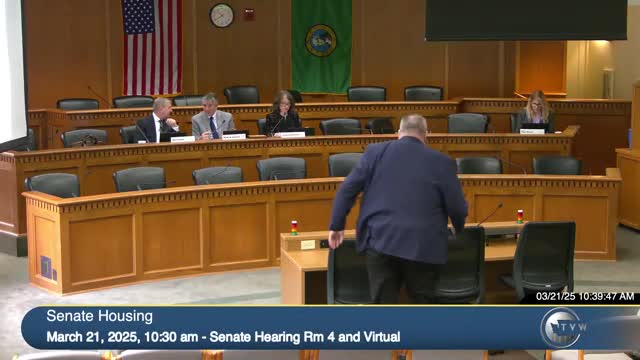
Committee hears bill to ease licensing rules for nonprofits selling manufactured homes to low‑income buyers
Summary
House Bill 1760 would exempt certain nonprofits, community land trusts, resident cooperatives and public housing authorities from vehicle‑dealer licensing rules when selling a limited number of manufactured homes to low‑income households. Supporters said the change would remove barriers and lower costs for community‑driven homeownership projects.
House Bill 1760, presented to the Senate Housing Committee March 21, would remove vehicle dealer licensing requirements for specified entities that sell manufactured homes to low‑income households at cost, as long as the entity does not sell more than 12 such homes in any 12‑month period.
Bill Fosbury, staff to the committee, explained the existing statutory background: manufactured homes are titled as vehicles and dealers are therefore subject to vehicle dealer laws, including a $975 initial dealer licensing fee and a required $30,000 surety bond. “To summarize, the bill adds a number of entities, including community land trusts, resident nonprofit cooperatives, local governments, public housing authorities and others who do not sell more than 12 manufactured homes to low income households at cost in any 12 month period will not be considered vehicle dealers and will not be subject to licensing and regulations of vehicle dealers,” Fosbury said.
Nut graf: Sponsors and nonprofit advocates said the current vehicle‑dealer rules impose fixed costs and regulatory burdens that can make small nonprofit and cooperative programs infeasible. The bill is meant to let community organizations sell manufactured homes at cost without being treated like a commercial vehicle dealer, while preserving consumer protections.
Representative Mike Fultz, sponsor of HB 1760, described a local program that placed three units in 2023 and helped two single mothers and a disabled veteran obtain housing. “They started in 2023 and placed their first houses in 2024,” Fultz said. He said program partners secured donated or discounted materials and financing, and that regulatory limits prevented the group from scaling up: “They did 3 in 2023 … they ran into this law where if they do, they can do up to 4, but they can't do 5 or more or they have to follow all these other regulations.”
Advocates supporting the bill urged the committee to remove the licensing burden for nonprofit sellers working to place homes with households at or below income thresholds. Victoria O'Banion of the Northwest Cooperative Development Center said the change “empowers nonprofit organizations and cooperatives and community based organized groups to sell manufactured homes at cost to low income households.” Sarah Van Olson of Village Cohousing Works said a dealer license can cost “$50,000 or more annually” for small nonprofits and that the exemption would help small programs expand placements.
Staff indicated the fiscal note shows no state fiscal impact. The committee took public testimony but did not take executive action on HB 1760 at the March 21 meeting.
Ending: If enacted, the bill would permit certain nonprofit or public entities to sell up to 12 manufactured homes to low‑income households at cost without being treated as vehicle dealers; rule details and income thresholds would depend on bill language and implementing guidance.