Get Full Government Meeting Transcripts, Videos, & Alerts Forever!
Get email alerts on the Sepa Trail Exemption Burke Gilman topic
No spam. Unsubscribe anytime.
Burke‑Gilman missing‑link bill sparks sharply divided testimony as committee weighs narrow SEPA exemption
Summary
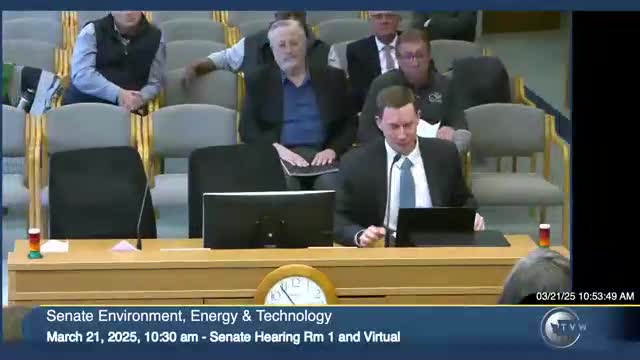
The Senate committee heard more than three hours of testimony Tuesday on House Bill 1814, a narrowly targeted proposal to exempt some trail or path projects from SEPA review, prompted by a long‑running dispute over the Burke‑Gilman Trail ‘missing link’ through Ballard in Seattle.
The Senate Environment, Energy & Technology Committee received extended, often heated testimony on Engrossed House Bill 1814, a narrowly tailored proposal to create a categorical exemption from the State Environmental Policy Act (SEPA) for certain trail or path projects.
Staff summarized the bill as establishing a SEPA exemption for trail or path projects of 10 acres or less located on railroad rights‑of‑way designated for interim trail use and situated in cities with populations of at least 500,000. The bill requires public notice at the project start, middle and end of the proposed location and mandates that applicants seek “meaningful consultation” with any federally recognized tribe that may be affected, with procedural requirements for that consultation included in the bill text.
Representative Joe Fitzgibbon (30th Legislative District), the prime sponsor, said the measure responds to a decades‑long delay on the 1.4‑mile “missing link” in the Burke‑Gilman Trail through Ballard. Fitzgibbon emphasized that the bill does not pick a route — Schill’s (Shilshole) Avenue or Leary Way — and said SEPA’s unique role in tribal notice remains intact because the bill requires meaningful tribal consultation.
Testimony split sharply. Cascade Bicycle Club and Washington Bikes officials argued that the missing link creates a dangerous corridor that has produced emergency responses and at least one fatality; they said a legislative exemption would prevent SEPA litigation from further delaying completion and said experience on other completed trail gaps shows overall travel times for freight change negligibly while safety improves.
By contrast, dozens of business owners, maritime industry associations, manufacturers and industrial property owners said the Schill’s Avenue alignment crosses an active industrial and maritime corridor where heavy trucks, ready‑mix concrete vehicles and marine operations move frequently. They argued bicyclists and trucks crossing at grade would create traffic hazards, impair truck egress and put union jobs and longstanding maritime businesses at risk. Several witnesses said the city of Seattle already adopted funding for an alternate route on Leary Way and that the matter should be resolved at the city level, not by a state SEPA exemption. Multiple speakers described long litigation involving this corridor; opponents also raised potential soil contamination and cleanup issues tied to converting a rail line to trail.
Several senators expressed concern about setting precedent for SEPA exemptions and about ensuring tribes have an opportunity to consult. Fitzgibbon and supporters pointed to specific bill language requiring tribal outreach and contended the measure was narrowly crafted for a high‑density, built‑out corridor with a long regulatory and litigation history.
The hearing included a broad cross section of local voices: business and industrial representatives who said the trail would directly affect operations along Schill’s Avenue; trail advocates and bicyclists who said the missing link is a significant public‑safety hazard; attorneys litigating the SEPA cases; and students and residents who urged more streamlined approvals for environmental and active‑transport projects. The committee did not vote on the bill Tuesday.
Ending: The record showed a sharply divided local debate over safety, economic impact and the proper role of SEPA. Sponsors said the bill is narrowly tailored and includes tribal consultation obligations; opponents urged that city processes and SEPA remain the proper avenues for resolving concerns.