Get Full Government Meeting Transcripts, Videos, & Alerts Forever!
Get email alerts on the Housing Cost Drivers topic
No spam. Unsubscribe anytime.
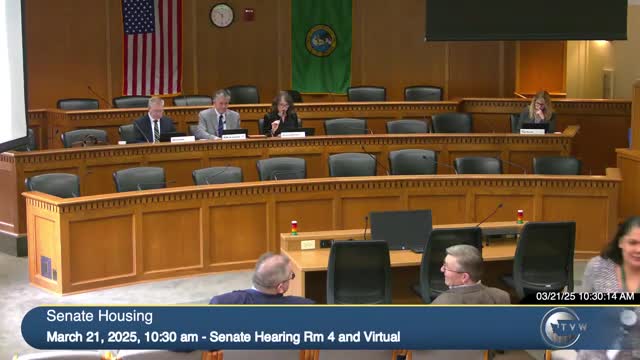
Senate panel hears bill to create task force to analyze housing cost drivers
Summary
Representative Mark Quicker, sponsor of engrossed second substitute House Bill 1108, told the Senate Housing Committee the bill would convene people who “are experiencing it every day” to identify why housing in Washington is unaffordable.
Representative Mark Quicker, sponsor of engrossed second substitute House Bill 1108, told the Senate Housing Committee the bill would convene people who “are experiencing it every day” to identify why housing in Washington is unaffordable.
“In front of you is engrossed second substitute house bill 11 o 8, creating a task force on housing cost driver analysis,” staffer Ben (committee staff) said in a staff briefing to open the hearing. The bill would establish a 27‑member legislative task force charged with researching, analyzing and determining the primary cost drivers for homeownership and rental housing in Washington and reporting findings and recommendations to the Legislature by Dec. 1, 2026.
Nut graf: Proponents described the group as a practical, stakeholder‑driven way to gather information from builders, tenants, landlords, utilities, labor and others. Committee members sought clarification about who would prepare and carry the report to the Legislature and how the task force would be organized.
Under the bill as described by staff, task force membership would include one member from each of the two largest caucuses in both the House and Senate; legislative members must convene the initial meeting. The task force must meet virtually, may meet no more than three times and must select co‑chairs from among its legislative membership. Staff support would be provided by Senate Community Services and the House Office of Program Research. The task force must solicit and consider information provided by the Affordable Housing Advisory Board and other entities with relevant expertise.
Representative Quicker said the impetus was to bring together people with direct experience rather than rely solely on an agency report. “What this bill does is you know we're trying to figure out what we're going to do regarding unaffordable housing,” Quicker said, adding the group should include “builders and realtors, tenants, landlords, utility companies, economists, architects … labor unions, organizations both profit and non profit.”
Senator Gaynor asked who would have “ultimate responsibility of putting the report together” and whether the legislative support offices or staff would actually write the report. Committee staff replied that support from Senate Community Services and the House Office of Program Research would be provided and that staff would help task force members with issuing the report, but they did not give a single entity that would “own” follow‑up legislative action.
Several committee members and attendees noted value in getting on‑the‑ground perspectives from people who build, manage and live in housing and said that information could point to specific, actionable legislative proposals.
The bill carries no estimated state fiscal impact in the available fiscal note.
Ending: The committee held a public hearing on HB 1108 but did not take executive action on the bill during the March 21 meeting. If enacted as written, the task force would be required to file its final report with the Legislature by Dec. 1, 2026.