Get Full Government Meeting Transcripts, Videos, & Alerts Forever!
Get email alerts on the Medicare topic
No spam. Unsubscribe anytime.
Committee hears calls to "level the playing field" between original Medicare and Medicare Advantage
Summary
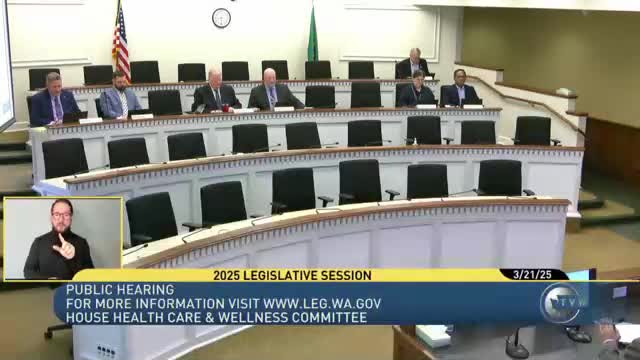
Senate Joint Memorial 8002, which asks the federal government to reduce differences between original Medicare and private Medicare Advantage plans, drew a staff briefing and public testimony at the House Health Care and Wellness Committee on March 21.
Senate Joint Memorial 8002, which asks the federal government to reduce differences between original Medicare and private Medicare Advantage plans, drew a staff briefing and about a dozen public testimonies at the House Health Care and Wellness Committee on March 21.
The memorial asks Congress to eliminate the 20% coinsurance in original Medicare, establish an out-of-pocket maximum for original Medicare, add dental, vision and hearing benefits to original Medicare, and to recoup overpayments, fraud and abuse from Medicare Advantage plans and use those funds to support original Medicare.
The committee received a staff overview from Jim Morishima, staff to the committee. Morishima summarized differences between the two programs, saying original Medicare is administered by the federal government and often leaves beneficiaries with a 20% coinsurance for many services, while Medicare Advantage plans are administered by private insurers and can vary in cost sharing and networks.
Senator Bob Hasegawa, prime sponsor of the memorial, told the committee the growth of supplemental and Medicare Advantage plans has created “an unlevel playing field for the main Medicare program,” pointing to differences in overhead and retained revenue between the programs. Hasegawa said those differences have not translated into better coverage for people enrolled in Medicare Advantage plans.
During public testimony, Lynn Dodson, executive board member of Puget Sound Advocates for Retirement Action, urged the committee to back the memorial and warned that Medicare Advantage brokers often highlight extra benefits without explaining limits on networks, prior authorization and changes over time. “Leveling the playing field includes common sense reforms that are detailed in Senate Joint Memorial 8002,” Dodson said.
Retired family physician Ed Weisbart testified that Medicare Advantage corporations increase profits by delaying or denying care and that many beneficiaries have little affordable alternative. Weisbart provided committee cost estimates from analysis he cited, saying limiting outpatient expenses in original Medicare to the same $5,000 level that many Medicare Advantage plans offer would cost about $42 billion per year and that adding hearing, vision, dental and pharmacy at comparable levels would cost about $43 billion more, for a combined figure near $85 billion; Weisbart also said Medicare Advantage overpayments have been estimated at about $140 billion annually. He summarized: “This is turning our precious public health insurance into a gold mine for Wall Street.”
Other witnesses described difficulties with prior authorization, network limits, denials and slow payments that they said harm patients and strain rural hospitals. Ellen Menshu, a constituent of Rep. Tharinger and advocate, said delays and prior authorization in Medicare Advantage harm access in rural areas and can threaten the financial stability of hospitals such as Olympic Medical Center in Port Angeles.
Committee members asked staff to clarify technical questions about Medicare Advantage regulation and funding. Representative Schmick asked whether Medicare Advantage plans are subject to the same medical loss ratio rules he associates with the Affordable Care Act; Morishima said he would check. A committee member requested more detail on the federal process and timeframes for waiver requests; Health Care Authority staff offered to follow up.
No formal action or vote was taken on SJM 8002 during the hearing. The memorial is a formal request to the federal government and does not by itself change state law.
The committee paused public testimony after roughly 32 total witnesses across the two joint memorials and proceeded with other agenda items.