Get Full Government Meeting Transcripts, Videos, & Alerts Forever!
Get email alerts on the Garnishment Protections topic
No spam. Unsubscribe anytime.
Committee hears bill to make full bank-garnishment protections automatic and permanent
Summary
Lawmakers and advocates told the Civil Rights & Judiciary Committee that Senate Bill 56-51 would preserve and expand protections that keep modest amounts in debtors' bank accounts from garnishment. Consumer advocates and the attorney general’s office urged passage; collectors raised a compliance concern about a marital-status checkbox.
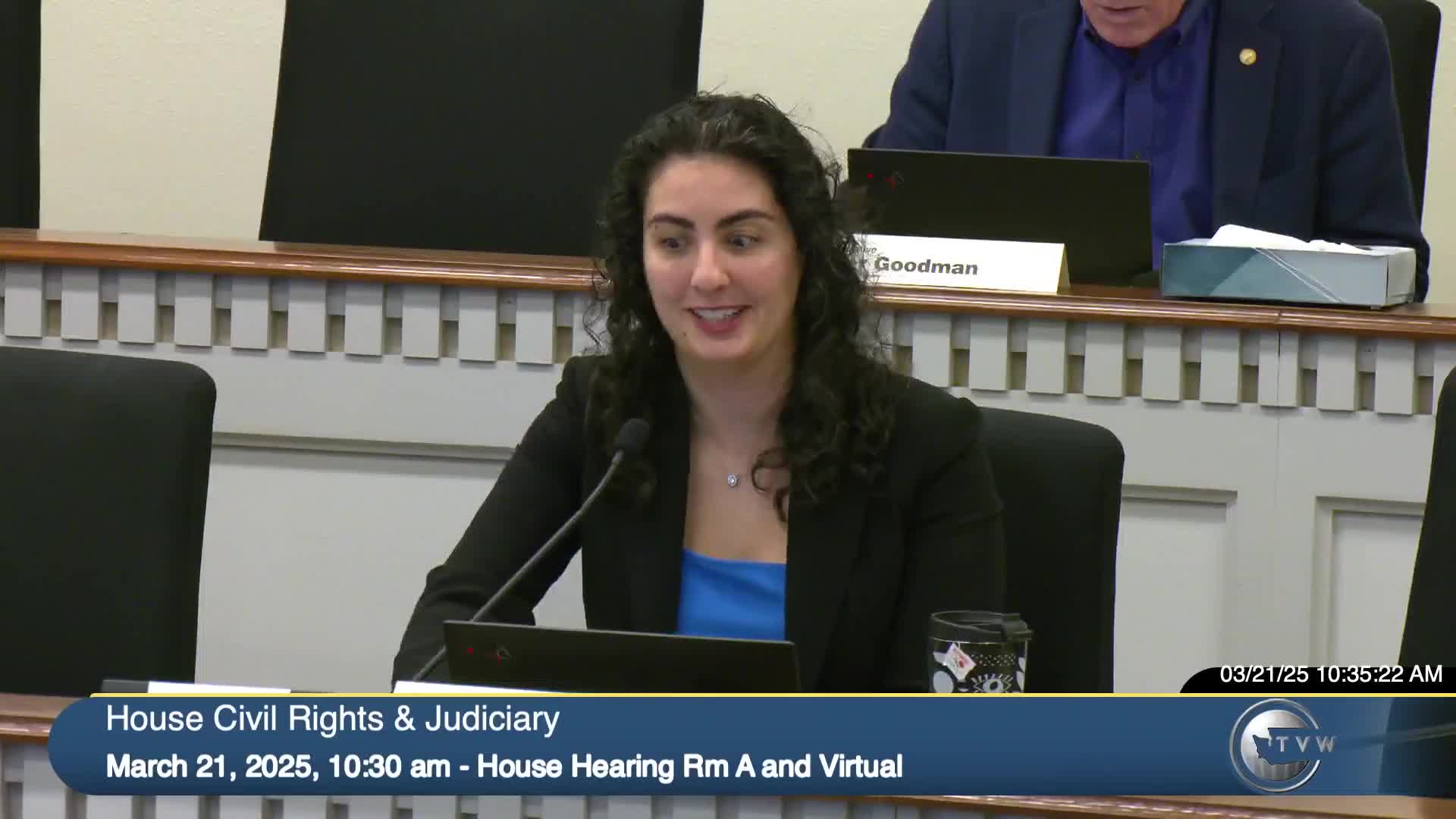
Senators and witnesses on the Civil Rights & Judiciary Committee on March 21 heard testimony on Senate Bill 56-51, which would make automatic the full amount of Washington’s bank-account exemption for consumer debt and remove a July 1, 2025, sunset on automatic protections.
The bill was presented to the committee by staff member E. E. D. Adams, who summarized the measure as “remov[ing] the specific dollar amounts and instead insert[ing] blanks that must be filled in with the appropriate inflation adjusted amounts” and making the temporary automatic protections permanent. Adams said the bill also would require the Department of Revenue to adjust exemption amounts every three years beginning July 1, 2027.
The legislation would preserve a nonbankruptcy exemption that currently protects $2,000 of “other personal property” in a bank account, of which $1,000 is automatically protected for consumer debt under current law; SB 56-51 would make the full $2,000 automatic in nonbankruptcy proceedings and make that automatic protection permanent. The bill also adds an exemption for alimony or spousal support payments to the extent they are traceable, with an exclusion for actions by a child support or spousal support agency operating under Title IV-D of the Social Security Act.
Senator Emily Alvarado (prime sponsor) said the protections help families cover rent, groceries and medicine and described the bill as “about self sufficiency for people, about keeping a little bit of resource in their pocket so they can pay for basics even when they're facing debt and garnishment.” She said the bill is a compromise that makes the automatic protection permanent and increases the automatically protected portion to the full $2,000 for consumer debt.
Advocates urged passage. Amanda Martin, executive director of Northwest Consumer Law Center, told the committee that the automatic protection is necessary because “very few people actually claim the exemption when it is not automatic.” Adam Zahn of the Leukemia & Lymphoma Society said medical debt drives many garnishments and that protecting bank accounts helps patients. Sam Leonard of the Washington State Association for Justice described representing clients who had bank accounts frozen and said only about 3% of Washingtonians complete the exemption form when required; he said the bill “is not about keeping people from paying their debts. It's meant to ensure that those that have fallen on hard times have the resources to stay off the streets, get to work and hopefully get back on their feet.” Molly Gallagher of the Statewide Poverty Action Network said the protections disproportionately benefit communities of color and that the automatic protection is set to expire in July if the legislature does not act.
The Washington Collectors Association, represented by Mindy Chumbley, said stakeholders had narrowed differences but opposed a specific provision in Section 4 that would require plaintiffs to check a box confirming whether a defendant is part of a marital community or domestic partnership. Chumbley said, “Plaintiffs have no way to comply with this requirement,” because there is no central database that reliably indicates marital status and because accounts can be shared with unrelated parties. She urged further stakeholder work and asked the committee not to move the bill until the compliance issue is resolved.
Nick Field, legislative analyst for the Attorney General’s Office (AGO), expressed the AGO’s strong support for extending bank-garnishment exemptions and making them automatic, saying the earlier statute benefited thousands of consumers and should not sunset.
A former debtor, Russell Brandt, testified about a decade-long garnishment episode that left his family without money for housing, food and gas. “The garnishments cleaned out my bank accounts, put me in a position where I was struggling to even find gas to get to work,” Brandt said, and added that garnishments reduced his ability to pay debts because they removed basic necessities.
No final committee vote on SB 56-51 was recorded in the transcript. Committee members asked questions about the origin of the current automatic protection and whether predatory or routine credit issuance would change if protections were permanent; sponsors and witnesses answered that the bill does not increase the statutory total protected amount, it makes existing protections self-executing, and that other enforcement mechanisms (wage garnishment, liens, credit reporting) remain available to creditors.
The committee left the bill without a recorded vote in the portion of the transcript provided. If enacted as written, the bill would (1) make the full statutory account exemption for consumer debt automatically protected in nonbankruptcy proceedings, (2) remove the July 1, 2025 sunset on the automatic protection, (3) require triennial inflation adjustments beginning July 1, 2027, and (4) add a narrowly drawn spousal-support traceable-payment exemption that excludes Title IV-D actions.
Ending: Sponsors and advocates asked the committee to act before the July expiration; collectors asked for additional stakeholder work on the marital-status compliance language. The transcript does not record a committee vote on the bill during the session covered.