Get Full Government Meeting Transcripts, Videos, & Alerts Forever!
Get email alerts on the Nonprofit Property Tax topic
No spam. Unsubscribe anytime.
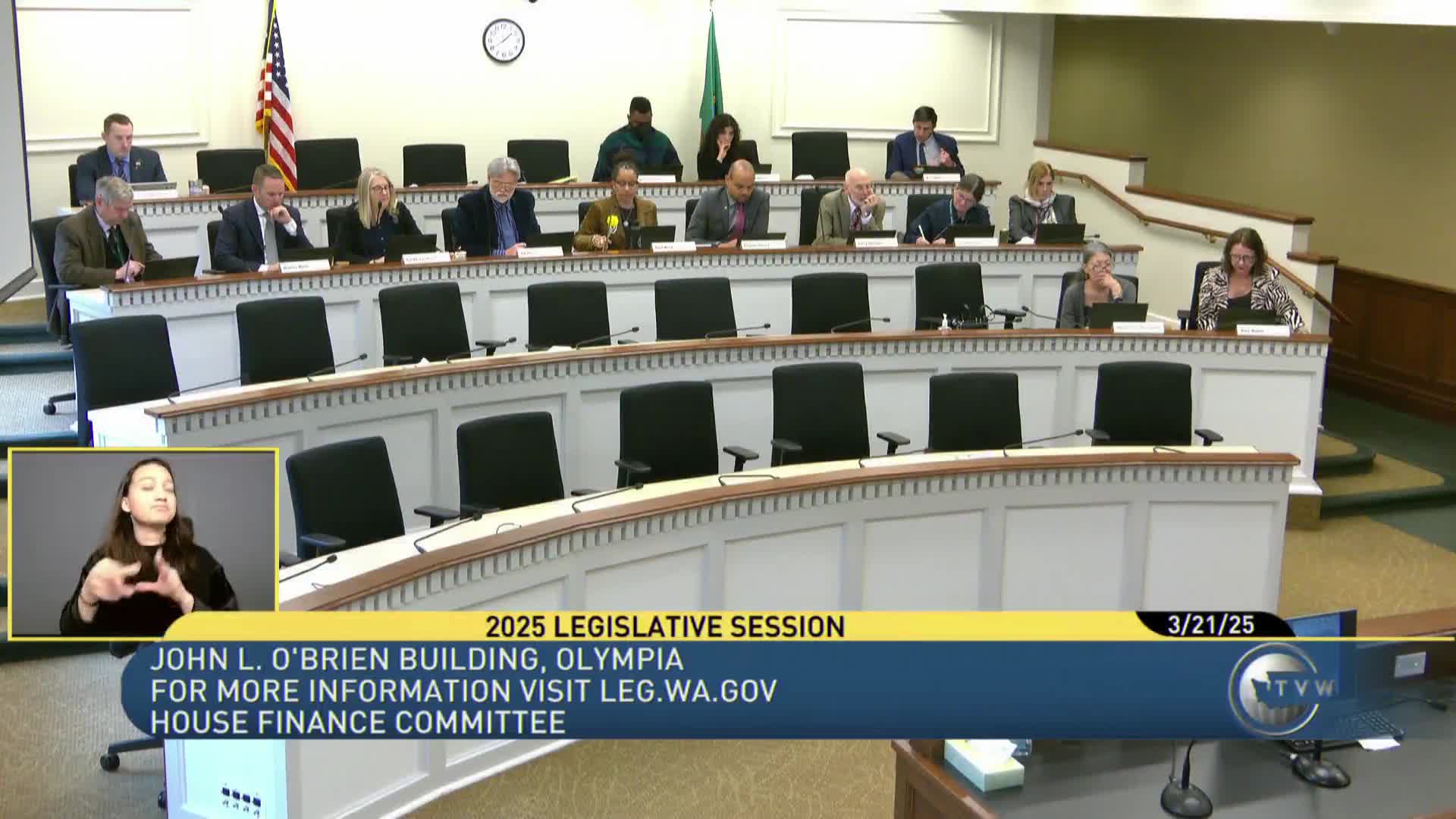
Committee hears bill to expand nonprofit community-center property tax exemption to surplus university property
Summary
Legislation to extend an existing community-center property-tax exemption to nonprofit organizations that acquire surplus property from nonprofit universities drew testimony from Parkland organizers who say the change would help preserve a community-run center that hosted an emergency warming shelter.
Christina King, staff to the House Finance Committee, briefed members on Senate Bill 5516, which would expand an existing property-tax exemption for community centers so it covers surplus buildings and property acquired from a nonprofit university (an institution already exempt from property tax) when the purchaser is a nonprofit organization converting the property to a community center.
Under current law, the exemption applies when a local school board declares property surplus and the property is sold to a nonprofit that converts it to a community center; the bill would add similar coverage for surplus property acquired from qualifying nonprofit universities. King said the expansion would apply to property taxes due for calendar year 2026 through 2035, include an exemption from a tax preference performance statement (JLARC) review and carry a minimal, indeterminate local shift in property taxes; a fiscal note is available.
Wendy Freeman, speaking for the Parkland Community Center, described a recent purchase and local operations. “The school was acquired from Pacific Lutheran University by Parkland Community Association in May of 2024 with the approval of their board of regents,” Freeman said. She told the committee the center houses multiple nonprofit programs and services, and that it served as an emergency warming center this winter: “We served as an emergency warming center for 27 days this winter. We had unique individuals, 367 people were in the warming center, 37 of those people were children. At the height of our emergency warming center, we had 97 individuals.”
Phil Edlund, project consultant for the Save Parkland School initiative, told the committee the property’s current annual property tax bill is about $40,000 and that paying that amount would take an estimated 30 to 40 percent of the community center’s rental revenue. Edlund said the building has not been on the tax rolls since it opened as a school in 1908; that changed after the nonprofit purchase from the university and an application for exemption was denied by the state auditor’s office because the prior owner was a university rather than a school district.
Members asked questions about whether other statutory exemptions (for assembly halls or meeting places) could apply. Representative Jacobson and others asked staff whether different nonprofit-owned properties can already qualify; King said not all nonprofit-owned property qualifies for exemption and that the bill addresses this specific purchase-from-university scenario. Committee members and testifiers discussed whether the nonprofit’s activities or the ownership history determine eligibility; staff said the bill’s language was drafted to extend the surplus-school-district exemption framework to surplus nonprofit university acquisitions.
The committee closed the hearing after testimony; staff said they would follow up with additional information requested by members.