Get Full Government Meeting Transcripts, Videos, & Alerts Forever!
Get email alerts on the Housing Property Tax topic
No spam. Unsubscribe anytime.
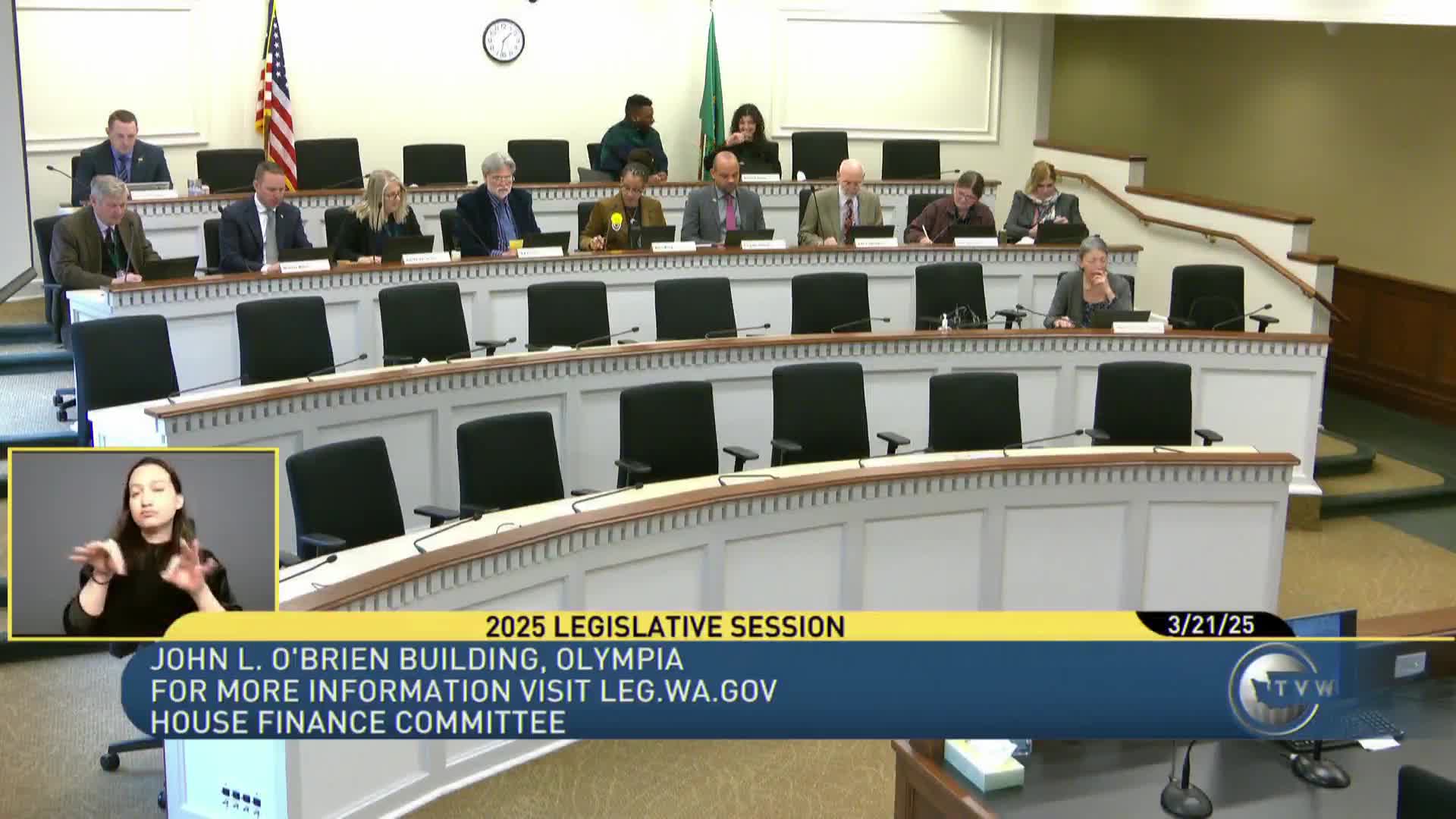
House Finance committee hears bill to let Pierce County, Tacoma offer ADU property-tax exemption for low-income rentals
Summary
A bill that would expand an existing accessory dwelling unit (ADU) property-tax exemption beyond King County to a second county drew brief testimony and technical questions in the House Finance Committee on March 21.
Tracy Taylor, staff to the House Finance Committee, briefed members on Senate Bill 5529, saying the bill would expand an existing property-tax exemption for accessory dwelling units to cities or counties located in a county with a population of at least 90,000 but not more than 1,500,000.
The bill would allow a city or county legislative authority to exempt an ADU from property tax if the unit is detached and rented to low-income households (tenant adjusted income at or below 60 percent of county median household income) with rent not exceeding 30 percent of the tenant’s monthly income. Taylor said applicants must apply annually and provide an affidavit, documentation of tenant income and a lease of at least 12 months. She summarized implementation details: “the county assessors may collect a fee from the taxpayer in an amount necessary to cover the cost administering this exemption,” and assessors “may determine what the property taxes and penalties would be, if any, in the case that the enacting legislative authority finds noncompliance.”
Brianna Murray, testifying on behalf of the City of Tacoma, said the bill is aimed at expanding a policy that was implemented in King County. “The legislature approved this property tax exemption for ADUs rented at affordable rates, for King County several years ago,” Murray said. She said Pierce County and the City of Tacoma worked with the Pierce County assessor’s office on implementation and that adding Pierce County will provide more data to evaluate whether the exemption increases the number of ADUs rented at affordable rates.
Members asked staff and the testifier implementation questions. Representative Santos asked how many jurisdictions would qualify under the new population threshold; Taylor said the fiscal note and analysis did not provide a count and suggested advocates might be able to answer. Representative Orcutt and others asked whether the exemption would apply to units in cities within Pierce County or only to unincorporated areas; Murray responded that implementation would be up to each jurisdiction and could be limited by ordinance (for example, Tacoma could adopt it just for the city).
Committee members also raised technical implementation points. Murray and staff noted a minor clarifying amendment was needed to make clear the exemption runs only for the length of the qualifying lease, and staff said the bill’s language does not specify how prorating would work if a lease ended midyear; the assessor “may determine what property taxes and penalties would be due, if any, if they find noncompliance,” Taylor said. Taylor summarized fiscal and timing items: the bill would apply to taxes levied for collection in calendar year 2026 and thereafter and would expire on January 1, 2034; the effective date would be 90 days after adjournment of the session. Taylor also said the Department of Revenue expects few ADUs would qualify and therefore the total exempted value would be small.
No vote occurred; the committee closed the public hearing and moved on to other bills.