Get Full Government Meeting Transcripts, Videos, & Alerts Forever!
Get email alerts on the Amendment 3 topic
No spam. Unsubscribe anytime.
Families, advocates and commissioners warn Amendment 3 could expand adult charging of youth; commission members urge public education ahead of vote
Summary
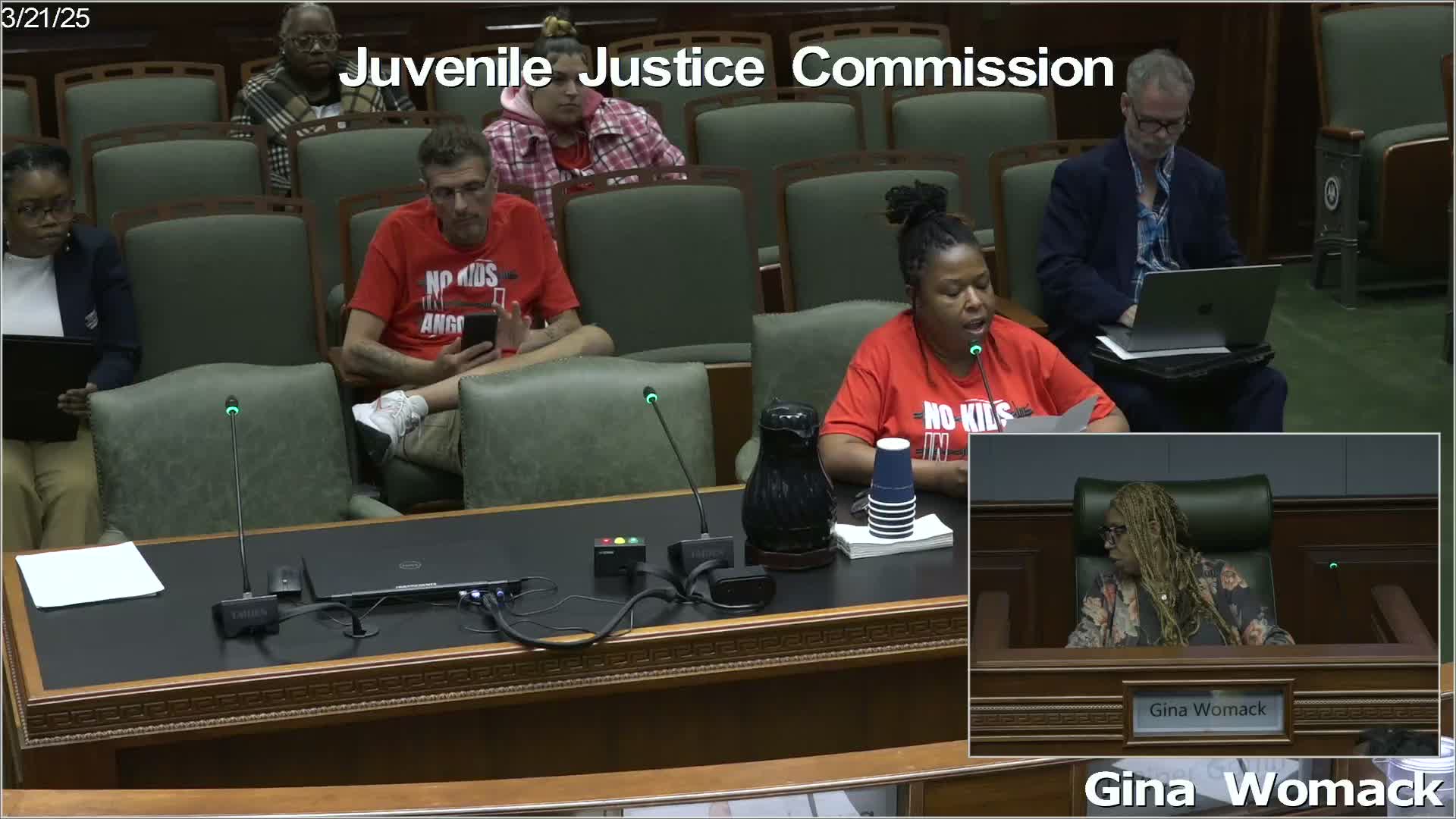
Commission and public witnesses testified that Amendment Number 3, which would move rules on charging children as adults from the constitution into legislative control, risks increasing adult prosecutions of youth; commissioners and public commenters urged investment in rehabilitation and broad public education ahead of the ballot.
Multiple witnesses and at least one commissioner told the Juvenile Justice Reform Advisory Commission that Amendment Number 3 — which would shift the authority over charging juveniles as adults from the state constitution to the legislature — risks increasing adult prosecutions and undermining rehabilitation.
Jennifer Landry, Lafayette chapter lead for Families and Friends of Louisiana’s Incarcerated Children, told the commission she represents mothers whose children "were both tried as adults and sent to adult prisons." She described cases in which teenagers placed in adult prisons suffered severe violence and lack of rehabilitative services, and said "Real solutions lie in community based services and support systems that prioritize prevention and rehabilitation."
Senator Regina Barrow, who said she voted in opposition to the measure on the Senate side, told the commission Amendment Number 3 "attempts to charge children as adults" and warned that removing the age protections from the constitution would place those choices "completely in the hands of the legislature." Barrow said the change would allow lawmakers to alter the age threshold and the list of crimes subject to adult prosecution and said she is "adamantly opposed to Amendment Number 3."
Public commenters echoed those concerns and urged investment in alternatives to incarceration. Reverend Alexis Anderson, chair of the Children and Youth Committee for the Louisiana Behavioral Health Advisory Council, described monitoring first appearances in East Baton Rouge and said she had seen "17 year olds who either don't make that first appearance because they are in solitary confinement" and other harms when youth are prosecuted in adult systems. Bruce Riley, deputy director of Voice Experience (Vote), said expanding adult prosecution would only enlarge the prison industry and funnel more young people into long sentences; he noted recent additions to the list of violent crimes can carry long mandatory minimums.
Melville Hamilton, founder of Someone Always Cares Foundation, described a 17‑year‑old he works with who spent months in an adult facility from November through February without a judge hearing; Hamilton said the experience required trauma services and illustrated the stakes for young people transferred into adult custody. Rio Valdez, a young person representing Families and Friends of Louisiana's Incarcerated Children and Black Men Rising, said more youth voices should be present at commission meetings.
Commission leaders closed the meeting urging members and the public to educate voters before the March 29 election deadline. The commission did not take a formal vote on Amendment Number 3; several commissioners and public witnesses asked the public to be informed and to vote.