Get Full Government Meeting Transcripts, Videos, & Alerts Forever!
Get email alerts on the Water Supply topic
No spam. Unsubscribe anytime.
Haverhill declares drought emergency as reservoir levels fall; outdoor watering banned March 19
Summary
Mayor Melinda E. Barrett and DPW Director Robert Ward told the City Council Haverhill will enact a drought emergency effective March 19 after Kenoza Lake fell about 10 feet below full and other reservoirs remain low. The declaration prohibits nonessential outdoor water use and outlines exceptions, enforcement procedures and conservation steps.
Haverhill Mayor Melinda E. Barrett announced a local drought emergency effective March 19 after city water officials reported reservoir levels well below normal for this time of year.
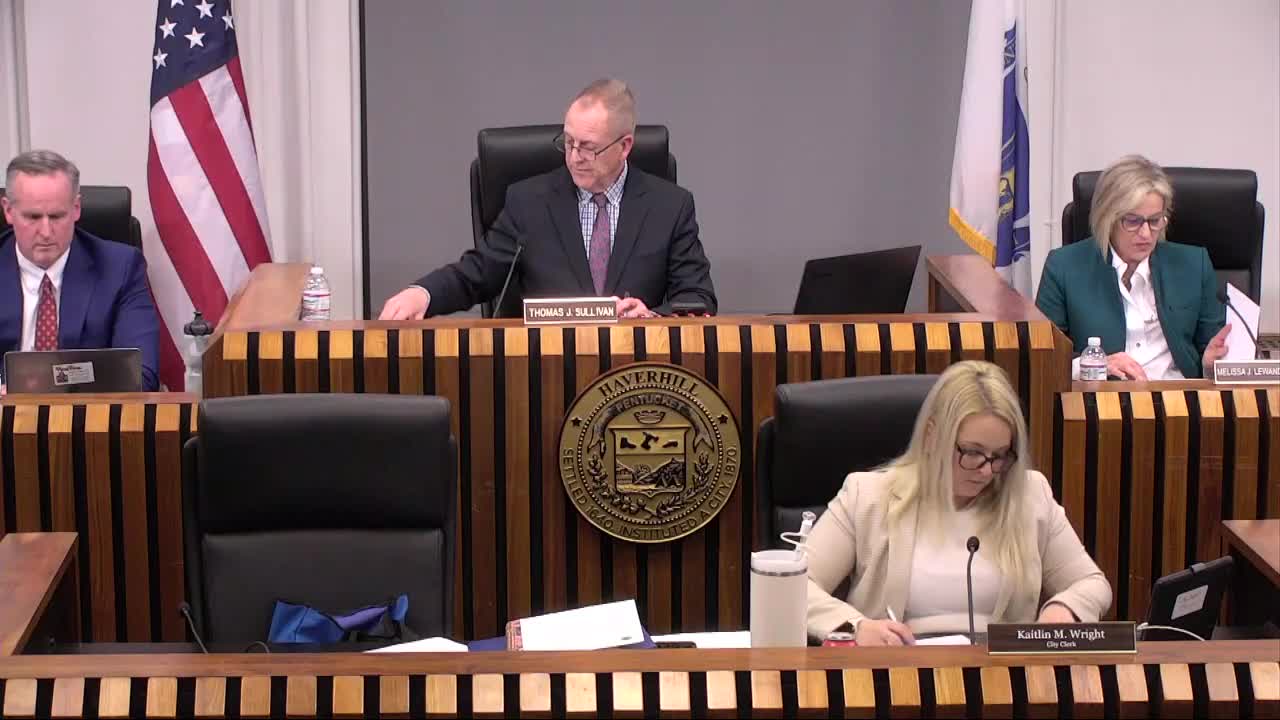
The declaration, presented at the March 18 City Council meeting, responds to a multimonth dry stretch and a Massachusetts Department of Environmental Protection designation of the region as in a critical (Level 3) drought, Mayor Barrett said. Robert (Bob) Ward, director of the Department of Public Works, told councilors the city’s main storage, Kenoza Lake, sits roughly 10 feet below full (current level 104.8 feet; full = 114.5 feet) and that overall watershed recovery is about a month to six weeks behind typical seasonal trends.
Why it matters: the drought declaration triggers a ban on nonessential outdoor water use, activates the city’s drought-management ordinance and gives officials authority to enforce limits to preserve supplies while spring and early-summer demand rises.
Ward walked the council through reservoir and usage facts the city is using to justify the emergency. Kenoza Lake provided about 2,100,000,000 gallons pumped during calendar 2024; Millvale Reservoir supplied roughly 830,000,000 gallons and Crystal Lake contributed about 266,000,000 gallons. Ward said Millvale is nearly full but is a relatively small source and the city is estimating roughly three months of pumping capacity from that reservoir under current conditions. He cautioned Crystal Lake’s apparent numbers are misleading and that it “is not going to be ready to pump any water for a while.”
The emergency declaration bans nonessential outdoor watering at all times starting March 19, subject to exemptions written in city code (Chapter 250) and described by Ward. Exemptions listed include agriculture, businesses that use water for core functions (for example, plant nurseries and golf courses), irrigation using harvested/stored stormwater, and limited other uses by review and approval. Public parks, recreation fields and spray parks were flagged as uses the city will review individually because they may open later in the season.
City staff urged indoor conservation as well. Ward and councilors noted standard steps: check and fix leaks, run dishwashers and washing machines only on full loads, shorten showers and install low-flow fixtures. The water department is offering free low-flow fixtures at the billing office, Ward said.
Enforcement and penalties: Ward summarized the city code enforcement scale. The first offense is a warning; subsequent violations carry escalating fines (the ordinance cites amounts that begin modestly and increase with repeat offenses). Each day of continued violation can count as a separate offense, and the code permits shutoff of service for noncompliance.
City support and short-term mitigation: the DPW is making rain barrels available through the city’s recycling webpage. Ward said ordered barrels cost $89; preorders run through April 13 and barrels are scheduled for pick-up April 26 at the Highway Garage (500 Primrose Street). Ward and the mayor also said the city is exploring discounts or rebates on barrels. Councilors pressed staff to publish a clear, itemized list of what is and is not allowed under the emergency; Ward and the mayor said guidance would appear on the city website and be shared with the council.
Council reaction and next steps: Councilors asked whether long-term weather trends and increased development should prompt earlier triggers for restrictions; Ward said the city’s drought thresholds are based on historical reservoir levels and the drought-management ordinance adopted in 2016, and agreed to consider whether thresholds warrant re‑examination. Councilor questions also covered revenue impacts (McGonigal asked about fiscal-year revenue effects) and the status of a planned river-adjacent well (a “ranney collector” well) intended to add supply; Ward said design and permitting work is underway but land‑purchase and legal negotiations are ongoing and construction would still be a year to 18 months after bids are awarded.
The declaration does not impose new indoor use limits; instead it activates the code’s emergency prohibitions on outdoor uses while staff monitor levels and prepare further public guidance. Ward and the mayor stressed the declaration is intended to preserve supply and give the city time to recover if seasonal weather trends return to normal.
Ending: The City Council received the announcement; the mayor and DPW said detailed, FAQ-style guidance and any permit or exception forms would be posted to the city website and circulated to councilors. The declaration takes effect March 19, 2025.