Get Full Government Meeting Transcripts, Videos, & Alerts Forever!
Get email alerts on the Opioids topic
No spam. Unsubscribe anytime.
Framingham names outreach coordinator for opioid task force; city plans to direct settlement funds toward prevention and treatment
Summary
Renee Vogel, the new outreach prevention coordinator, described initial outreach, data gathering and plans to center lived experience in Framingham’s opioid response; the board noted $2.6 million in opioid settlement funds slated for municipalities.
The Framingham Board of Health heard an update on the city’s opioid task force and the work of newly hired outreach prevention coordinator Renee Vogel.
Vogel said her first weeks have focused on mapping local services and connecting with organizations including SMOC and Program RISE. She told the board she is collecting data on barriers facing people who use drugs, including transportation and stigma, and is working to bring “lived experience” voices into task-force planning and spending decisions. "I was lucky to be able to bring in some lived experience there, which is really important," Vogel said.
Vogel described plans to form a more permanent commission to include people with lived experience in decisions about how to spend opioid-related funding. She also described regional coordination: a planned UCAN regional event and an upcoming adult resource fair to connect residents with services.
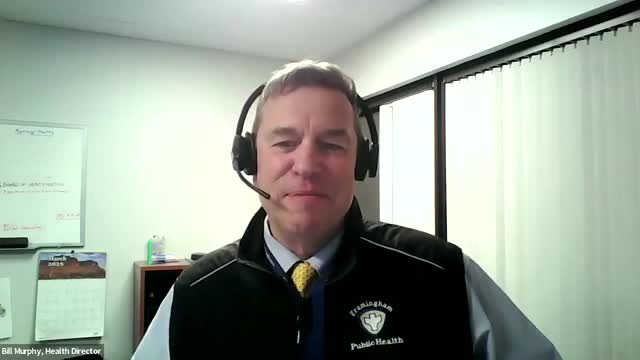
Health Director Bill told the board that a needs assessment has been completed and that municipalities in the state will share about 40 percent of local opioid settlement funds. He said Framingham is set to receive $2,600,000 from settlement funds; he noted the figure could change as more settlements are finalized. "We'd like to just direct that and get it to sort of front lines and hopefully make an impact," Bill said, describing priorities such as prevention, treatment, recovery and harm reduction.
Board members praised the emphasis on lived experience and regional coordination. The task force reported work on transportation issues as a barrier to access and said it is exploring a commission model and regional idea-sharing to promote equitable replication of programs.
The board did not take a funding vote at the meeting; staff described planning, a needs assessment and next steps for allocating settlement dollars.