Get Full Government Meeting Transcripts, Videos, & Alerts Forever!
Get email alerts on the Hb 3228 Public Hearing topic
No spam. Unsubscribe anytime.
League of Women Voters supports House Bill 3228 and urges adding AI considerations and a resilience fund
Summary
At a public hearing on House Bill 3228, the League of Women Voters of Oregon told the Joint Legislative Committee on Information Management and Technology that the bill should fund assistance for public bodies to meet cyber insurance requirements and suggested expanding the study to include artificial intelligence risks.
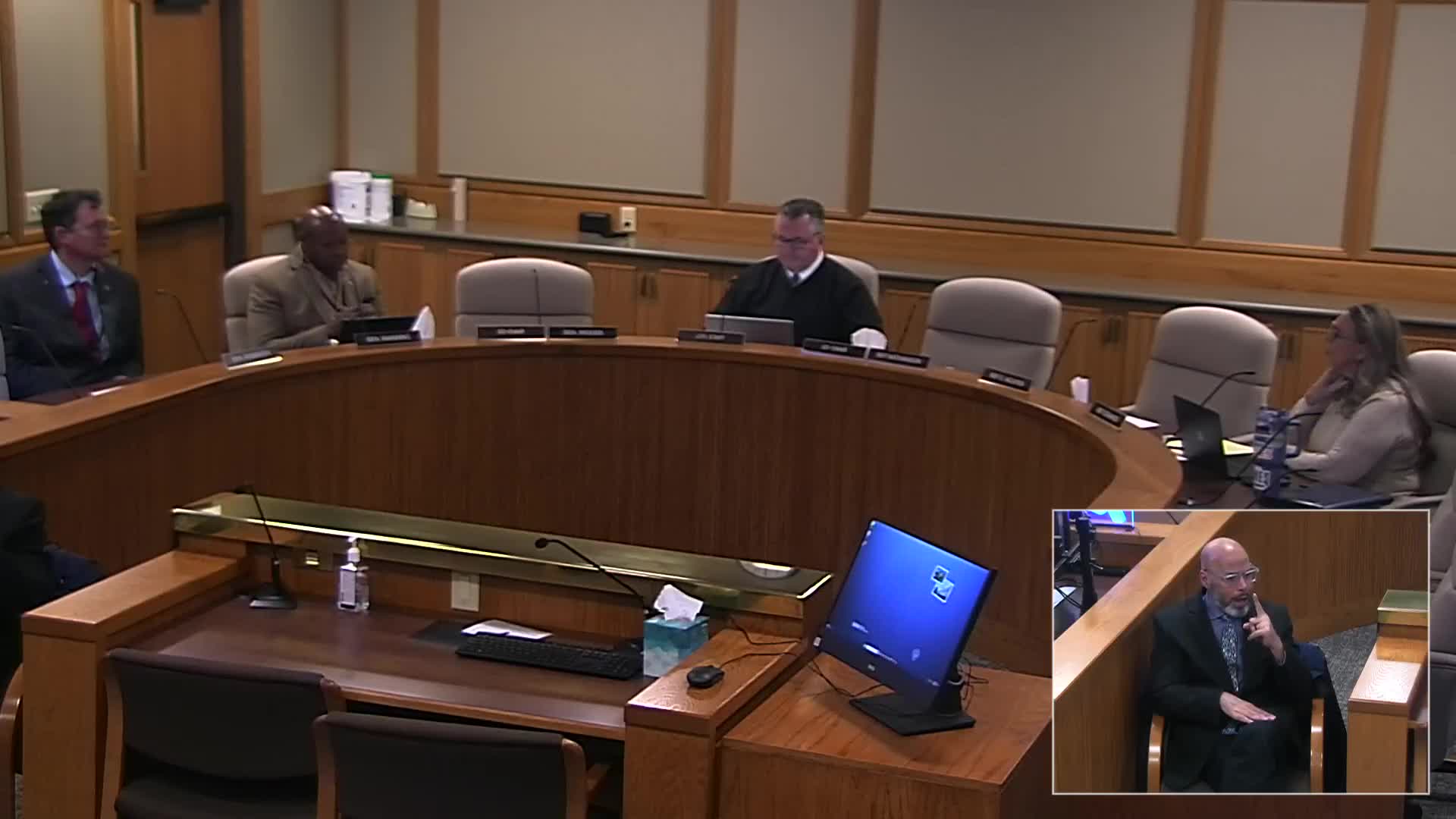
The Joint Legislative Committee on Information Management and Technology opened a public hearing on House Bill 3228 on March 30. Committee staff described the measure as directing the Oregon Cybersecurity Advisory Council to study use of cybersecurity insurance by Oregon public bodies and to submit findings to the committee by Dec. 31, 2025; the bill would also establish an Oregon Cybersecurity Resilience Fund and appropriate monies to the Higher Education Coordinating Commission for distribution to the Oregon Cybersecurity Center of Excellence to assist public bodies with insurance requirements and incident response.
Rebecca Gladstone, past president and current cybersecurity lead for the League of Women Voters of Oregon, testified in support “with modifications,” emphasizing that training, protocols and preventive measures are not discretionary and that a resilience fund would help jurisdictions implement needed protections. Gladstone said federal funding is uncertain and that a state fund would ensure vulnerable entities can meet insurance prerequisites and perform incident response.
Lindsay Washburn, testifying for the League in her role as an AI governance and policy expert, urged the committee to broaden HB 3228’s scope to include artificial intelligence risks. Washburn said modern cyber attacks increasingly leverage AI, and she recommended renaming the proposed fund the “Oregon Digital Resilience Fund” and expanding the Oregon Cybersecurity Center of Excellence’s role to include AI expertise to address algorithmic bias, automated decision-making errors and AI-specific vulnerabilities.
No other in-person witnesses spoke; committee staff noted additional written testimony may be submitted within 48 hours of the hearing. Committee leadership closed the public hearing and said staff will circulate schedules for upcoming meetings and follow-up materials.
Ending: The measure remains at the public hearing stage; legislators will receive the Advisory Council’s study and the proposal to create a state resilience fund if the bill advances. Witnesses recommended the study prioritize practical assessments and funding to help local governments and schools meet insurance underwriting requirements.