Get Full Government Meeting Transcripts, Videos, & Alerts Forever!
Get email alerts on the Infrastructure Finance topic
No spam. Unsubscribe anytime.
House approves GEFA financing for natural-gas and resiliency projects after hours of debate
Summary
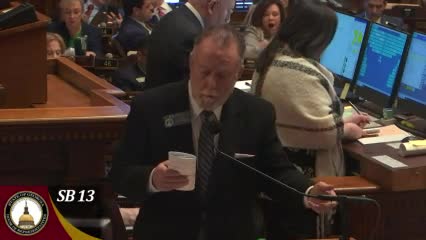
Senate Bill 13 expands Georgia Environmental Finance Authority (GEFA) financing to natural gas infrastructure and certain resiliency projects; the House passed the bill 109–50 after extended debate between supporters citing rural economic needs and opponents warning of mission creep.
The Georgia House voted to expand the Georgia Environmental Finance Authority’s financing authority to include natural-gas infrastructure projects and certain resiliency measures under Senate Bill 13. The bill passed Friday on a recorded vote of 109 yeas and 50 nays.
Representative Angie Osteen, who presented the measure for the chamber, said the change responds to recommendations from the Rural Development Council and would let GEFA offer low-interest financing for natural gas lines and for conversion or undergrounding of electric lines for resilience. “Senate Bill 13 would make natural gas infrastructure projects eligible for low interest GIFA [GEFA] financing,” Osteen said, adding the change would help counties such as Coffee and Douglas that lack capacity to attract industry.
Supporters’ case: Chairman Corbett argued the change would modernize energy infrastructure and aid counties without existing natural-gas service. Representative Whit Burchett described it as a tool for municipal gas utilities and noted similar provisions had passed the House previously.
Opponents’ case: Representative Carla Drenner (D) rose in opposition, calling the measure “a misguided expansion” that moves GEFA away from its core mission of financing water and wastewater projects. Drenner warned the state would be taking on financial risk better handled by private providers and said federal resilience funding is uncertain.
Other floor discussion flagged concerns about encouraging further reliance on fossil fuels and urged emphasis on sustainable resilience strategies. Representative Ramon said he remained undecided until the vote, noting the tension between helping communities recover after storms and avoiding policies that favor fossil-fuel expansion.
Process and vote: The House adopted the committee substitute and agreed to the committee’s favorable report before final passage. The clerk announced the final tally as 109 yeas and 50 nays; the bill was declared passed.
What the law changes: As described on the floor, the amendment authorizes GEFA (referred to in the caption) to finance or otherwise assist projects related to natural-gas facilities, and adds language to permit financing of electric-line conversions (undergrounding) for resiliency. Supporters said municipal gas authorities and GEFA worked to address territorial and financing concerns.
Next steps: With House passage the measure proceeds per the legislative calendar; sponsors said the change is intended to expand tools for rural economic development and grid resiliency.