
House Education members coalesce around class-size minimums, direct EQS rulemaking and two-year compliance window
Get AI-powered insights, summaries, and transcripts
Subscribe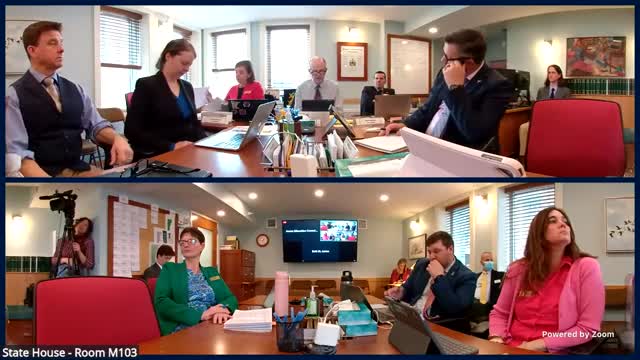
Summary
Members of the House Education Committee on March 21 discussed and signaled agreement on proposed minimum class sizes and a path to put the numbers into law while leaving details and exceptions to the state rulemaking process.
Members of the House Education Committee on March 21 discussed and signaled agreement on proposed minimum class sizes and a path to put the numbers into law while leaving details and exceptions to the state rulemaking process.
Committee members said they were generally comfortable with a draft framework that would set kindergarten at 12 students; grades 1–4 at 15; grades 5–8 at 18; and grades 9–12 at 20. The group agreed those numbers should be put into statute with implementation tied to the 2026–27 school year and a multi‑year compliance process (committee members repeatedly recommended a two‑year period or rolling average for enforcement and reporting).
The committee discussed why the issue matters: minimums can force reassignments in small, rural schools, and could affect the viability of schools that now operate with very small classes. Members referenced a recent news item about Ripton and the Salisbury Community School as an example of cascading effects when a class or grade band falls below a threshold.
Debate focused on three linked questions: which grade bands to use; how to treat multi‑age and mixed‑grade classrooms common in rural schools; and how to preserve elective, CTE and flexible‑pathway offerings in larger high‑school programs. Committee members compared several proposals, including a VSA (Vermont School Boards Association) set of numbers (12/15/18) and sample policies used in Montpelier area districts as models for high‑school content‑area averaging.
On exceptions, members identified categories many districts would expect to exclude from minimum calculations: CTE (career and technical education), special education services, MTSS/intervention sections, flexible pathways and certain electives (band, PE, drivers education), and students in off‑campus programs such as early‑college or statewide virtual learning. The committee discussed approaches used by other states and districts — for example, averaging minimums across a content area (for instance, all English courses) so one small elective class does not by itself trigger enforcement.
Legislative counsel (office of Legislative Council) walked members through how Education Quality Standards (EQS) live in statute and rule: statute can set the broad requirements and then direct the State Board of Education to adopt rules that specify exceptions, reporting, waiver criteria and operational details. Committee members directed staff to produce statutory draft language that would place the class‑size minimums into statute while directing the State Board to develop the implementation rules and criteria it should consider (student achievement, geographic isolation, cost per pupil, and other contextual factors were mentioned as possible rule factors).
Members also asked several unresolved implementation questions: whether the standards would apply to private schools that receive public funds (committee did not take a final position), how to define “geographic necessity” versus “rural by choice,” and how to count students participating in early‑college, CTE or virtual programs for the purpose of averaging. Several members emphasized that the enforcement process under current law starts with the Agency of Education secretary’s review and technical assistance and can extend over multiple review cycles before the State Board imposes measures such as boundary adjustments, administrative control or, ultimately, school closure — a multi‑year, stepwise due‑process path.
The committee identified next steps: ask Legislative Council to draft statutory language reflecting the agreed grade bands and timeline; direct the State Board (via statute) to develop rules on exceptions and waiver processes; and gather additional policy language examples from local districts to refine high‑school content‑area averaging. Members expected to reconvene on the work this summer and noted the desire to have final statutory language in time to provide clear signals for FY‑27 budgeting and planning.
Ending: Committee members did not take a formal recorded vote; the record shows a consensus to pursue the outlined statutory approach, retain a two‑year compliance or rolling‑average approach for enforcement, and rely on the State Board’s rules to define exceptions and operational details.