Get Full Government Meeting Transcripts, Videos, & Alerts Forever!
Get email alerts on the Public Defense topic
No spam. Unsubscribe anytime.
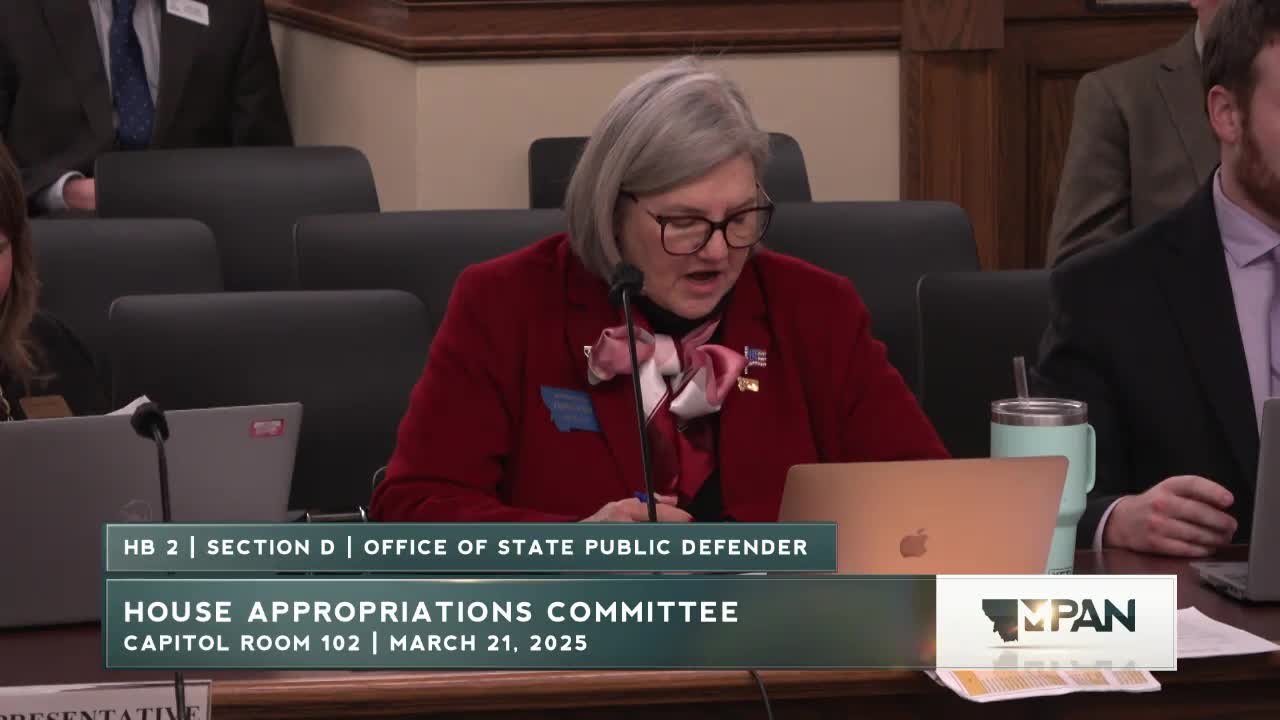
Public defenders press for multi‑year hiring plan as caseload shortfall exceeds 40 attorney equivalents
Summary
The Office of Public Defender told the appropriations subcommittee it is roughly 42 FTEs short of timely assignment capacity, proposed an eight‑per‑year, five‑year hiring plan and urged higher contract rates; the subcommittee funded a modest multi‑year increase and authorized higher contract rates but stopped short of the full request.
The Office of the State Public Defender (OPD) told the Section D subcommittee it is operating with a substantial shortfall in attorney capacity and proposed a five‑year plan to close the gap. Director Sabri Shandelson (recorded as "Shandelson" in the hearing) said OPD’s most recent internal data show the office is short roughly 42 full‑time‑equivalent attorneys in order to meet its internal assignment timeliness target; the agency proposed adding eight FTEs per year for five years to close that gap.
Why it matters: OPD is statutorily required to provide counsel in many case types and frequently must assign defenders statewide; director Shandelson said appointment delays had produced an effective shortfall of about 42 attorney equivalents. The shortfall leads the agency to depend on contract attorneys; OPD said its existing contract pay (about $71 per hour restored in 2022 after a prior cut) is low compared with the market and makes it difficult to secure high‑quality contractor capacity in every part of the state.
What the subcommittee did: The panel converted a number of modified positions to permanent status, authorized a partial program of new FTEs (a phased smaller set than OPD requested — the committee approved four FTEs in year one and four in year two rather than eight per year), and provided an increase in the contract hourly rate, while noting the agency will likely return with supplemental requests if caseloads continue to rise. Chair Nave told the committee the subcommittee intentionally funded half the request to allow OPD to provide actual cost data later in a supplemental.
Director Shandelson said OPD recruits strongly from law schools but that Montana’s single law school produces only roughly 70–80 graduates a year; to meet statewide coverage needs OPD increasingly recruits from out‑of‑state law schools and uses contract lawyers. The director said he would continue outreach to law students and that OPD has succeeded in hiring a notable share of third‑year law students but remains well short of the staff needed to eliminate the appointment backlog.
Policy language and companion bill: Section D’s companion bill will include language directing a lawyer‑study and proposing changes to statutory assignment rules the agency says drive workload (for example, the department said prior statute changed discretionary appointments for minors in abuse/neglect cases to a mandatory “shall” appointment; the companion bill would revisit that requirement). The subcommittee said it expects that language to be debated and voted in the companion bill process and noted the companion bill could modify statutes if necessary.
Next steps: OPD asked the Legislature to consider either restoring more FTEs over multiple sessions or to fund contract rates at a level sufficient to attract attorneys across Montana’s varied legal markets. The department will provide updated vacancy and caseload information and may request supplements during the session to cover unanticipated caseload growth.