Lifetime Citizen Portal Access — AI Briefings, Alerts & Unlimited Follows
Subcommittee backs trooper pay raise and maintenance authority; DOJ seeks flexibility for academy repairs and radio payoff
Loading...
Summary
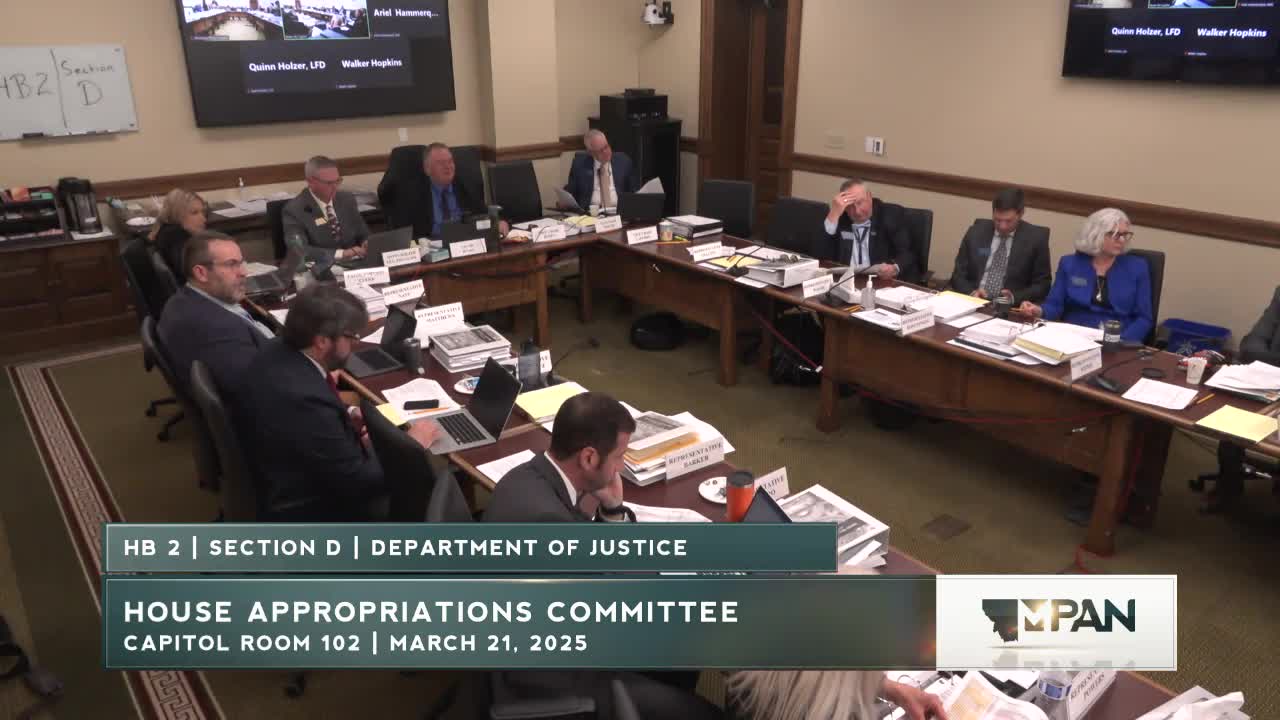
The House Appropriations Committee Section D kept a 14% pay increase for Montana Highway Patrol troopers in its HB2 recommendation and granted DOJ additional spending authority for academy maintenance and to pay off radio‑system loans, while moving the funding source to the general fund subject to amendment.
The House Appropriations Committee’s Section D subcommittee endorsed a major pay increase for the Montana Highway Patrol, supported additional spending authority for the Montana Law Enforcement Academy (MLEA) and the Motor Vehicle Division’s new computer system, and approved debt payoff authority tied to the statewide radio build (phase 1). Department of Justice (DOJ) officials told the committee the trooper pay raise is intended to stop ongoing losses in patrol staffing and to make entry pay more competitive with county and municipal law enforcement.
The DOJ’s top official told the committee the highway patrol was “hemorrhaging” troopers six months ago and that the department requested a 14% increase (the executive request) to reach parity with competing agencies; the subcommittee left the 14% raise in HB2 but moved the funding source to the general fund, with an amendment expected to revisit whether the revenue should instead come from a dedicated tax (referred to in the hearing as the “Maserati tax” or related bill). DOJ said the increase should stop the immediate outflow and improve recruitment; the department reported active recruiting and many retirements that created current vacancies.
Why it matters: The highway patrol is not in the same bargaining unit as other state public employees; its pay is driven by a statutory salary survey and separate bargaining rounds. Committee members said they wanted a stable funding source rather than depending on a one‑time or volatile special revenue stream.
Other DOJ priorities: DOJ asked for additional authority (not necessarily new appropriations) to address MLEA maintenance needs — old campus buildings, failing septic lines and deferred maintenance that require work funded from state special revenues. DOJ officials said the funds are available but they need legislative spending authority to use them for specific repairs. The department also sought ongoing authority for maintenance of the Motor Vehicle Division’s new CARS (Credentialing and Registration System) after it successfully replaced the older Merlin system; DOJ said the conversion is complete and counties are trained.
Radio and repayment authority: The subcommittee approved authority to pay off outstanding loans tied to the phase‑1 radio build, freeing DOJ from the prior Merlin debt and making the state special revenue and ongoing maintenance authority align with current needs; committee members cautioned that the radio build was only phase 1 and that phase 2 and phase 3 remain to be financed and maintained.
Forensics, MMIP and victim services: DOJ presented other smaller items the subcommittee approved or tagged, including funding for victim services, forensic lab capacity (noting a difference between Billings and Missoula lab capabilities), a $40,000 one‑time contribution to a Missing and Murdered Indigenous Persons (MMIP) fund and contingency language tying litigation/pension obligations to HB85’s passage.
Next steps and amendments: The subcommittee plans an amendment to change the trooper raise’s funding source (general fund to the special revenue stream referenced in the executive request) if the sponsor wishes; DOJ also expects to return with more detailed annual planning metrics requested by the committee so legislators can judge outcomes against intended goals (e.g., academy facility repairs, radio interoperability and forensic turnaround times).