Get Full Government Meeting Transcripts, Videos, & Alerts Forever!
Get email alerts on the City Charter topic
No spam. Unsubscribe anytime.
Medford council votes to send amended charter to mayor after debate over council composition
Summary
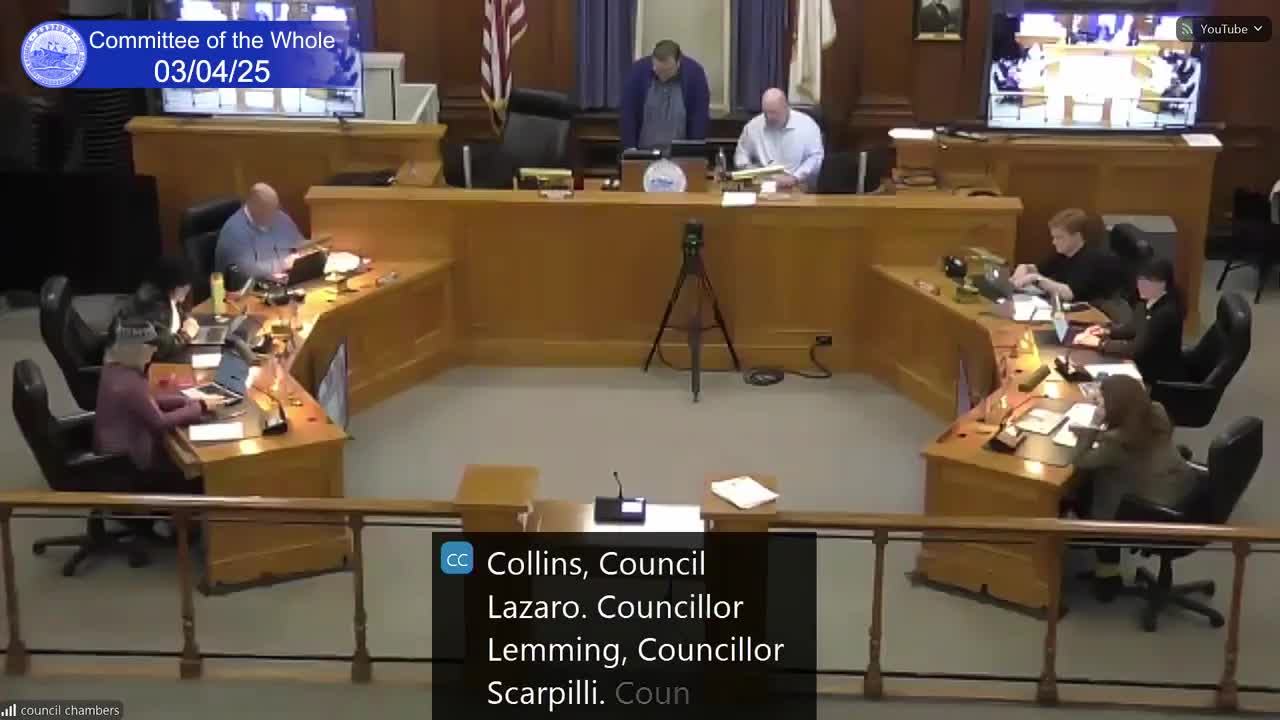
Medford City Council members at a Committee of the Whole meeting on March 4 debated and approved revisions to a proposed city charter — including a contentious change to council composition — then voted to send the amended charter to the full council and the mayor for the next steps toward legislative review.
Medford City Council members at a Committee of the Whole meeting on March 4 debated and approved revisions to a proposed city charter — including a contentious change to council composition — then voted to send the amended charter to the full council and the mayor for the next steps toward legislative review.
Councilor Justin Singh, chair of the governance committee, opened the item by summarizing the committee’s work on the draft charter and outlining two “big substantive edits” and a set of technical clarifications. “The two big substantive edits that we made was to adopt a district based composition for city council to align it with the school committee model that was proposed and to remove the mayor as the chair of the school committee,” Singh said. He also presented technical language changes, such as replacing “highest vote getter” with “candidate receiving the highest number of votes” and specifying that the budget must be posted on the city website.
The meeting turned to a sustained debate over how the council should be structured. Councilor George Scarpelli argued forcefully for the Charter Study Committee’s recommendation of eight ward representatives plus three at-large seats, calling that format the product of two years of work and more than 200 meetings. “8 leaves nobody behind,” Scarpelli said, arguing that ward seats lower the cost and difficulty of running and bring more neighborhood engagement.
Councilor Lehi (first name not specified in the record) and Councilor Collins both said they supported more localized representation but favored a compromise structure. Collins described the decision as one the council must make “for what we think is morally right for the city, not the politically expedient one,” and said she supported the governance committee’s amended model of four district seats and five at-large seats.
Councilor Zahid Tsang and others explained the committee’s reasoning and cited research they said shows district or mixed models can deliver better outcomes for equitable representation. Tsang also noted constraints tied to the “special act” process the city must use with the state legislature, saying that certain reforms such as ranked-choice voting were unlikely to survive that route and therefore were not included in the draft.
Public commentators — including Charter Study Committee members — urged the council to adopt the eight-ward, three at-large model recommended by the Charter Study Committee. Milva McDonald, chair of the Charter Study Committee, told the council the committee’s outreach and survey work had been extensive and asked councilors to honor the committee’s recommendation. “Ward representation has a definition that is understood,” McDonald said.
Other public commenters warned of legal risk if majority-minority districts are diluted. Alyssa Nugent, a resident, said the governance committee’s proposed maps could reduce the relative voting strength of minority residents in Ward 7 and urged the city to consider federal Voting Rights Act implications.
Procedure and votes: councilors first voted to sever the council-composition question from the larger package so the composition decision would be taken separately. After public comment and additional discussion the council voted on composition. By roll call the council approved the governance committee’s composition amendment — a council with five at-large members and four district members — by a 5–2 margin (yes: Callaghan, Collins, Lemming, Singh, President Bares; no: Lozaro, Scarpelli). Later the council voted to refer the full draft, as amended by the governance committee and with technical edits, to the regular council meeting; that referral passed 6–1 (yes: Callaghan, Collins, Lozaro, Lemming, Singh, President Bares; no: Scarpelli).
The council also directed that the technical edits Singh listed be included in the redline the clerk will distribute, and asked staff to circulate the final redline in advance of next Tuesday’s regular meeting. Councilors and several public speakers noted the shortened timeline: the Collins Center and the Charter Study Committee had told the council that to reach a November 2025 ballot the legislature would likely need the special-act petition by late March, which compressed the calendar for further changes.
What happens next: the amended draft will appear on the City Council’s regular-meeting agenda for a referral vote and then be sent to the mayor. If the mayor returns the draft with changes the council will need to consider revisions again; any post-referral changes could affect whether the petition reaches the Legislature in time for a chance at the November 2025 ballot.
Votes at a glance: - Motion to adopt governance committee recommendation on council composition (5 at-large, 4 district). Mover: Councilor Justin Singh (governance committee); second: Councilor Collins. Roll-call result: adopted, 5–2 (yes: Callaghan, Collins, Lemming, Singh, President Bares; no: Lozaro, Scarpelli). - Motion to refer the amended draft charter to the regular council meeting (as amended by governance committee with technical edits, and with an amendment to include a residency requirement for some multimember bodies). Mover: Councilor Singh; second: Vice President Collins. Result: referred to regular meeting, 6–1 (yes: Callaghan, Collins, Lozaro, Lemming, Singh, President Bares; no: Scarpelli).
Why it matters: the council’s choice over composition will change how residents are represented at city hall, the scale of local campaigns, and which neighbors are grouped together for representation. Supporters of wards said wards increase accessibility and neighborhood voice; supporters of a mixed at-large/district model said the hybrid approach balances local responsiveness with citywide accountability and can reduce the risk of parochialism and unequal campaign burdens.
Councilors, the Charter Study Committee and several residents said they would continue outreach before the next council meeting to try to explain the amendment choices and legal constraints to residents and to prepare the packet that will go to the mayor and then to the legislature.