Get Full Government Meeting Transcripts, Videos, & Alerts Forever!
Get email alerts on the Charter Revision topic
No spam. Unsubscribe anytime.
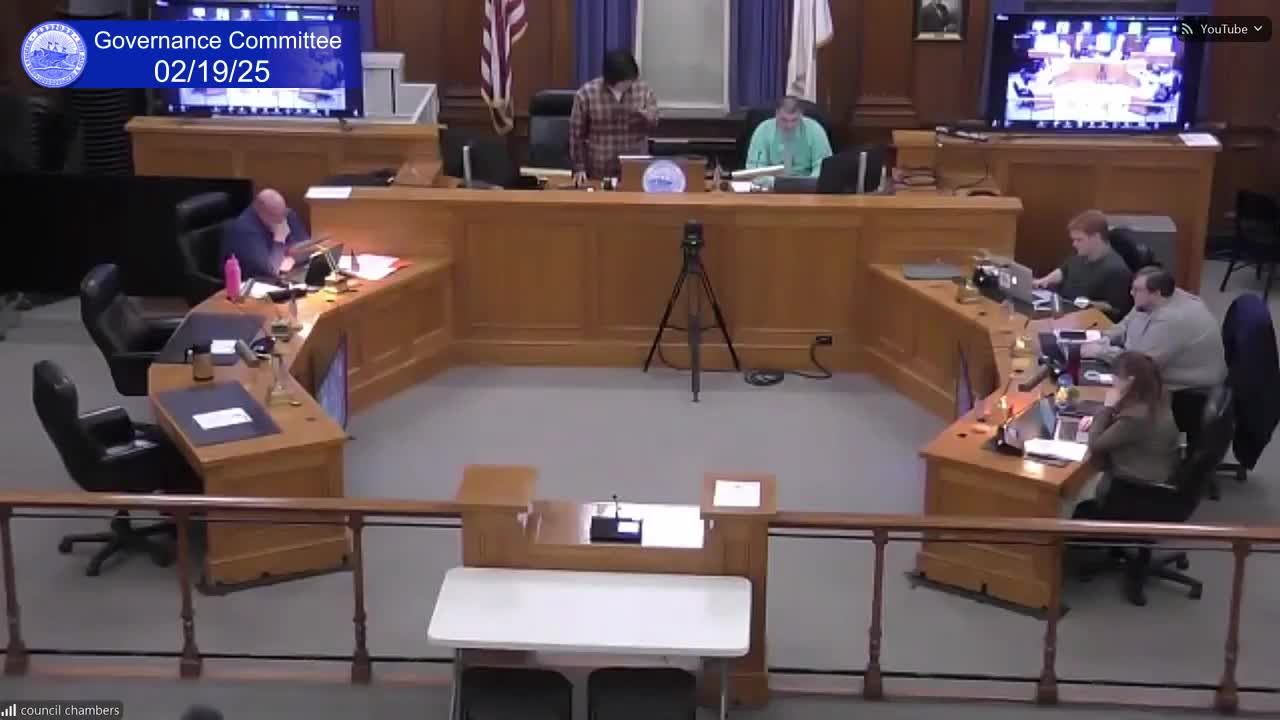
Governance Committee votes to remove mayor as school committee chair; advances charter changes including petition and recall rules
Summary
The Medford City Governance Committee voted Feb. 19 to amend the draft charter so the mayor remains a voting member of the school committee but will no longer automatically serve as its chair.
The Medford City Governance Committee voted Feb. 19 to amend the draft city charter so the mayor remains a voting member of the Medford School Committee but will not automatically serve as its chair, a change supporters said protects the school committee’s independent executive role.
The change passed on a 4-1 roll call after hours of testimony from sitting and former school committee members, councilors and residents who debated whether the city’s chief executive should preside over the school body. The committee also approved a set of related clerical edits, moved to require legal review of certain hiring-language in the charter, adopted a citizen petition ("group petition") mechanism with revised thresholds and limited the draft recall provision to apply to the mayor’s office only. Committee members voted to forward the amended charter draft and a set of redline versions to the Committee of the Whole for March consideration.
Why it matters: The committee’s changes address two central governance tensions raised repeatedly during the meeting — separation of powers between city government and the school system, and how to create durable public-participation rules that survive changes in council rules. Sponsors said clarifying who chairs the school committee reduces conflicts of interest at budget and contract time, while petition and referendum language aims to standardize how residents can compel public hearings or ballot action.
Most important facts
President Barris (City Council president) moved the charter amendment on the mayor’s role after summarizing written comments from school committee members and public commenters. He said: "I would move, make a motion that we amend the draft charter to keep the mayor as a serving voting member of the school committee, but not serving as the chair and to update the sections as needed to reflect that change." That motion passed 4–1.
Vice Chair Jenny Graham (Medford School Committee, written comment) warned that giving the mayor the chairmanship risks conflating the mayor’s municipal responsibilities with the school committee’s independent responsibility for education, writing, "The school committee's primary responsibility is to focus solely on the education needs of Medford children ... doing so undermines authority and responsibility of the committee."
Council debate and public comment
Supporters of removing the chair role argued it protects the superintendent’s independence and keeps the school committee focused on education rather than citywide political pressures. Aaron Olapade (Medford School Committee) told the committee that the dual role "creates kind of an unavoidable tension" between city and school responsibilities.
Opponents, including Councilor Scarpelli, said the mayor’s chairmanship provides important executive buy-in for school issues and warned frequent charter changes could jeopardize passage. Scarpelli argued the mayor "is the leader of your community" and should retain a leadership role on the school committee.
Other charter items advanced
- Citizen petitions (Article 8): The committee adopted a group-petition provision that requires a certified petition of signatures (committee adopted 100-signature certification language and asked the city solicitor/legal office to draft the exact procedural review language). The motion to approve revised petition language and require legal review passed unanimously (5–0). The adopted language requires notice and a public hearing and prevents identical petitions on the same subject more than once per year.
- Hiring and school-administration language (Article 4 / Article 5): Committee members debated language that in the draft tied certain school administrative hires to a superintendent recommendation. Several school committee members and legal commenters said state guidance (including citations to Chapter 71 and DESE/MASC guidance) treats these roles as areas where the school committee has appointment authority. The committee voted (4–1) to ask the city council’s legal team and the school committee’s counsel to propose clarified language reflecting state law and the committee’s intent.
- Clerical and procedural edits: The committee approved multiple clerical fixes recommended by school committee members (titles, phrasing regarding officers, and clarifications on filling vacancies). Several of those technical motions passed unanimously or by clear majorities (votes recorded in the actions summary below).
- Recall and referendum rules: The committee adjusted thresholds and timing for initiative/referendum processes. After debate the committee voted to align supplemental initiative and referendum signature thresholds at 15% (motion passed 4–1) and to remove from the ballot-eligibility list any measures that would let voters strike the city or school budget line-by-line (committee voted to remove the phrase "as a whole" to clarify ineligible budget actions; 4–1). The committee also narrowed the draft recall procedure to apply only to the office of the mayor (vote passed 3–2).
What’s next: The Governance Committee directed the chair, vice chair and the Collins Center staff to prepare consolidated redlines of all motions and amendments and to forward the package to the Committee of the Whole. The committee set a deadline for internal redlines so the Committee of the Whole can consider the draft at the next scheduled meeting.
Ending: Committee members and public speakers urged colleagues to preserve a balance between robust citizen access and governance stability. Several school committee members said the questions raised in the meeting — on chairmanship, hiring authority and budget protections — reflect long-standing tensions between city and school governance and should be resolved in language clear enough for voters and for the state legislature to review.