Get Full Government Meeting Transcripts, Videos, & Alerts Forever!
Get email alerts on the Product Liability topic
No spam. Unsubscribe anytime.
Justices probe meaning of “supplied” and "actual knowledge" in Texas product‑liability venue fight
Summary
In the same oral argument, counsel debated whether "supplied" in Texas Civil Practice & Remedies Code §82.003(a)(6) means the moment of delivery or the entire distribution sequence and whether venue may be established where substantial steps in the supply chain occurred in Dallas County.
The Supreme Court of Texas also heard argument in Rush Truck Centers v. Sayre over the interpretation of the product‑liability statute Texas Civil Practice and Remedies Code §82.003(a)(6) — specifically what it means to have "supplied" a product "with actual knowledge" of a defect and which county counts as a "substantial part" of the events giving rise to the claim for venue purposes.
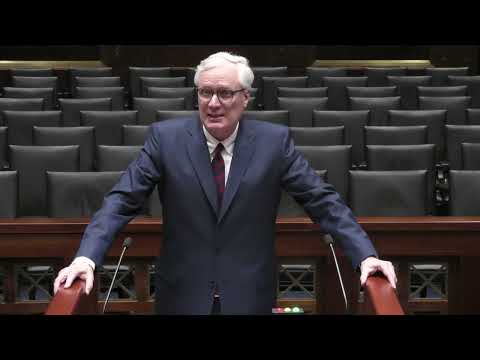
Petitioners’ counsel, Mr. Grafton, urged a narrower reading: the seller must have "actual knowledge" of a defect at the precise time the seller "supplied" the product. "The seller must have actual knowledge, not knew or should have known, but have actual knowledge of a defect," he said, arguing that the Dallas Court of Appeals stretched the statutory phrase "the time the seller supplied" to include the entire distribution sequence and thereby expanded seller liability.
Respondents’ counsel, Mr. Levinger, countered that events occurring at the seller’s Dallas facility — ordering, taking delivery, equipping options, state inspection, titling, invoicing and billing, and delivery to the school district — are integral to "supply" and therefore may establish venue in Dallas County. He told the court that documents show a sales representative, Reuben Koenig, acted as a sales representative for RBC Dallas and that some inventory and option‑installation activity at the Dallas facility supported attributing knowledge to the seller.
Much of the bench questioning centered on whether venue analysis at the interlocutory stage should focus on the pleadings and the existence of a "substantial part" of events in the county, or require proof of the causation and knowledge elements of the cause of action. Counsel for the petitioners emphasized that the causation/knowledge element is essential and that clerical or administrative acts (titling, inspection) are not equivalent to actual knowledge of a defect at the time of supply. Respondents argued that the statutory phrase "at the time" is meant to exclude after‑acquired knowledge, not to bar considering steps in the supply chain that would reveal knowledge before or at delivery.
The court also discussed where to attribute an employee's knowledge for venue purposes when a sales representative worked remotely from Parker County while being held out in documents as an RBC Dallas representative. Counsel for the respondents said that attribution to the employer is proper where the seller holds out the employee as its representative; petitioners pointed to sworn testimony in the record (identified as exhibit 5) that the sales representative believed the bus complied with state and federal law and thought it was safe.
Justices asked whether it is appropriate at the interlocutory stage to parse these evidentiary questions or whether such fact‑intensive inquiries should await trial. After further questioning about statutory text, attribution of knowledge, and which events are "substantial," the court took the case under submission.